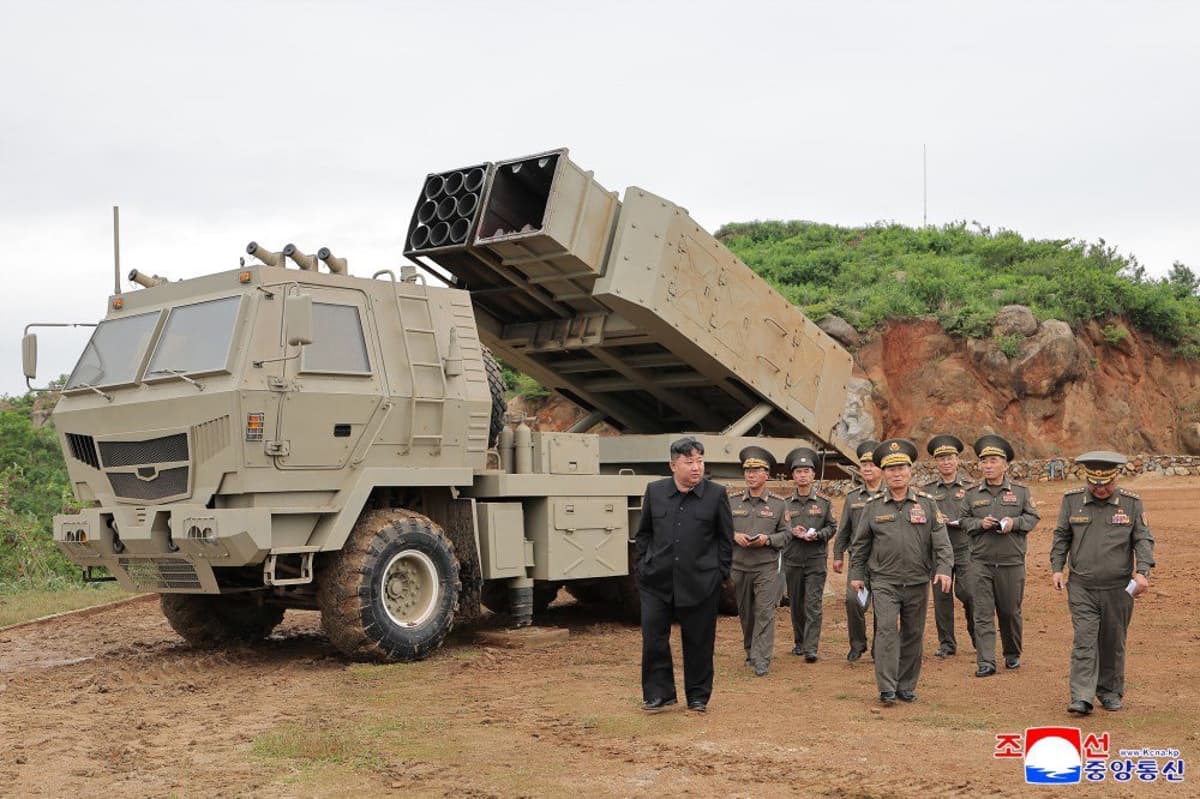
North Korea Tests HIMARS-Like MLRS: Kim Jong Un Upgrades Tactical Firepower Near South Korea
Why It Matters
The upgrade gives Pyongyang a high‑precision, mobile conventional strike capability that can pressure Seoul and U.S. forces without resorting to nuclear options, reshaping the security calculus on the Korean Peninsula.
Key Takeaways
- •North Korea unveiled a HIMARS‑style MLRS with guided 240 mm rockets
- •System can launch both rockets and short‑range Hwasong‑11Ra missiles
- •Precision navigation turns former area‑saturation weapon into point‑target tool
- •AI‑guided 100 km cruise missile tested alongside the MLRS
- •Deployments aim to boost non‑nuclear firepower near the DMZ
Pulse Analysis
The recent demonstration of a HIMARS‑like multiple launch rocket system marks a significant evolution in North Korea’s conventional arsenal. By integrating guided 240 mm rockets and modular missile pods, the DPRK mirrors the U.S. system’s rapid‑deployment and shoot‑and‑scoot capabilities that proved decisive in Ukraine. The addition of an ultra‑precision autonomous navigation suite transforms what was once a blunt, area‑saturation weapon into a surgical strike platform, extending its effective range and accuracy against specific targets near the Demilitarized Zone.
Beyond the rockets, the test of an AI‑guided cruise missile with a 100‑kilometer reach signals Pyongyang’s intent to embed advanced algorithms into its strike weapons. Artificial‑intelligence guidance promises tighter flight paths, adaptive targeting, and reduced reaction times, narrowing the technological gap with U.S. and allied systems. Coupled with a newly inspected 155 mm self‑propelled howitzer boasting a 60‑kilometer range, these developments broaden North Korea’s non‑nuclear firepower, offering flexible options for coercion and deterrence without escalating to nuclear posturing.
For regional security analysts, the emergence of a mobile, precision‑guided MLRS near the border raises the stakes for South Korea and the United States. Existing U.S. and ROK air‑defense networks must now account for low‑observable, fast‑moving launchers capable of striking deep‑inside the Seoul metropolitan area. The move may prompt accelerated deployment of counter‑rocket, artillery, and mortar (C‑RAM) systems, increased joint exercises, and diplomatic pressure to curb further proliferation of advanced conventional weapons on the peninsula.
North Korea Tests HIMARS-Like MLRS: Kim Jong Un Upgrades Tactical Firepower Near South Korea
Comments
Want to join the conversation?
Loading comments...