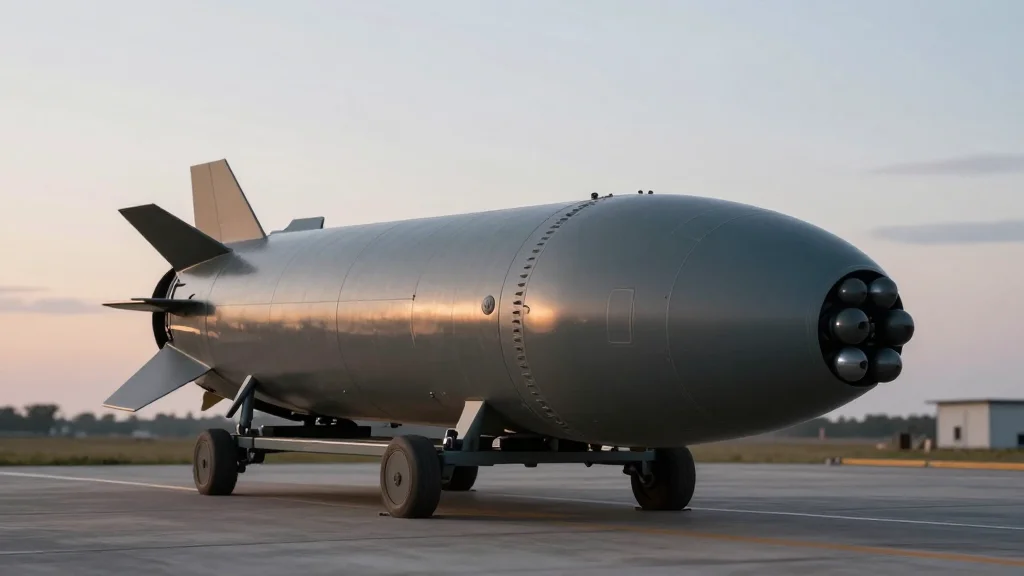
North Korea Tests Upgraded Ballistic Missiles with Cluster‑warhead Payloads

Why It Matters
The introduction of cluster‑warhead technology onto North Korea’s ballistic missiles represents a qualitative shift in its offensive capabilities. Unlike single‑warhead missiles, cluster munitions can saturate a target area, complicating detection, tracking, and interception for existing missile‑defense systems in Japan, South Korea, and U.S. forces stationed in the region. This development heightens the risk of collateral damage in any future conflict and may trigger an arms‑race dynamic, prompting neighboring states to invest in more advanced, multi‑layered defense architectures. Furthermore, the test raises legal and humanitarian concerns. Cluster munitions are subject to international restrictions due to their propensity to leave unexploded ordnance that endangers civilians long after hostilities cease. By integrating such weapons into its missile arsenal, North Korea not only expands its tactical options but also deepens the potential for civilian harm, complicating diplomatic efforts aimed at denuclearization and regional stability.
Key Takeaways
- •North Korea test‑fired a ballistic missile equipped with cluster‑warhead payloads under Kim Jong Un’s supervision
- •Cluster‑warhead missiles challenge existing missile‑defense systems designed for single‑warhead threats
- •The test follows recent missile launches that have kept Japan and South Korea on high alert
- •U.S. and regional allies are reviewing interceptor capabilities to address the new threat
- •The move raises humanitarian concerns due to the indiscriminate nature of cluster munitions
Pulse Analysis
North Korea’s decision to field cluster‑warhead ballistic missiles is a strategic gamble aimed at offsetting the growing sophistication of regional missile‑defense networks. Historically, Pyongyang has relied on sheer quantity and the threat of nuclear payloads to deter adversaries. By adding a payload that can disperse multiple sub‑munitions, the regime seeks to create a dilemma for defenders: intercept the primary missile or risk allowing a rain of sub‑munitions to strike. This dual‑layered threat could force a costly upgrade cycle for Japan’s Aegis‑Ashore and South Korea’s Patriot and KM-SAM systems, potentially accelerating procurement of next‑generation interceptors such as the U.S. Terminal High Altitude Area Defense (THAAD) and the European SAMP/T.
The test also signals a broader doctrinal shift. Cluster munitions, while banned by many nations, are cheap, readily producible, and can be used against both military and civilian targets, expanding Pyongyang’s coercive toolkit. This aligns with a pattern observed in other authoritarian regimes that blend conventional and unconventional weapons to complicate an opponent’s response calculus. The international community’s reaction will likely be two‑fold: heightened diplomatic pressure to curb the use of cluster munitions and a pragmatic push to shore up defenses. In the short term, we can expect emergency security consultations among the U.S., Japan, and South Korea, with possible joint exercises aimed at testing multi‑layered interception scenarios.
Long‑term, the introduction of cluster‑warhead missiles could reshape the strategic balance in Northeast Asia. If North Korea successfully demonstrates reliable deployment, it may embolden further advancements, such as hypersonic delivery vehicles or larger payload capacities. Regional actors will need to balance deterrence with escalation control, ensuring that any defensive upgrades do not inadvertently trigger a security dilemma that spirals into a new arms race. The coming weeks will be critical in gauging whether diplomatic channels can mitigate the heightened risk or whether the defense postures of the allies will shift toward a more aggressive, pre‑emptive stance.
North Korea tests upgraded ballistic missiles with cluster‑warhead payloads
Comments
Want to join the conversation?
Loading comments...