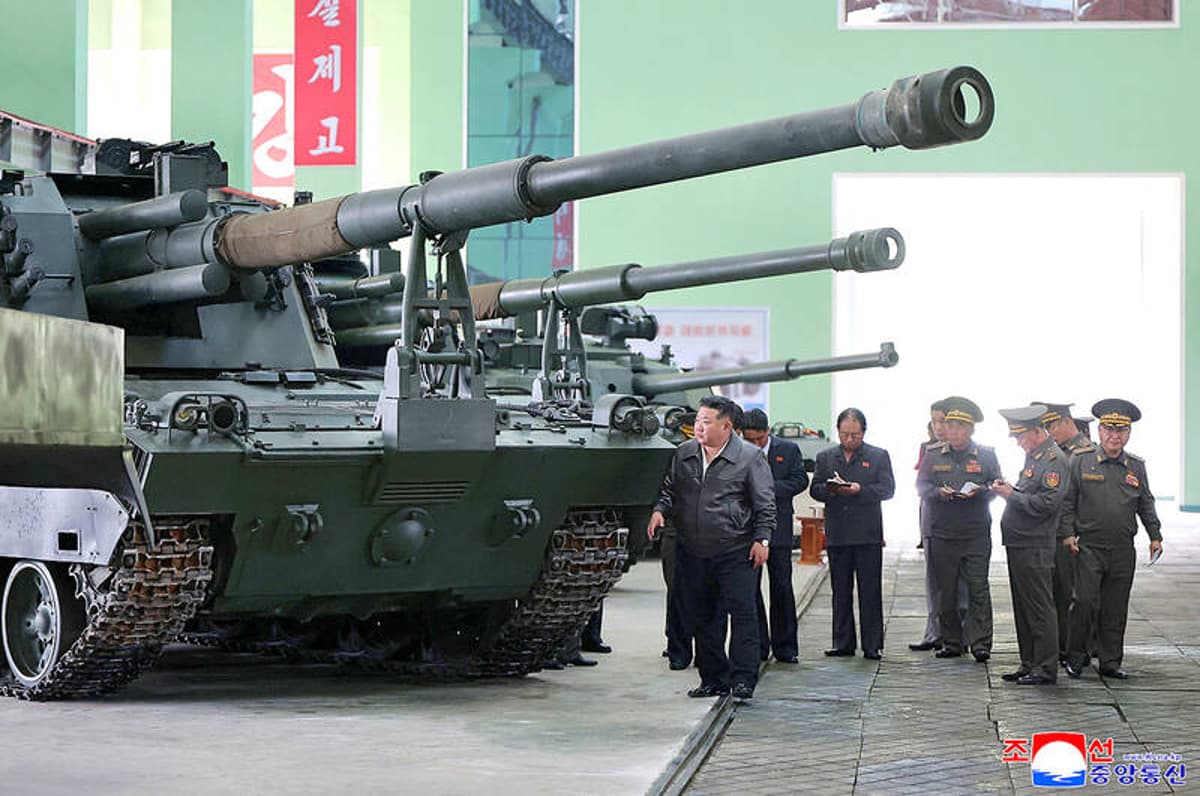
North Korea to Deploy New Type of Artillery Along Border with the South
Why It Matters
The system places South Korea’s capital within artillery range, raising the risk of rapid conventional strikes and complicating diplomatic efforts to de‑escalate peninsula tensions.
Key Takeaways
- •155mm self‑propelled howitzer range exceeds 60 km
- •Seoul and Gyeonggi within striking distance
- •Deployment planned for 2026 along border
- •Kim inspected artillery and 5,000‑ton destroyer
- •North removed unification clause, redefining territorial claim
Pulse Analysis
North Korea’s artillery modernization has accelerated in recent years, but the introduction of a mobile 155‑mm self‑propelled gun‑howitzer marks a qualitative leap. Unlike towed pieces, the tracked platform can relocate quickly after firing, complicating counter‑battery efforts. Its 60‑kilometer reach eclipses the distance to Seoul and the industrial heartland of Gyeonggi, effectively shrinking the buffer that South Korean forces have relied on for decades. Analysts compare the new system to Russia’s 2S19 Msta, suggesting comparable firepower at a fraction of the cost.
For South Korea, the artillery threat forces a reassessment of both ground and air defenses. Existing Patriot and THAAD batteries are designed primarily for missile interception, not high‑rate artillery bursts, prompting calls for enhanced counter‑battery radars and rapid‑response artillery units. The United States, as a key security guarantor, may need to accelerate the deployment of precision‑guided munitions and bolster joint exercises to demonstrate deterrence. Meanwhile, diplomatic channels remain open, but the artillery deployment underscores Pyongyang’s willingness to leverage conventional capabilities to extract political concessions.
Regionally, the new howitzer could spur an arms‑building spiral on the Korean Peninsula. Neighboring China and Japan monitor the development closely, wary that heightened North Korean firepower could destabilize existing security architectures. International bodies may consider additional sanctions targeting artillery components, while arms‑control dialogues could be revived to address conventional weapon proliferation. Ultimately, the howitzer’s fielding highlights the fragile balance between military posturing and peace‑building in East Asia, making vigilant intelligence and diplomatic engagement essential.
North Korea to deploy new type of artillery along border with the South
Comments
Want to join the conversation?
Loading comments...