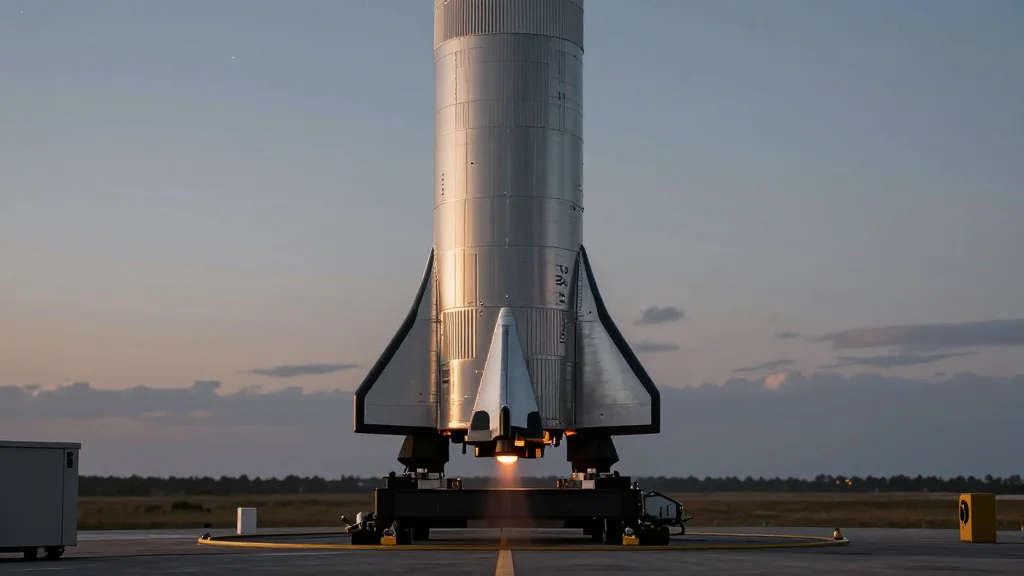
Northrop Grumman Lifts Off US Space Force STP‑S29A on Minotaur IV, 31st Flight of the Launch Family

Companies Mentioned
Why It Matters
The STP‑S29A launch demonstrates how the US Space Force is leveraging legacy launch assets to sustain a rapid, low‑cost pipeline for space‑defense experiments. By fielding sensors that improve debris detection and radiation monitoring, the mission enhances Space Domain Awareness and protects high‑value assets from both natural and adversarial threats. Moreover, the inclusion of communications and CubeSat experiments signals a shift toward distributed, resilient satellite networks that can support warfighters in contested environments, reducing reliance on traditional, large‑satellite architectures. In the broader defense ecosystem, the mission illustrates a growing partnership model that blends government‑owned launch vehicles, commercial payload integration, and academic research. This hybrid approach accelerates technology insertion, spreads development risk, and creates a talent pipeline that can sustain future innovation cycles across the Department of Defense’s space enterprises.
Key Takeaways
- •Northrop Grumman launched the US Space Force STP‑S29A mission on a Minotaur IV from Vandenberg Space Force Base.
- •The flight marked the 31st successful Minotaur launch since 2000, highlighting the vehicle’s proven reliability.
- •STPSat‑7 carried five experiments, including LARADO for debris tracking and NanoUHF Comms for beyond‑line‑of‑sight communications.
- •Secondary payloads featured Army‑sponsored Rawhide CubeSats, a Special Operations Command MISR‑C CubeSat, and university research instruments.
- •The mission supports Space Domain Awareness, radiation monitoring, and resilient low‑Earth‑orbit communications for warfighters.
Pulse Analysis
Northrop Grumman’s reliance on the Minotaur IV platform reflects a strategic hedge against the commercial launch market’s price swings and schedule uncertainties. While SpaceX and other private providers dominate high‑volume payload deliveries, the government‑owned Minotaur offers a niche capability: rapid, low‑cost access for small, experimental payloads that do not justify a full‑scale commercial ride. This dual‑track approach gives the Space Force flexibility to prioritize mission urgency over cost when national security is at stake.
The payload mix on STP‑S29A also signals a doctrinal shift. Traditional defense satellites have focused on large, monolithic platforms; the current emphasis on CubeSats and modular experiments suggests a move toward a distributed architecture that can survive and adapt in a contested environment. By fielding debris‑tracking and radiation‑hardening sensors now, the service is building a data foundation that will inform future autonomous on‑orbit servicing and debris‑removal missions—capabilities that could become decisive if adversaries attempt to weaponize the orbital domain.
Looking ahead, the success of this launch is likely to spur additional contracts under the Rocket Systems Launch Program, potentially expanding Minotaur’s payload capacity and integrating newer propulsion technologies. If the Space Force can sustain a steady cadence of such missions, it will not only keep the launch vehicle’s production line alive but also maintain a continuous flow of experimental data that feeds directly into next‑generation warfighting concepts. The challenge will be balancing this low‑cost, government‑run model with the rapid innovation cycles of the commercial sector, ensuring that the United States retains both the agility and the depth of capability needed to dominate the emerging space‑defense frontier.
Northrop Grumman lifts off US Space Force STP‑S29A on Minotaur IV, 31st flight of the launch family
Comments
Want to join the conversation?
Loading comments...