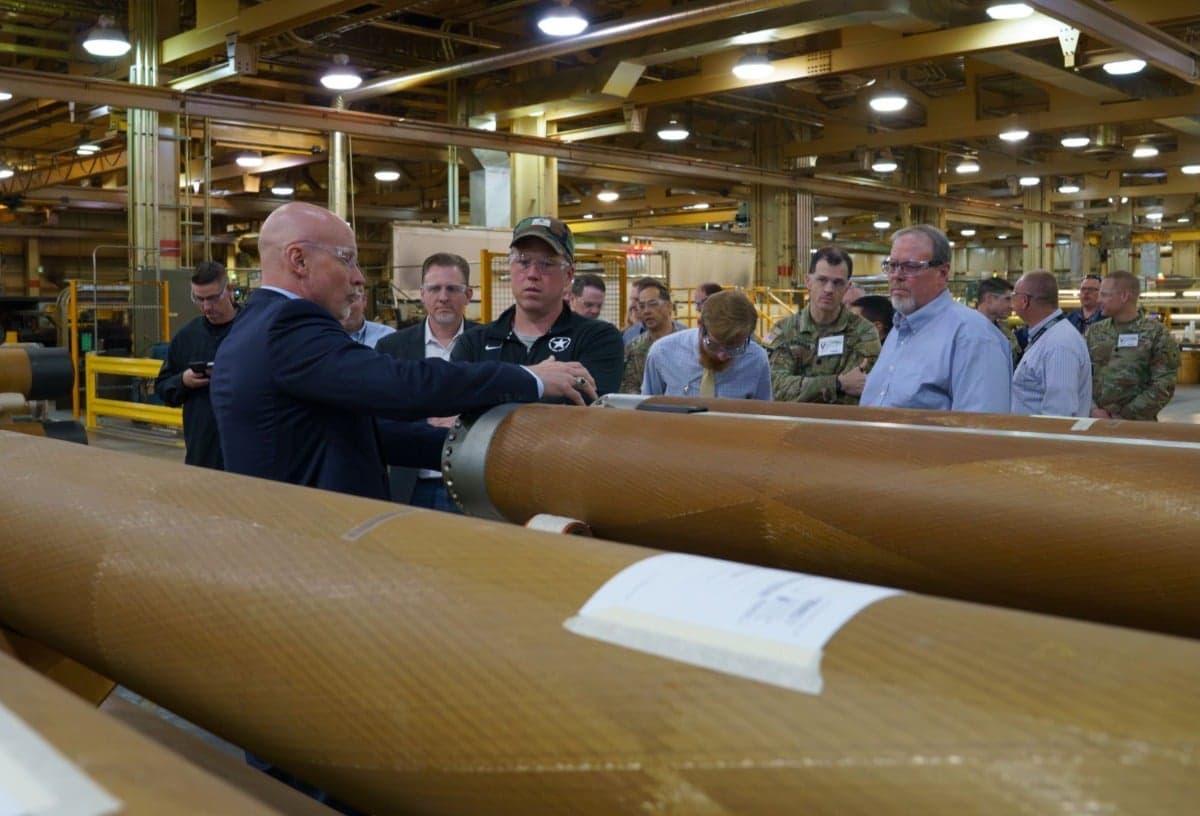
Northrop Grumman Shows U.S. Army Secretary Its Munitions Capacity Push
Companies Mentioned
Why It Matters
Accelerating propulsion and munitions output directly addresses critical supply‑chain gaps exposed by recent conflicts, ensuring the Army can meet heightened demand for artillery, missiles and interceptors. The focus on domestic capacity strengthens U.S. defense readiness and creates sustained market opportunities for contractors.
Key Takeaways
- •Army Secretary visited Northrop's West Virginia propulsion lab.
- •Northrop invested over $2 billion in munitions R&D and capacity.
- •Allegany Lab specializes in solid rocket motor design since 1945.
- •Visit underscores urgency to replenish depleted artillery and missile stocks.
- •Propulsion capacity directly impacts Patriot interceptors and HIMARS output.
Pulse Analysis
The U.S. Army’s recent stockpile shortfalls, highlighted by sustained ammunition shipments to Ukraine, have forced senior leaders to scrutinize the nation’s defense industrial base. Secretary Dan Driscoll’s on‑site tour of Northrop Grumman’s Allegany Ballistics Laboratory reflects a broader effort to accelerate production of rockets, artillery shells and missile interceptors. By directly engaging with manufacturers, the Army aims to compress lead times that historically stretched months, ensuring that frontline units receive the munitions they need faster than in previous conflicts.
Northrop Grumman has earmarked more than $2 billion for munitions research, development and capacity expansion, positioning the company as a linchpin in the Army’s modernization agenda. The Allegany facility, operating since 1945, houses a multigenerational workforce that designs and builds solid‑propellant rocket motors for systems ranging from tactical missiles to the HIMARS and MLRS launchers. Recent upgrades have boosted line‑rate output and introduced advanced composite propellants, enabling faster scaling of production to meet the heightened demand for long‑range fires and air‑defense interceptors.
The heightened focus on propulsion capacity signals a shift toward a more resilient, domestically sourced munitions supply chain. As NATO allies increase orders for Patriot interceptors and the Army pursues higher rates of artillery and missile production, contractors that can rapidly scale solid‑rocket manufacturing will capture a larger share of future defense budgets. Policymakers are likely to sustain or expand funding for industrial‑base initiatives, making the next few years critical for firms that have already invested in facilities like Allegany to solidify their market position. These dynamics also create opportunities for smaller suppliers to integrate into the propulsion ecosystem.
Northrop Grumman shows U.S. Army secretary its munitions capacity push
Comments
Want to join the conversation?
Loading comments...