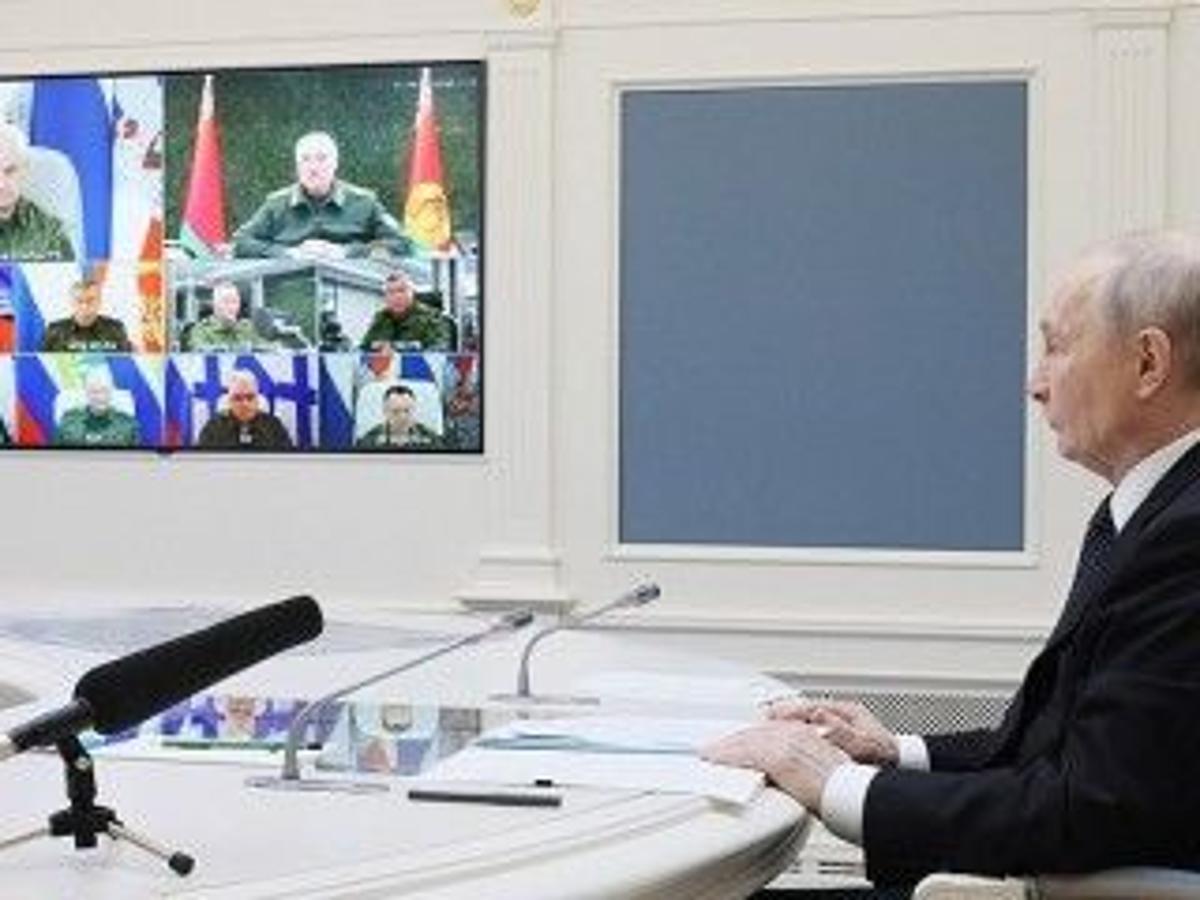
Nuclear Exercise Involving the Belarusian Iskander-M
Why It Matters
The exercise signals deeper nuclear cooperation between Russia and Belarus, raising strategic stakes for NATO and reshaping the security calculus in Eastern Europe. It also demonstrates Belarus’s growing role in Russia’s nuclear posture, potentially altering deterrence dynamics.
Key Takeaways
- •First joint Putin‑Lukashenko directed nuclear drill
- •Belarus launched live Iskander‑M missile
- •Russia fired Yars ICBM, Zircon hypersonic, Sineva submarine missile
- •Delivery of Russian nuclear warheads to Belarusian reception points
- •Exercise expands Belarusian role in Russia’s nuclear strategy
Pulse Analysis
The joint nuclear drill marks a watershed in Moscow‑Minsk security ties, reflecting years of gradual integration that began with the 1992 Treaty on Friendship and later the 2022 agreement allowing Russian tactical nuclear weapons on Belarusian soil. By moving beyond ceremonial displays to operational testing, both leaders signal a willingness to embed Belarus more firmly into Russia’s strategic deterrent architecture, a step that analysts view as a response to heightened NATO activity in the region.
During the two‑day exercise, Russian forces demonstrated the full spectrum of its strategic arsenal: a Yars intercontinental ballistic missile from Plesetsk, a hypersonic Zircon launched from a Barents Sea frigate, and a Sineva missile fired by a nuclear‑powered submarine. Belarus contributed a live launch from its 465th Missile Brigade’s Iskander‑M system, a capability traditionally limited to short‑range, conventional strikes. The inclusion of this operational‑tactical missile, capable of carrying both ballistic and cruise warheads, illustrates Belarus’s expanding strike portfolio and its potential to host Russian nuclear assets.
The broader implications are profound. NATO members now face a more integrated Russian‑Belarusian nuclear posture that blurs the line between tactical and strategic weapons, complicating deterrence calculations. The drill also serves a domestic propaganda purpose for Lukashenko, reinforcing his image as a sovereign statesman while cementing his regime’s reliance on Russian security guarantees. For policymakers, the exercise underscores the urgency of diplomatic engagement and defense readiness to address a rapidly evolving threat environment in Eastern Europe.
Nuclear exercise Involving the Belarusian Iskander-M
Comments
Want to join the conversation?
Loading comments...