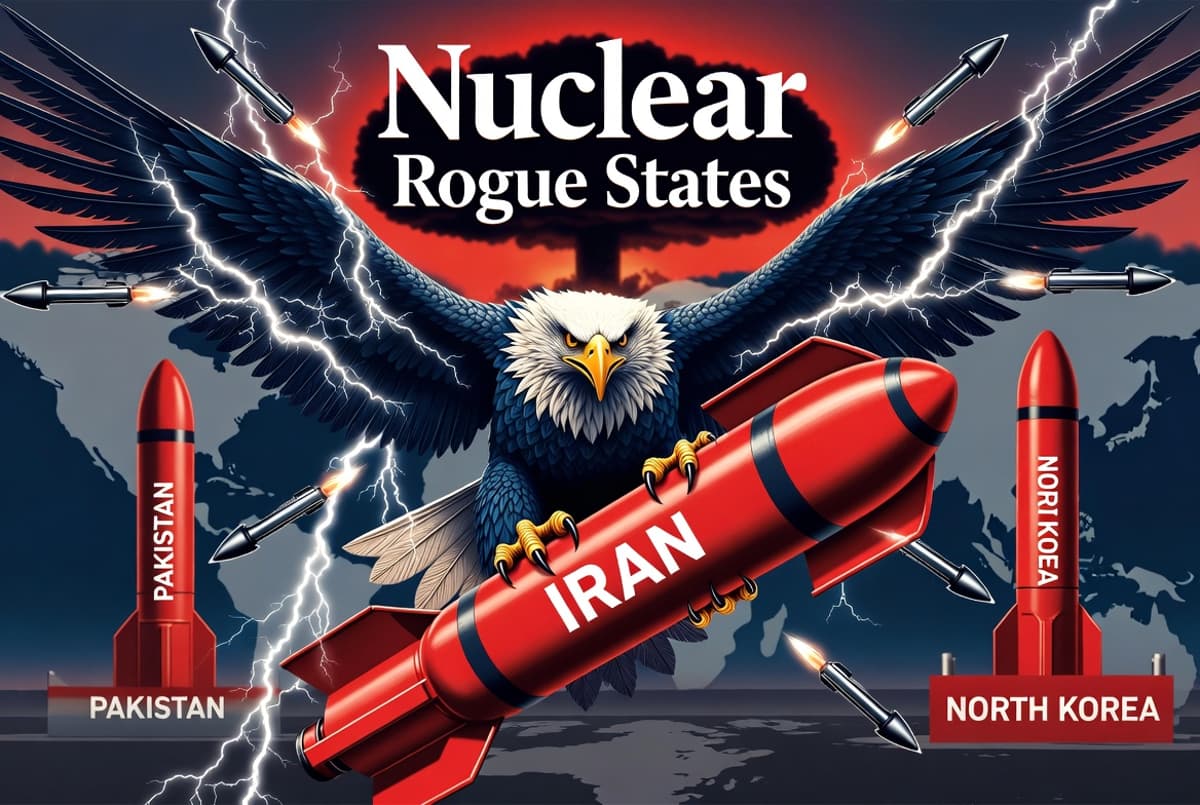
Nuclear “Rogue States”: Why U.S. Is Hell-Bent To Kill Iran’s Nuke Program More Than Pakistan or North Korea? OPED
Why It Matters
Stopping Iran before it crosses the weapons threshold is seen as a high‑reward, feasible goal that could prevent a destabilizing Middle‑East arms race, whereas existing nuclear states are treated as established deterrents.
Key Takeaways
- •Iran holds ~440 kg of 60% enriched uranium, enough for several bombs
- •US strikes in 2025 targeted Natanz, accelerating Iran's clandestine facilities
- •Pakistan and North Korea already nuclear; US focus differs over proliferation risk
- •Regional rivals fear Iran's nuclear capability could spark Middle East arms race
- •IAEA still denied access, limiting verification of Iran's peaceful claims
Pulse Analysis
The United States’ heightened focus on Iran’s nuclear program reflects a strategic calculus that differs from its approach to established nuclear powers like Pakistan and North Korea. Iran’s 60%‑enriched uranium stockpile, estimated at 440 kilograms, sits just below weapons‑grade thresholds, meaning a modest additional enrichment step could yield multiple warheads. This proximity to a breakout point, combined with Iran’s ballistic‑missile capabilities and its support for proxy groups, creates a unique risk profile that policymakers view as both urgent and preventable, unlike the entrenched arsenals of Pakistan and North Korea which are already integrated into their national security doctrines.
Regional dynamics amplify the urgency. A nuclear‑armed Tehran would fundamentally alter the security calculus of the Middle East, prompting Saudi Arabia, the United Arab Emirates and possibly Turkey to consider their own nuclear options. Such a cascade would erode the non‑proliferation regime and increase the likelihood of nuclear material falling into the hands of non‑state actors. The U.S. and Israel therefore prioritize diplomatic pressure, sanctions, and kinetic actions—such as the 2025 strikes on Natanz and Esfahan—to keep Iran’s enrichment program under strict oversight and to signal the high cost of crossing the red line.
In contrast, the United States treats Pakistan and North Korea as de‑facto nuclear states, focusing on containment rather than elimination. Pakistan’s arsenal serves as a deterrent against India, while North Korea’s missiles pose a direct threat to U.S. interests. Because these regimes already possess delivery systems and have demonstrated a willingness to use nuclear rhetoric, the U.S. strategy leans toward deterrence, sanctions, and diplomatic isolation. Iran, however, remains at a threshold stage where decisive action could halt its progression, making the U.S. stance appear more aggressive but also more strategically justified.
Nuclear “Rogue States”: Why U.S. is Hell-Bent To Kill Iran’s Nuke Program More Than Pakistan or North Korea? OPED
Comments
Want to join the conversation?
Loading comments...