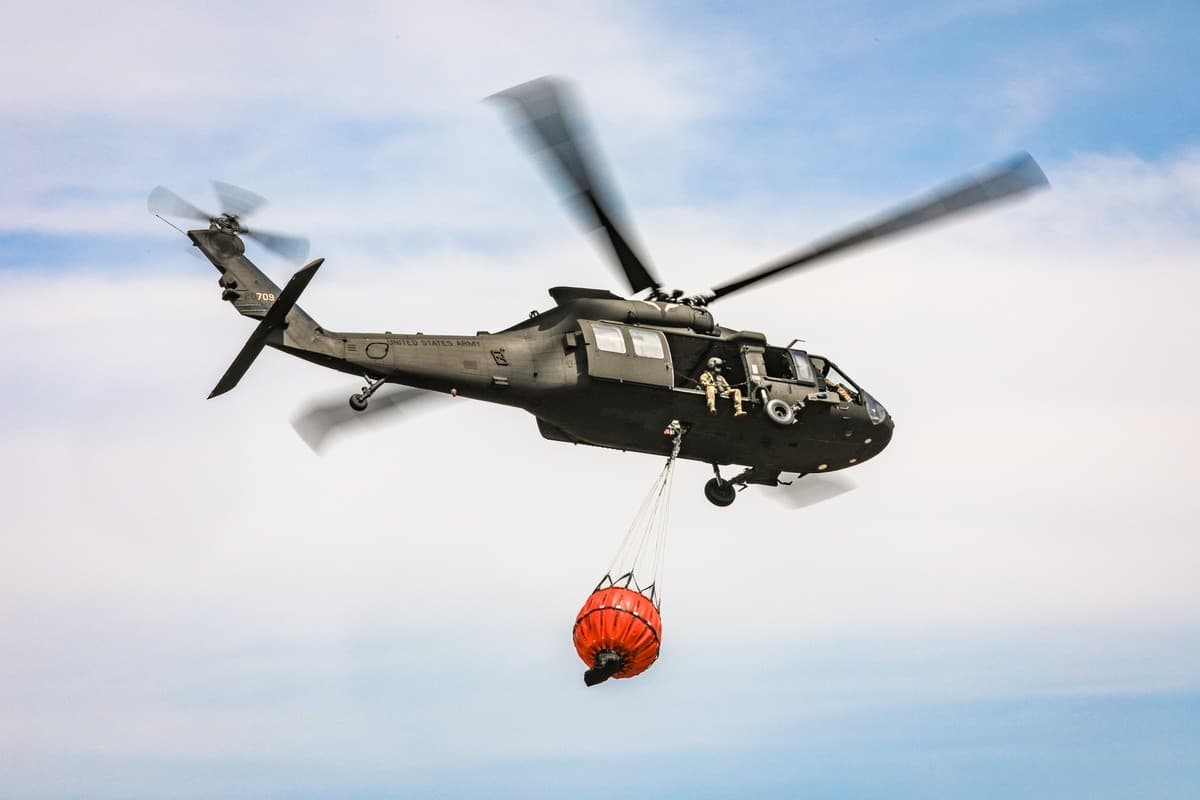
Oklahoma Army National Guard Deploys for Fire Suppression Mission
•February 25, 2026
0
Why It Matters
The deployment demonstrates how state National Guard assets can rapidly augment civilian fire‑fighting resources, improving response times amid rising wildfire threats and reinforcing interagency collaboration.
Key Takeaways
- •Guard deployed UH‑60 Black Hawks with 660‑gallon buckets.
- •Two ground crews of 8‑10 red‑card certified firefighters.
- •Eighty certified guardsmen ready for state fire missions.
- •Program trained 130 firefighters in past two years.
- •Response coordinated via Emergency Management, governor, and agencies.
Pulse Analysis
Wildfire activity across the central United States has surged in recent years, driven by hotter, drier conditions and expanding development into fire‑prone landscapes. In this environment, the Oklahoma Army National Guard’s ability to field UH‑60 Black Hawk helicopters with high‑capacity water buckets provides a critical aerial asset that can reach remote hotspots faster than ground crews alone. The 660‑gallon drops not only suppress flames directly but also create moisture barriers that protect containment lines, buying valuable time for local firefighters.
Beyond the helicopters, Oklahoma’s Wildland Firefighting Program has invested heavily in specialized training, awarding the nationally recognized Red Card to over 130 soldiers in the past two years. Red‑card certification ensures that Guard members meet stringent standards for wildland fire tactics, safety, and incident command integration. With 80 certified personnel currently available, the Guard can field two fully staffed crews, each comprising eight to ten firefighters, to operate under state incident command structures. This seamless integration is facilitated by the Domestic Operations Office, which coordinates with the Office of Emergency Management, the Department of Public Safety, and Forestry Services to align resources with tactical needs.
The successful deployment highlights a model for other states seeking to bolster their emergency response capabilities. By maintaining a ready pool of trained Guard firefighters and leveraging existing aviation assets, Oklahoma reduces reliance on costly mutual‑aid agreements and improves overall resilience. As climate change continues to amplify fire risk, the Guard’s dual‑role capacity—combining rapid aerial suppression with disciplined ground crews—offers a scalable solution that can be replicated nationwide, ensuring communities receive swift, coordinated protection when wildfires strike.
Oklahoma Army National Guard Deploys for Fire Suppression Mission
0
Comments
Want to join the conversation?
Loading comments...