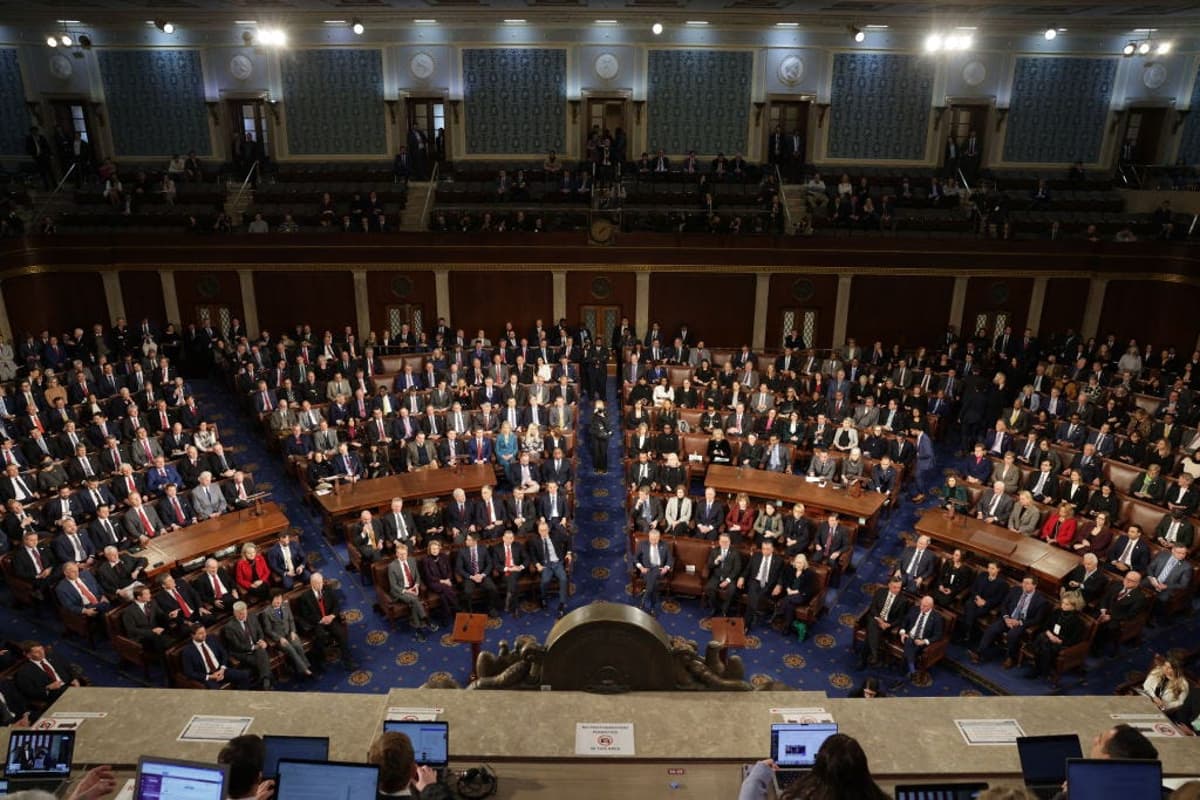
Once Again, Congress Has Failed to Use Its Constitutional Powers to End the President’s Ridiculous War
Why It Matters
The failure underscores Congress’s diminishing role in checking executive military action, raising concerns about unchecked war powers. Ongoing geopolitical frictions, including U.S.–Cuba strains, could further entangle U.S. foreign commitments.
Key Takeaways
- •Senate rejected war‑powers resolution 52‑47, crossing party lines.
- •Rand Paul voted Democrat, John Fetterman voted Republican.
- •Democrats pledge to keep war‑powers bills until conflict ends.
- •Pentagon readies contingencies amid escalating U.S.–Cuba tensions.
- •Iran referenced in debate, highlighting geopolitical complexities.
Pulse Analysis
The constitutional balance between Congress and the president on war powers has been tested repeatedly since World War II, yet the Senate’s recent 52‑47 vote illustrates a persistent reluctance to assert legislative authority. Historically, Congress has struggled to translate its power to declare war into actionable restraints, often ceding ground to executive momentum. This latest defeat of a war‑powers resolution—prompted by concerns over a potential “international genocide”—reinforces the pattern of legislative inertia, even as the conflict’s human and fiscal costs mount.
Politically, the vote revealed an unusual cross‑party alignment: Republican Rand Paul sided with Democrats, while Democrat John Fetterman broke ranks with his caucus. Such deviations highlight growing fractures within party orthodoxy on foreign‑policy oversight. Democrats have pledged to reintroduce war‑powers bills until a formal congressional declaration or explicit authorization is secured, signaling a strategic shift toward incremental pressure rather than a single decisive vote. The bipartisan nature of the dissent suggests that future attempts may gain traction if legislators frame the issue around constitutional duty rather than partisan ideology.
Beyond the war‑powers debate, the United States faces escalating tensions with Cuba, where recent restrictions on oil shipments have prompted the Pentagon to develop contingency plans. This broader geopolitical backdrop, coupled with references to Iran during the Senate debate, underscores the complex web of regional conflicts that can draw U.S. forces into extended engagements. As the executive branch signals readiness to act on presidential directives, the lack of congressional check raises strategic risks, potentially committing resources to multiple fronts without clear legislative oversight.
Once Again, Congress Has Failed to Use Its Constitutional Powers to End the President’s Ridiculous War
Comments
Want to join the conversation?
Loading comments...