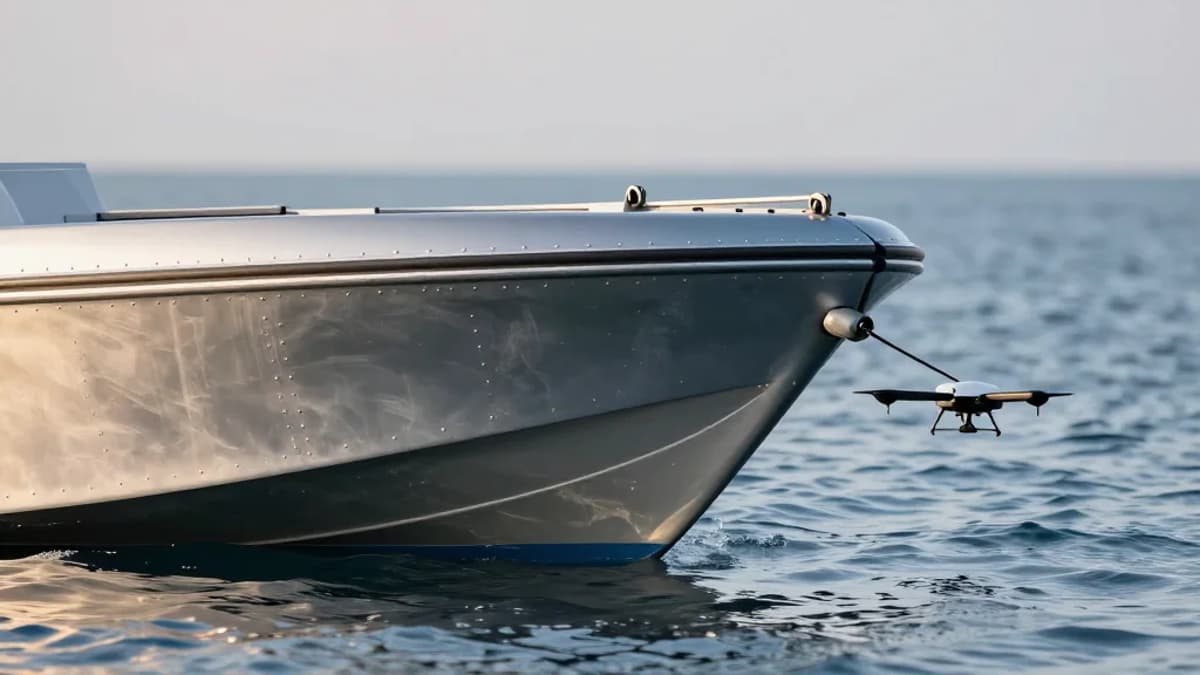
One Hull for Today’s Crews and Tomorrow’s Unmanned Missions: Cross Water Positions Modular Aluminium RIB as a Transition Platform
•February 24, 2026
0
Why It Matters
The solution offers operators a cost‑effective bridge between reliable manned craft and emerging autonomous missions, preserving fleet investment while reducing future procurement risk.
Key Takeaways
- •Long-life aluminium hull targets 25‑plus year service life
- •Deck modules swap without structural refit, enabling mission changes
- •Platform supports stepwise autonomy, from data logging to remote operation
- •TRL‑8 demonstrated in Baltic winter conditions with diverse users
- •1.5× buoyancy ensures stability with heavy payloads and varied layouts
Pulse Analysis
The maritime sector faces a paradox: operators must keep crewed craft ready for daily missions while simultaneously preparing for autonomous vessels that are still maturing across regulations, training and maintenance regimes. Cross Water Production’s modular aluminium RIB answers this dilemma by offering a single, durable hull that can serve both purposes. By treating the hull as a 25‑plus‑year asset and decoupling mission equipment from the structure, the company gives navies and commercial users a cost‑effective bridge between today’s manned operations and tomorrow’s unmanned concepts.
The technical foundation rests on a reinforced aluminium hull with a buoyancy factor of roughly 1.5 × the fully‑loaded displacement, delivering high reserve buoyancy and seakeeping in harsh environments. Above the hull, the deck is organized into standardized ‘integration zones’ where consoles, seating, casualty‑care stations, dive‑support workspaces and sensor suites can be swapped in minutes without structural refits. This plug‑and‑play architecture simplifies logistics, reduces downtime, and aligns with existing maintenance cycles, while also providing the power distribution and cable routing needed for future autonomy packages.
For procurement officers, the platform translates into measurable lifecycle savings. Instead of purchasing separate fleets for crewed and unmanned roles, agencies can invest in a single hull and upgrade incrementally—from basic instrumentation and health‑monitoring to supervised remote control and full autonomy—matching budgetary constraints and regulatory readiness. The TRL‑8 status, validated in Baltic winter trials with navy, police and special‑operations units, reinforces confidence in operational reliability. As more maritime missions demand rapid reconfiguration and scalable autonomy, Cross Water’s modular RIB is poised to become a reference model for flexible, future‑proof small‑craft fleets.
One hull for today’s crews and tomorrow’s unmanned missions: Cross Water positions modular aluminium RIB as a transition platform
0
Comments
Want to join the conversation?
Loading comments...