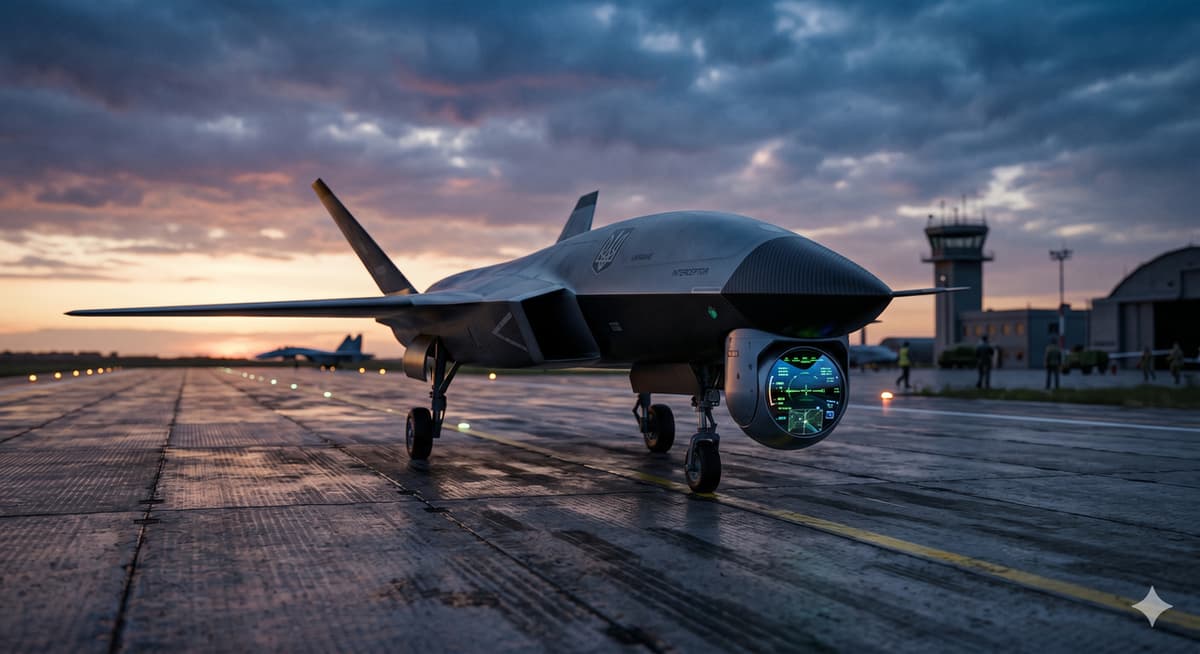
One Year Ago, Ukraine Launched Operation Spiderweb to Destroy Billions of Dollars Worth of Russian Combat Planes – It 'Served as a Warning to the United States'

Companies Mentioned
Why It Matters
The strike demonstrates that low‑cost drone swarms can cripple high‑value air assets, forcing militaries—including the United States—to rethink defense doctrines and accelerate counter‑drone investments.
Key Takeaways
- •Ukraine destroyed up to 41 Russian aircraft, claiming $7 bn damage.
- •Attack used 117 low‑cost drones assembled from smuggled parts.
- •Drones were remotely activated via Russian cellular networks, evading detection.
- •Strike hit five airfields, including Belaya 4,300 km from Ukraine.
- •Highlights need for new doctrine and counter‑drone investments worldwide.
Pulse Analysis
Operation Spiderweb marked a watershed moment in modern warfare by proving that a relatively cheap, swarming drone fleet can inflict damage measured in billions of dollars. Ukraine’s SBU spent 18 months covertly moving drone components across borders, assembling 117 units in concealed trucks, and exploiting Russian cellular infrastructure to command the aircraft from a distance. The resulting strikes hit five strategic airfields, including a deep‑strike on Belaya in Siberia, and reportedly knocked out or damaged 41 combat planes—an outcome that dwarfs the $26 million loss figure offered by Moscow.
The implications for Western militaries are immediate and profound. The United States, with its extensive network of carriers, bases and domestic installations, has already begun fielding laser, microwave and electronic‑warfare counter‑drone systems, yet the Spiderweb attack exposes gaps in perimeter protection and asset hardening. Traditional air‑defense radars struggle against low‑observable, low‑altitude FPV platforms that can be launched from civilian‑type vehicles, prompting a doctrinal shift toward layered, AI‑driven detection and rapid‑response neutralization. Budget planners are now weighing the cost‑effectiveness of proliferated low‑cost drones against the expense of protecting multi‑billion‑dollar platforms.
Beyond the tactical realm, Spiderweb signals a broader strategic transition toward asymmetric, cost‑asymmetric conflict. Nations that can mass‑produce inexpensive drones—such as Iran’s $20,000 Shahed—gain a lever to challenge technologically superior adversaries without incurring prohibitive expenditures. As drone technology becomes more modular and stealth‑coated, the threshold for achieving strategic effects lowers, compelling policymakers to integrate counter‑drone considerations into overall defense doctrine, procurement cycles, and alliance interoperability. The era of relying solely on high‑end weaponry to guarantee deterrence is waning; adaptability and resilience against swarming drones will define future battlefield superiority.
One year ago, Ukraine launched Operation Spiderweb to destroy billions of dollars worth of Russian combat planes – It 'served as a warning to the United States'
Comments
Want to join the conversation?
Loading comments...