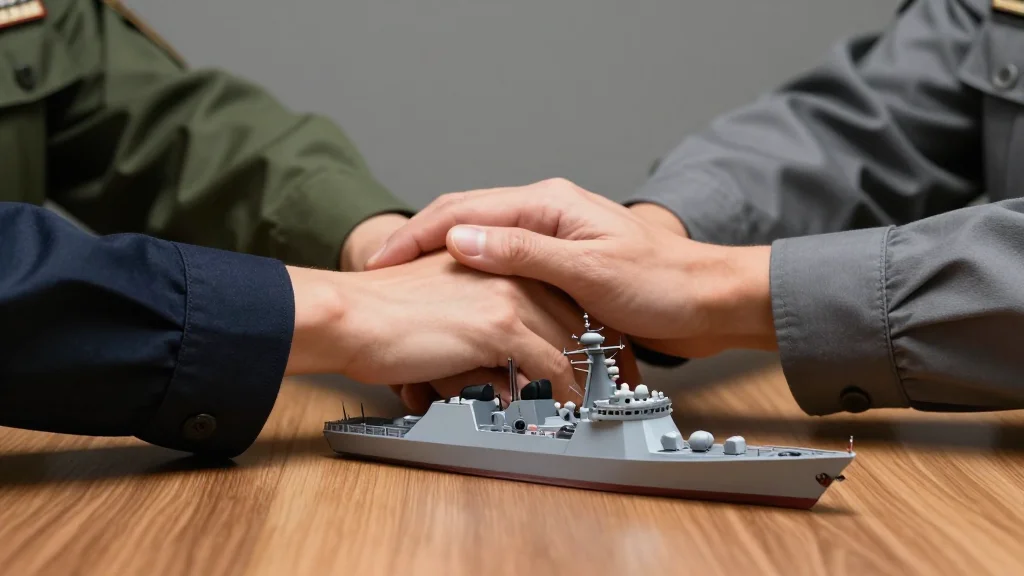
Optimizing Defense Requirements Cooperation Among the United States and Its Allies
Why It Matters
Coordinated reforms promise faster delivery of cutting‑edge capabilities, strengthening collective defense against near‑peer threats. Harmonizing requirements reduces cost overruns and improves interoperability across U.S., UK, and Australian forces.
Key Takeaways
- •US, UK, Australia overhaul defense acquisition for faster delivery
- •US disbands Joint Capabilities Integration and Development System
- •Australia adopts One Defence Capability System for streamlined procurement
- •UK Defence Reform targets speed and resilience after Ukraine war
- •Cooperation could align requirements, reduce duplication, boost deterrence
Pulse Analysis
The shifting security landscape—driven by China’s maritime expansion, Russia’s aggression in Europe, and a series of regional flashpoints—has forced traditional allies to rethink how they buy and field weapons. In the United States, the President’s directive for acquisition reform aims to cut bureaucratic lag, culminating in the Pentagon’s decision to dissolve the Joint Capabilities Integration and Development System, a legacy structure that often slowed capability delivery. Meanwhile, Australia’s One Defence Capability System centralizes prioritization, emphasizing minimum viable capabilities and off‑the‑shelf solutions to accelerate fielding. The United Kingdom’s Defence Reform, spurred by lessons from Ukraine, similarly seeks to streamline requirements, shorten procurement cycles, and embed resilience into its force structure.
Despite differing institutional histories, the three nations share common reform themes: centralized decision‑making, a focus on rapid, affordable procurement, and an emphasis on interoperability. By aligning their requirement‑setting processes, they can pool intelligence, share technology roadmaps, and avoid redundant development programs. For example, a joint standards framework for unmanned systems could allow each country to procure compatible platforms, reducing lifecycle costs and simplifying logistics. Moreover, synchronized acquisition timelines enable coordinated training and joint exercises, enhancing readiness against shared threats in the Indo‑Pacific and European theaters.
Realizing these benefits, however, requires overcoming entrenched national procurement cultures and reconciling divergent budget cycles. RAND’s analysis suggests that formal mechanisms—such as a trilateral requirements council and shared data repositories—could bridge gaps and institutionalize cooperation. As the allies move forward, the ability to jointly define and fund capability gaps will be a decisive factor in maintaining a credible deterrent posture and ensuring that limited defense dollars translate into maximum strategic impact.
Optimizing Defense Requirements Cooperation Among the United States and Its Allies
Comments
Want to join the conversation?
Loading comments...