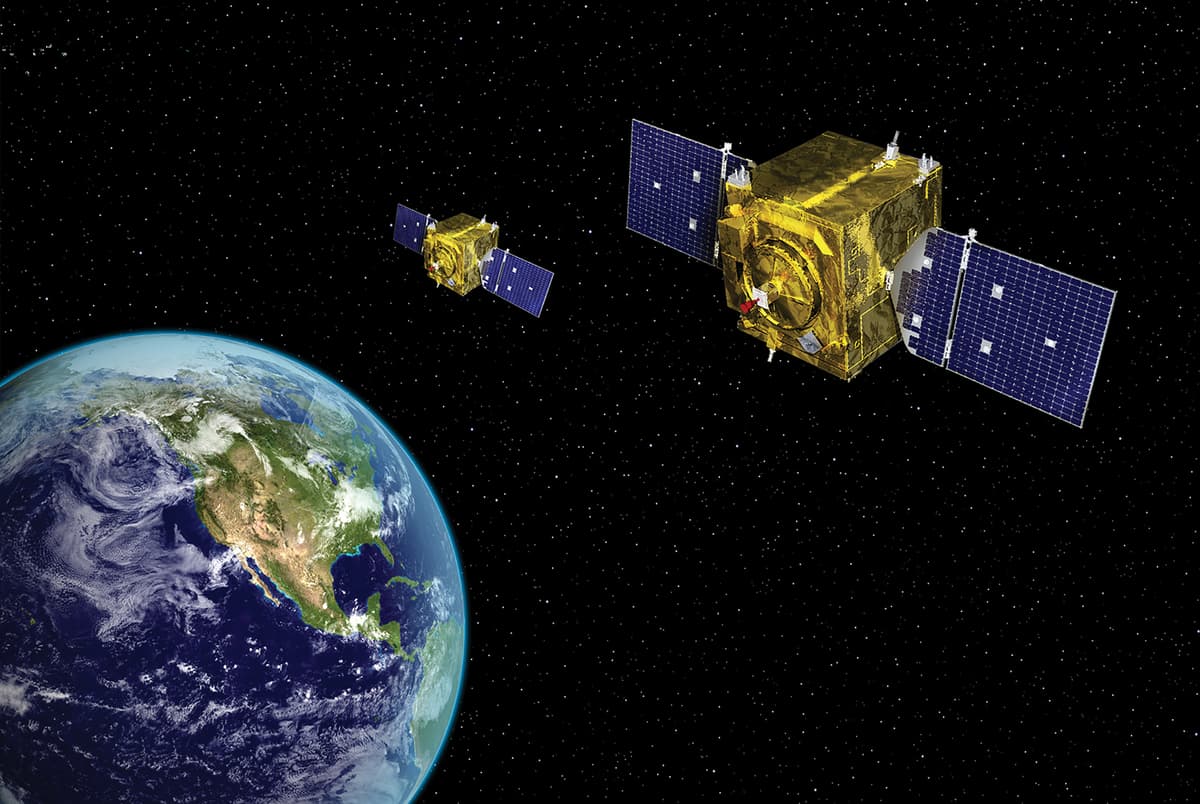
Orbital Warfare Unit Gets Live Satellite to Practice Maneuvers
•February 26, 2026
0
Why It Matters
Realistic training boosts U.S. space warfighting readiness and guides the design of agile, fuel‑efficient satellites, a critical edge as adversaries develop anti‑satellite capabilities.
Key Takeaways
- •Live satellite enables realistic orbital warfare training
- •Training informs tactics, techniques, procedures for space maneuvers
- •Supports development of dynamic, fuel‑efficient satellite propulsion
- •Guides acquisition of future on‑orbit training assets
- •Complements near‑term servicing and refueling demonstration programs
Pulse Analysis
The Space Force’s decision to field a live training satellite marks a watershed moment for orbital warfare preparation. Until now, crews relied on static or commercial‑type simulators that could not replicate the high‑speed, high‑precision maneuvers required in contested space. By launching a purpose‑built demonstrator on the USSF‑87 mission, Mission Delta 9 can now execute real‑world rendezvous, proximity operations, and aerobraking drills, mirroring the challenges of future combat satellites. This shift mirrors the broader military trend of moving from theoretical exercises to kinetic, on‑orbit rehearsals, ensuring operators develop muscle memory and decision‑making skills under authentic conditions.
Beyond training, the satellite serves as a testbed for emerging concepts such as dynamic space operations, where satellites must rapidly shift orbits to evade threats or reposition for mission objectives. The ability to practice fuel‑efficient maneuvers like aerobraking directly informs the development of next‑generation propulsion systems and on‑orbit servicing technologies. As propulsion advances, the Space Force anticipates a new class of satellites capable of frequent, low‑cost orbit changes, reducing vulnerability to anti‑satellite weapons and enhancing resilience of critical space assets.
Strategically, the live satellite initiative dovetails with upcoming demonstrations on on‑orbit servicing, refueling, and modular payload swaps slated for the mid‑2020s. By integrating training data with acquisition pipelines, the service can refine requirements for future operational satellites and ensure that new hardware aligns with proven tactics. Partnerships with other defense agencies and commercial partners further expand the pool of available training assets, accelerating the rollout of a robust, adaptable space warfighting capability that keeps pace with evolving threats.
Orbital Warfare Unit Gets Live Satellite to Practice Maneuvers
0
Comments
Want to join the conversation?
Loading comments...