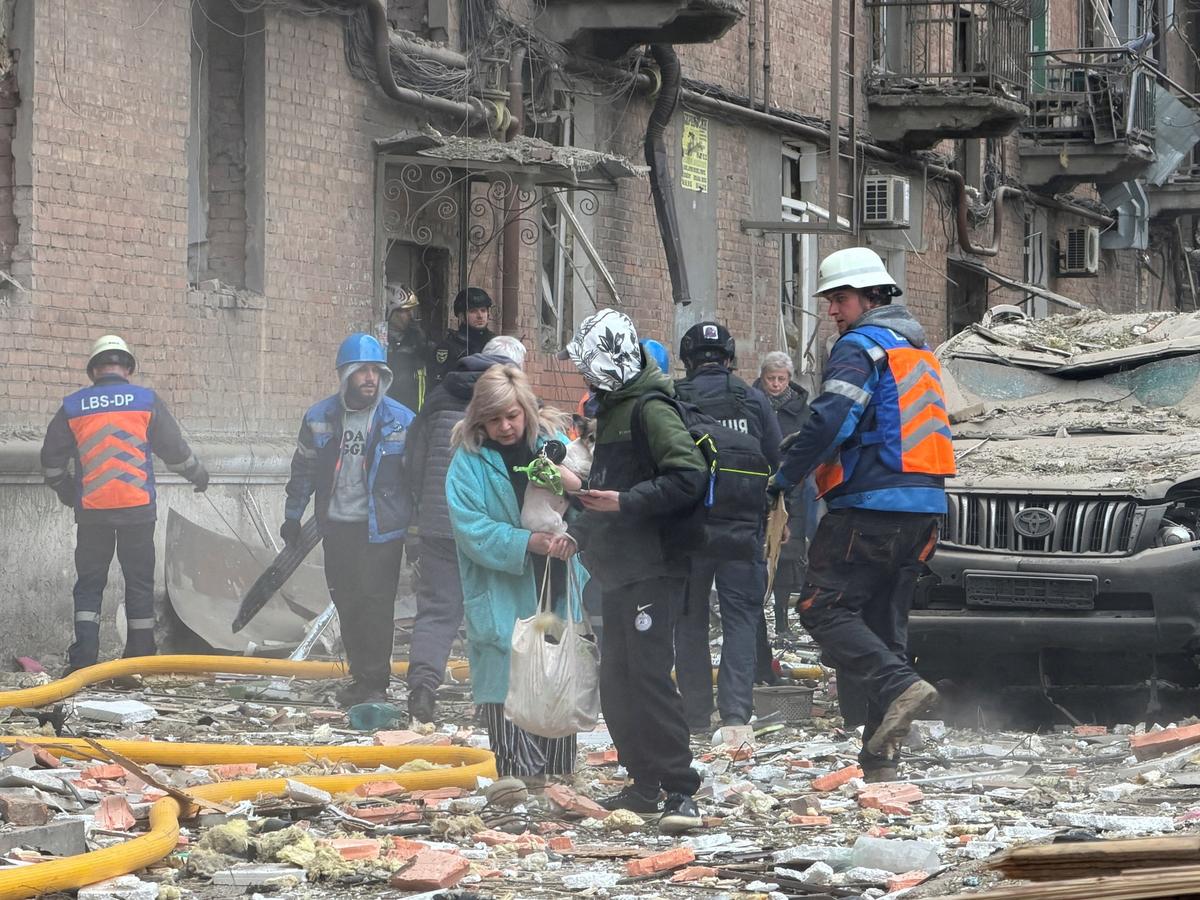
Overnight Russian Attacks on Ukraine Kill Five, Injure 30
Why It Matters
The high‑intensity assault underscores the vulnerability of civilian infrastructure and heightens pressure on European leaders to accelerate sanctions that could curb Russia’s war‑fighting capacity.
Key Takeaways
- •Russia launched 619 drones/missiles across eight Ukrainian regions
- •Ukraine's air defenses intercepted 610 of the incoming attacks
- •Five civilians killed, 30 injured, including children and police officers
- •Damage hit residential buildings, a post office, and a church
- •EU sanctions discussions intensify after the large‑scale Russian strike
Pulse Analysis
The overnight onslaught marks one of the most concentrated uses of unmanned aerial systems in the conflict, with Russia deploying more than 600 drones alongside cruise and ballistic missiles. Ukrainian air‑defence units, bolstered by Western‑supplied systems, managed to neutralise roughly 98% of the threat, a testament to both improved detection networks and the high cost Russia incurs to sustain such sorties. Nonetheless, the residual strikes inflicted significant civilian harm, highlighting the persistent challenge of protecting densely populated urban centers like Dnipro, where schools, homes and essential services were directly targeted.
Strategically, the attacks serve a dual purpose: they aim to erode morale and force the Ukrainian government to divert resources to emergency response, while also testing the limits of Kyiv’s defensive shield ahead of anticipated diplomatic moves. President Zelensky’s appeal to European leaders for a swift sanctions package reflects a broader calculus—by tightening financial and energy constraints on Moscow, the EU hopes to diminish the Kremlin’s ability to fund and equip large‑scale drone campaigns. The timing aligns with the EU’s stalled 20th sanctions round, where internal dissent, notably from Hungary, has delayed decisive action.
Humanitarian implications remain stark. Casualties include a nine‑year‑old child and a one‑year‑old infant, underscoring the war’s toll on the most vulnerable. International aid agencies are likely to amplify calls for safe corridors and reconstruction funding, while the damage to civic infrastructure such as post offices and churches complicates recovery efforts. As the conflict evolves, the interplay between kinetic attacks and diplomatic pressure will shape both the immediate security environment and the longer‑term prospects for a negotiated settlement.
Overnight Russian attacks on Ukraine kill five, injure 30
Comments
Want to join the conversation?
Loading comments...