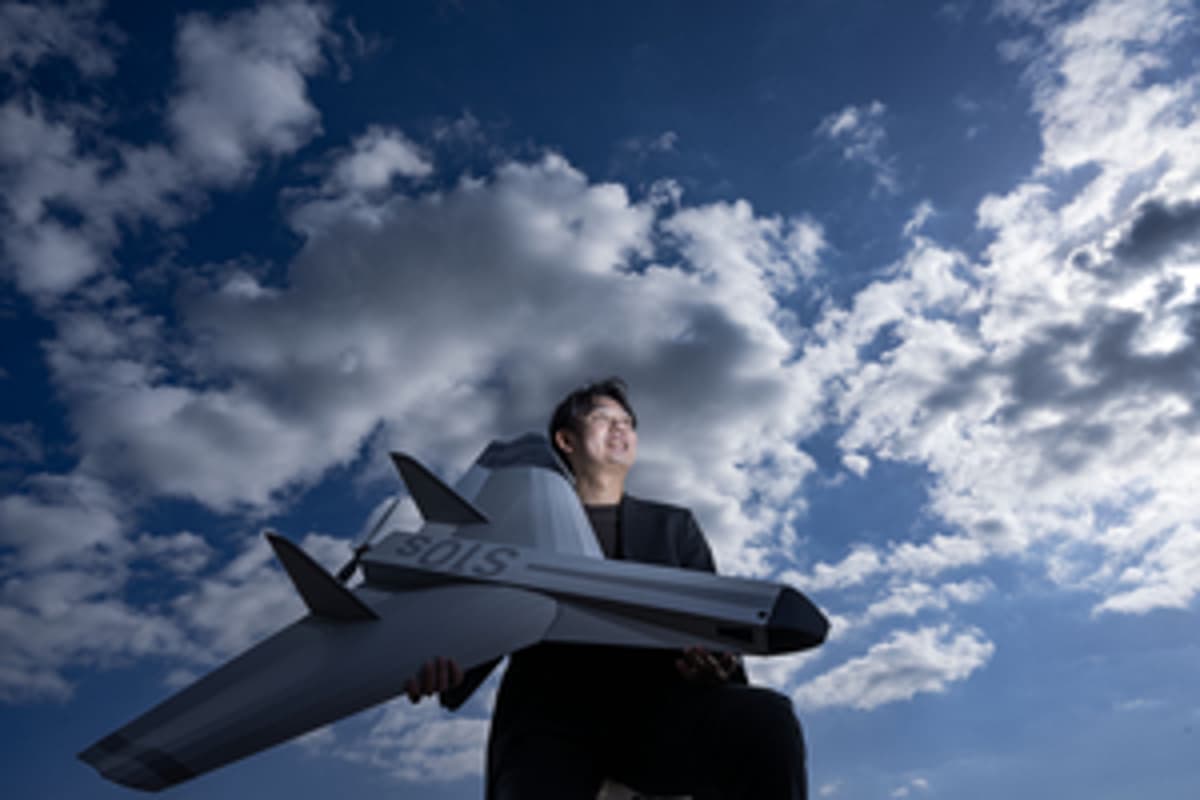
Pablo Air Shoots Higher with AI Drone Swarms
•March 9, 2026
0

Companies Mentioned
Why It Matters
The technology positions Pablo Air as a potential market leader in cost‑effective defense drones and could reshape valuation benchmarks for Korean AI‑hardware firms.
Key Takeaways
- •Achieved Level 4 autonomous drone‑swarm capability
- •Raised 107.5 billion won; targeting KOSDAQ IPO 2026
- •S10 attack drone costs $10,000, undercuts rivals
- •Demo expanding to 300 drones this year
- •Aims for 500 billion won sales by 2030
Pulse Analysis
The rise of AI‑driven drone swarms is redefining modern warfare and commercial logistics, and Pablo Air sits at the forefront of this shift. By achieving Level 4 swarm autonomy—where dozens of drones communicate and adapt in real time—the company offers capabilities previously limited to large defense contractors. Its partnership with KAIST to standardize swarm levels mirrors the automotive industry's SAE framework, promising clearer regulatory pathways and broader industry adoption. This technical edge, combined with a cost‑efficient $10,000 S10 platform, gives Pablo Air a compelling value proposition in a market hungry for affordable precision assets.
Financially, Pablo Air’s recent 107.5 billion won funding round and imminent KOSDAQ listing signal strong investor confidence despite a prior technical review setback. The company’s valuation, estimated at 200 billion won, appears modest when benchmarked against U.S. peers, suggesting upside potential for early shareholders. Its aggressive pricing strategy—delivering a combat‑ready drone at a fraction of traditional costs—could disrupt legacy suppliers and accelerate procurement cycles for defense ministries worldwide. Moreover, the acquisition of component maker Volk equips Pablo Air with in‑house manufacturing capacity, essential for scaling to the projected 300‑drone demonstrations and future mass‑production contracts.
Looking ahead, Pablo Air aims to leverage its swarm software beyond aerial applications, targeting maritime cleaning robots, unmanned submarines, and coordinated ground fleets. Such cross‑domain versatility aligns with the founder’s vision of an all‑in‑one mobility conglomerate akin to Siemens. By positioning itself as a technology hub, the firm plans strategic acquisitions post‑IPO, potentially catalyzing a broader Korean startup ecosystem. If successful, Pablo Air could not only set new standards for autonomous swarms but also reshape how emerging markets approach defense innovation and global expansion.
Pablo Air shoots higher with AI drone swarms
0
Comments
Want to join the conversation?
Loading comments...