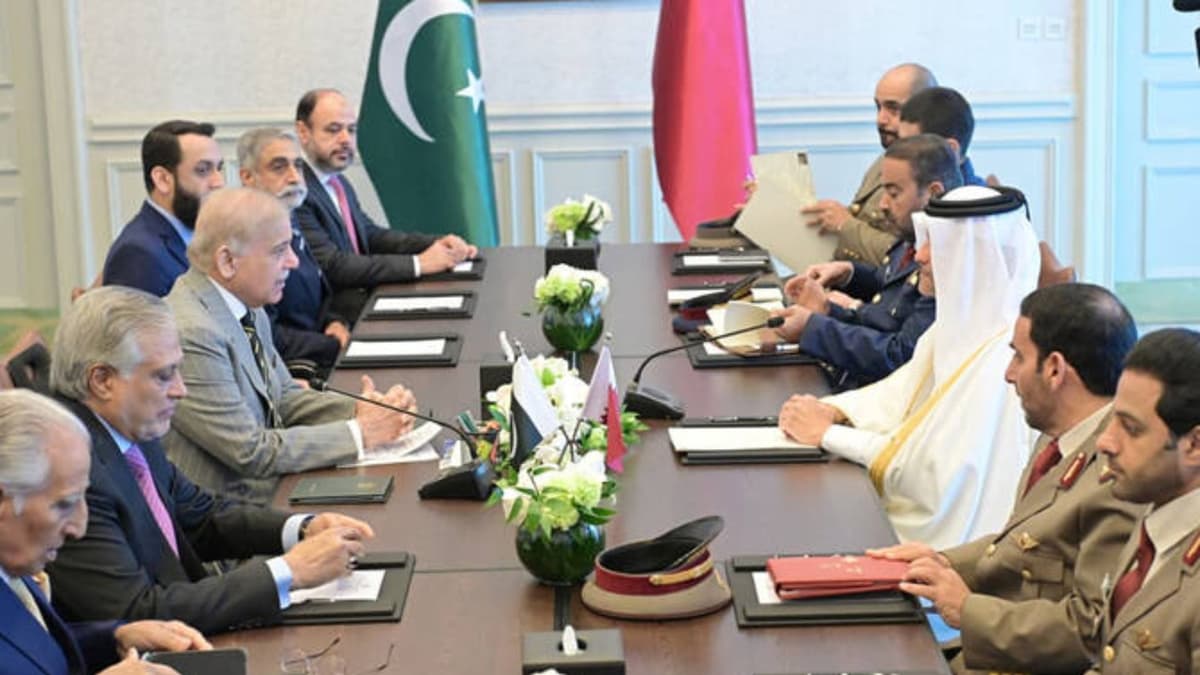
Pakistan and Qatar Reaffirm Defence Cooperation in Doha Talks
•February 25, 2026
0
Why It Matters
The renewed pact strengthens Qatar’s security architecture while giving Pakistan access to Gulf markets and advanced platforms, reshaping regional defence dynamics.
Key Takeaways
- •Doha talks cemented Pakistan‑Qatar defence partnership.
- •Joint exercises and technology sharing slated for 2026‑2027.
- •Qatar seeks diversified security allies beyond traditional partners.
- •Pakistan aims to expand defense exports to Gulf states.
Pulse Analysis
The Doha meeting marks a significant milestone in South‑Asia‑Gulf defence diplomacy. Historically, Pakistan has supplied military hardware and training to Gulf states, but Qatar’s recent emphasis on diversifying its security partners reflects broader concerns about regional volatility. By reaffirming ties, both countries signal a willingness to move beyond ad‑hoc arrangements toward a more structured, long‑term collaboration that leverages Pakistan’s experience in counter‑terrorism and Qatar’s financial resources.
Key components of the renewed cooperation include scheduled joint air and naval exercises, joint‑development projects for unmanned systems, and a framework for technology transfer. These initiatives aim to enhance interoperability and create a shared operational doctrine, which could prove decisive in scenarios ranging from maritime security in the Persian Gulf to counter‑insurgency operations in the broader Middle East. For Pakistan, the partnership offers a gateway to modern Gulf procurement cycles, while Qatar gains a reliable partner capable of providing both hardware and expertise without the political strings often attached to Western suppliers.
Economically, the agreement is poised to boost Pakistan’s defence export portfolio, potentially adding billions of dollars in revenue over the next decade. Geopolitically, it reinforces a multi‑polar security architecture that dilutes reliance on traditional powers such as the United States. As both nations navigate shifting alliances, the Pakistan‑Qatar defence pact could serve as a template for other emerging partnerships seeking strategic depth and fiscal pragmatism.
Pakistan and Qatar Reaffirm Defence Cooperation in Doha Talks
0
Comments
Want to join the conversation?
Loading comments...