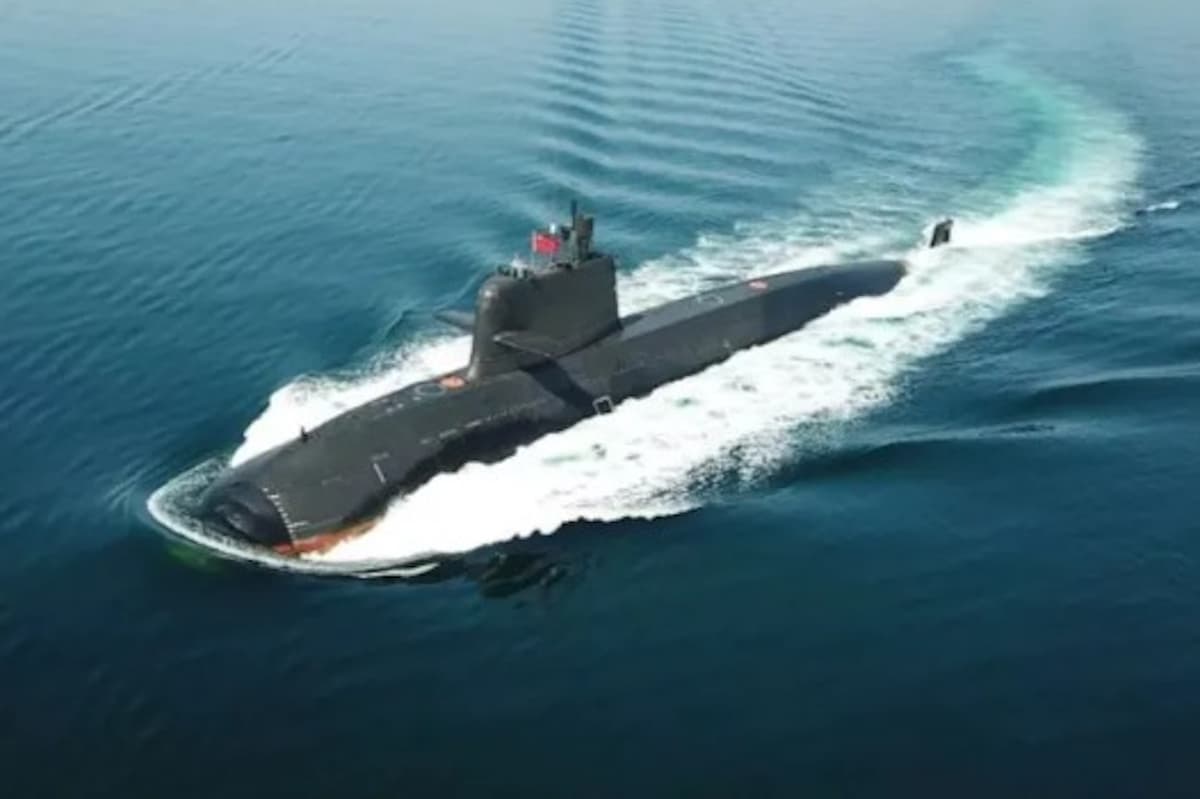
Pakistan’s Hangor Subs Tighten China Link, Test India at Sea
Why It Matters
The Hangor program strengthens Pakistan’s conventional deterrent and complicates Indian naval planning, while cementing China’s role as Pakistan’s primary arms supplier and reshaping undersea dynamics in the Indian Ocean.
Key Takeaways
- •Pakistan commissioned first Chinese-built Hangor-class submarine, PNS/M Hangor.
- •Program targets eight subs: four Chinese-built, four locally produced via tech transfer.
- •Submarines boost Pakistan's anti-access/area-denial but not decisive against India.
- •China supplies about 61% of Pakistan's arms, deepening strategic partnership.
- •Hangor subs increase undersea surveillance, raising operational costs for Indian navy.
Pulse Analysis
Pakistan’s naval modernization gained a visible boost in early 2026 with the commissioning of PNS/M Hangor, the first of a planned eight‑submarine fleet. The Hangor‑class, an export variant of China’s Yuan design, incorporates air‑independent propulsion that allows extended submerged operations without surfacing for snorkels. Equipped with 53‑mm torpedo tubes, the vessels can launch heavyweight Yu‑6 torpedoes and anti‑ship cruise missiles, giving Pakistan a credible conventional strike platform. The program’s dual‑track approach—four submarines built in Chinese shipyards and four assembled domestically under a technology‑transfer agreement—aims to develop indigenous expertise while ensuring rapid capability growth.
Beyond the hardware, the Hangor rollout reflects the deepening strategic alignment between Islamabad and Beijing. China now accounts for roughly 61% of Pakistan’s arms imports, a share that translates into extensive training, spare‑parts logistics, and integrated ISR support. This partnership not only fills capability gaps left by India’s larger navy but also embeds Pakistani forces within China’s broader maritime doctrine, including joint exercises and shared intelligence. The submarines’ primary role is expected to be conventional sea‑denial, complicating Indian anti‑submarine warfare (ASW) planning and raising the cost of maintaining freedom of navigation in the western Indian Ocean.
Regionally, the addition of Hangor submarines nudges the undersea balance toward a more contested environment. While India retains a numerical advantage—16 submarines versus Pakistan’s five—the new Pakistani assets increase the uncertainty of any maritime crisis, forcing India to allocate more ASW resources and potentially altering its carrier strike group deployments. The development also signals to other Indian Ocean actors that China‑Pakistan cooperation can produce advanced, export‑derived platforms, reinforcing a nascent “two‑front” challenge to Indian security. As the Indo‑Pacific rivalry intensifies, the Hangor program illustrates how mid‑tier powers leverage great‑power partnerships to amplify their deterrent posture without achieving outright parity.
Pakistan’s Hangor subs tighten China link, test India at sea
Comments
Want to join the conversation?
Loading comments...