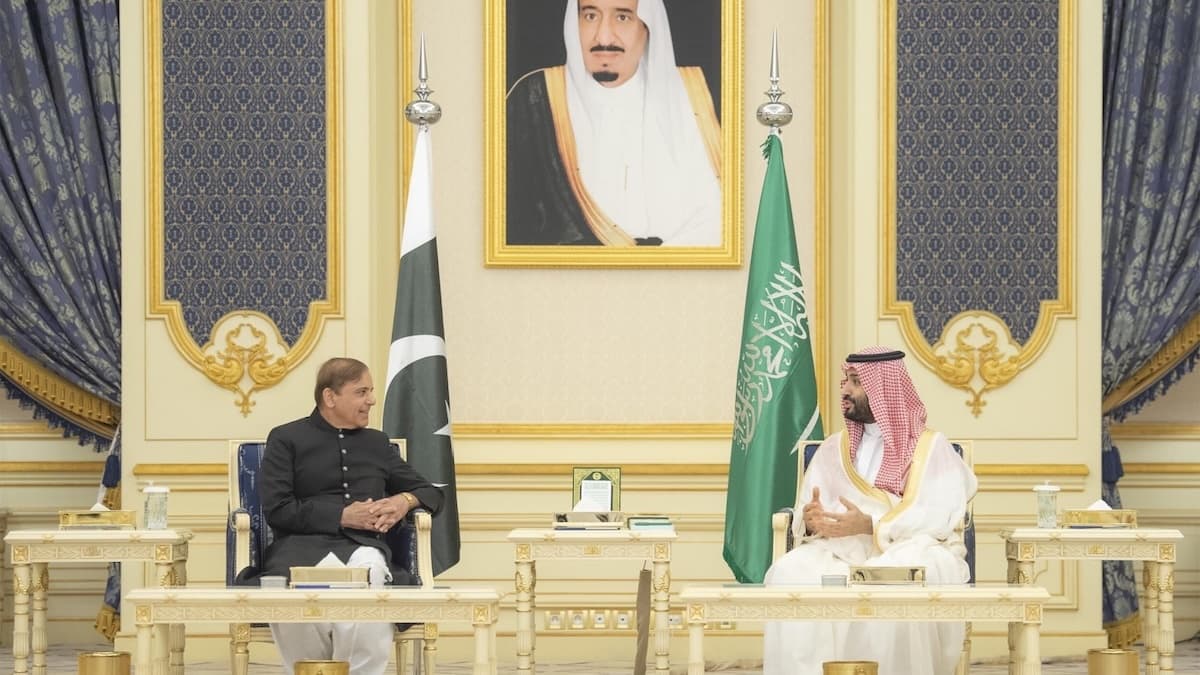
Pakistan’s Saudi Deployment Reveals a New Gulf Security Reality
Why It Matters
The pact illustrates Gulf states’ shift toward broader strategic partnerships, reducing reliance on a single external guarantor and reshaping regional security dynamics. It also elevates Pakistan’s diplomatic leverage as a mediator between Washington and Tehran.
Key Takeaways
- •Saudi Arabia deployed ~8,000 Pakistani troops, JF‑17 jets, drones, HQ‑9 system
- •Agreement signals Gulf states diversifying security partners beyond the United States
- •Pakistan’s role blends military support with diplomatic mediation between Washington and Tehran
- •Chinese‑origin equipment embeds Beijing’s tech in Gulf defence architecture
Pulse Analysis
The Saudi‑Pakistan defence agreement arrives at a moment of heightened volatility in the Gulf, where recent Israeli operations on Qatari soil have rattled the assumption that U.S. security guarantees are absolute. By stationing a sizable Pakistani force—including modern JF‑17 fighters and a Chinese HQ‑9 air‑defence system—Riyadh signals a pragmatic approach: supplementing American capabilities with reliable regional allies. This layered security model offers Saudi Arabia redundancy against unpredictable geopolitical shifts, while allowing Islamabad to showcase its operational readiness and deepen strategic ties with a wealthy patron.
Beyond the immediate military calculus, the deployment carries significant geopolitical weight. Pakistan’s dual role as a combat partner and diplomatic conduit between Washington and Tehran positions it as a valuable intermediary in de‑escalation efforts. The ability to host direct U.S.–Iran talks underscores Islamabad’s unique leverage, which could prove crucial if regional tensions flare again. For Gulf states, the message is clear: diversifying alliances does not equate to abandoning the United States, but rather to building a more resilient security architecture that can withstand fluctuating U.S. policy priorities.
The inclusion of Chinese‑origin hardware, notably the JF‑17 and HQ‑9, marks Beijing’s indirect imprint on Gulf defence procurement. While China cannot replace U.S. expeditionary power, its technology offers cost‑effective alternatives that Gulf militaries are increasingly willing to adopt. This trend may prompt neighboring India to reassess its own regional posture, given the potential for Chinese‑linked systems to influence the balance of power. Ultimately, the Saudi‑Pakistan pact reflects a broader shift toward a multipolar security order in the Middle East—one where layered partnerships, diplomatic flexibility, and diversified equipment sources become the new norm.
Pakistan’s Saudi deployment reveals a new Gulf security reality
Comments
Want to join the conversation?
Loading comments...