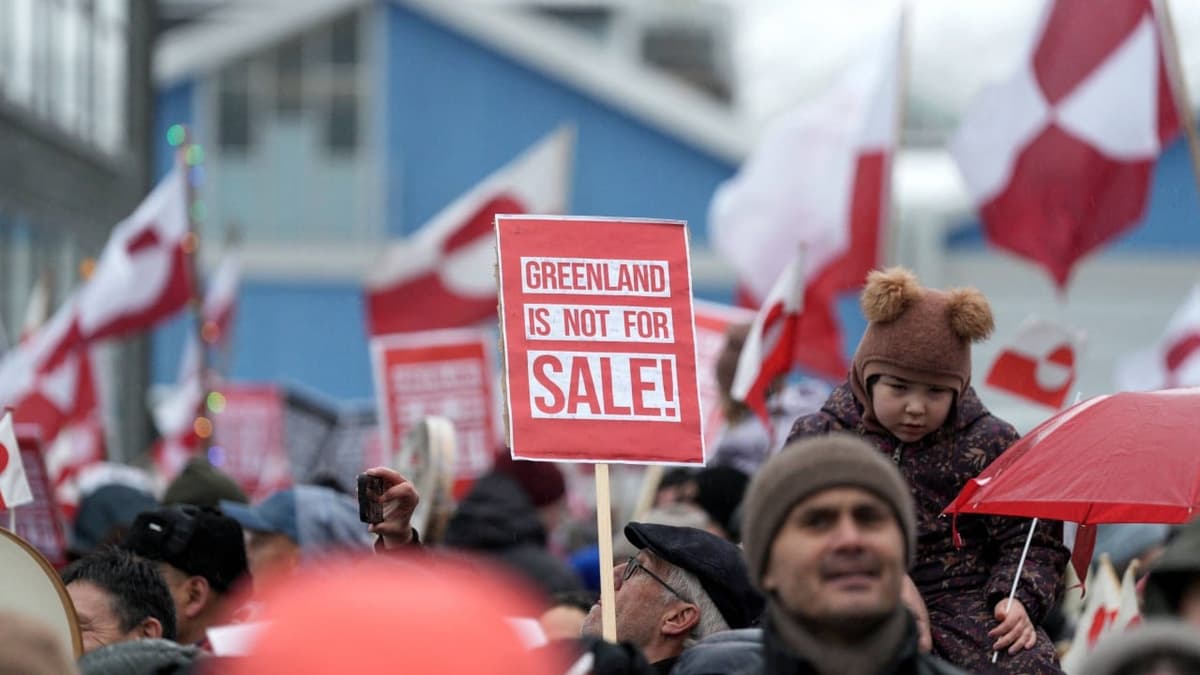
‘Paper Tiger’: What’s Behind Donald Trump’s Renewed Greenland Threat?
Why It Matters
The threat jeopardizes transatlantic cohesion at a moment when U.S. focus is divided, potentially reshaping NATO dynamics and trade relationships. It also highlights how geopolitical posturing can influence market perceptions of regional stability.
Key Takeaways
- •Trump revived 2019 Greenland acquisition rhetoric.
- •US focus shifts to Iran conflict, stretching resources.
- •European nations likely maintain neutrality in Iran war.
- •Greenland's strategic location attracts NATO and Chinese interest.
- •Threat could erode transatlantic trust, affecting trade.
Pulse Analysis
The latest Greenland ultimatum revives a diplomatic flashpoint first raised during Trump’s first term, when the president floated a $1 billion purchase of the Danish territory. Legal scholars note that any unilateral claim would clash with international law and Denmark’s sovereign rights, making the proposal more theatrical than actionable. Yet the rhetoric serves a domestic purpose, allowing Trump to project strength amid a costly war in the Middle East and to distract from domestic challenges.
Strategically, Greenland sits atop the Arctic’s melting ice routes, hosts a critical U.S. airbase, and contains untapped mineral reserves that have attracted both NATO and Chinese interest. As the United States diverts military assets to counter Iran, European capitals are calculating the benefits of a neutral stance, hoping to avoid entanglement while preserving economic ties with both Washington and Tehran. Analysts suggest that Europe could even leverage a weakened U.S. position to negotiate more favorable trade terms and security arrangements within the alliance.
The diplomatic fallout could be swift. A credible Greenland threat would strain the already fragile transatlantic trust, prompting European firms to reassess exposure to U.S. policy volatility and potentially redirect investment toward more stable jurisdictions. Moreover, NATO’s cohesion might be tested as member states balance collective defense commitments against divergent national interests. In the longer term, the episode underscores how political grandstanding can ripple through global markets, influencing everything from defense contracts to Arctic resource development.
‘Paper tiger’: what’s behind Donald Trump’s renewed Greenland threat?
Comments
Want to join the conversation?
Loading comments...