Why It Matters
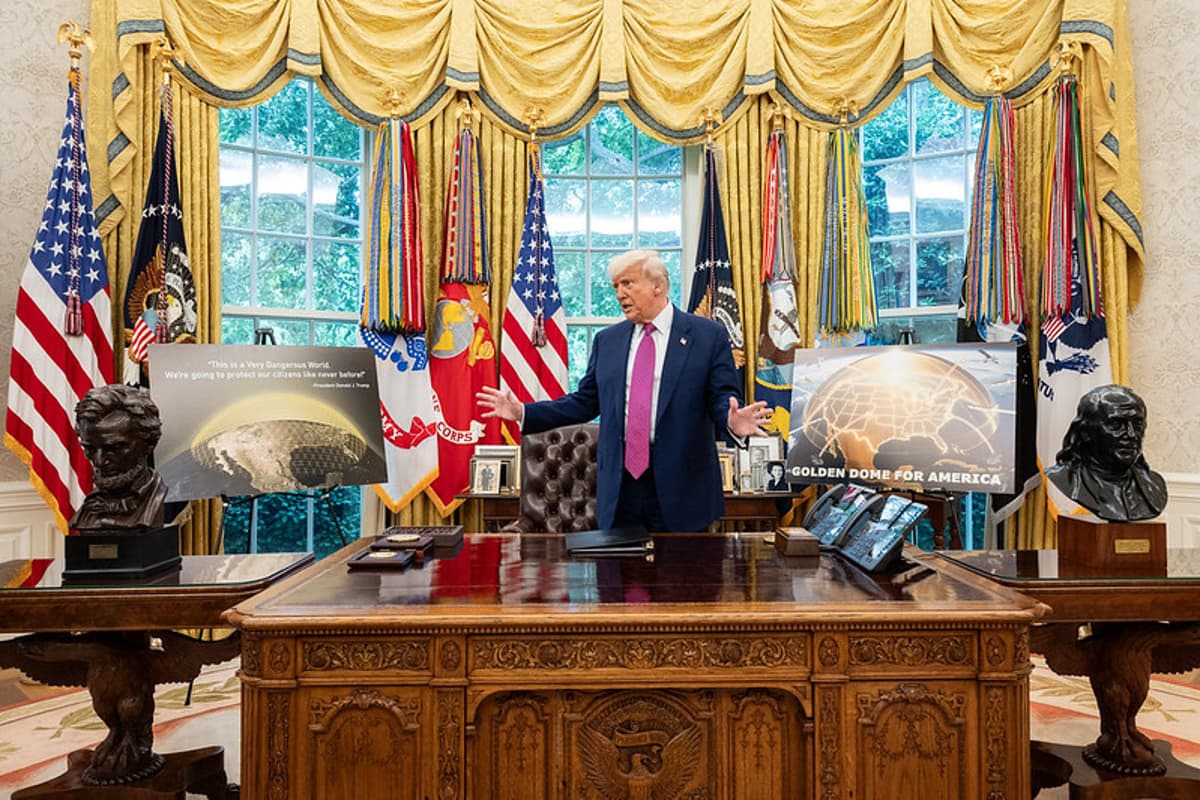
Golden Dome represents the largest U.S. investment in layered missile defense, reshaping the defense industrial base and influencing future space‑security policy. Its success or delay will affect national security posture and commercial space market dynamics.
Key Takeaways
- •Golden Dome aims to mirror Israel’s Iron Dome for U.S. missile defense
- •$175 billion program overseen by Space Force Gen. Michael Guetlein
- •Over 2,000 firms approved; $151 billion IDIQ contract pool
- •Lockheed Martin targets 2028 on‑orbit interceptor demo
- •Apex plans commercial interceptor demo as early as 2024
Pulse Analysis
The Golden Dome initiative marks a strategic pivot for U.S. missile defense, shifting from ground‑based batteries to a hybrid architecture that blends terrestrial radar with space‑based interceptors. By adapting the proven Iron Dome concept, the program seeks to protect critical infrastructure and population centers from a broader spectrum of threats, including hypersonic glide vehicles and short‑range rockets. The $175 billion budget underscores the Pentagon’s commitment to integrating advanced sensors, AI‑driven targeting, and rapid‑response kill vehicles, positioning the United States at the forefront of next‑generation defense technology.
Industry participation is unprecedented, with the Missile Defense Agency clearing more than 2,000 firms for competition under the SHIELD program. The $151 billion IDIQ contract pool creates a massive market for legacy prime contractors and emerging innovators alike. Companies such as Lockheed Martin are leveraging their space‑launch heritage to field on‑orbit interceptor demonstrations by 2028, while newer entrants like Apex aim to validate commercial interceptor concepts within months. This competitive landscape accelerates technology maturation, drives down costs, and encourages cross‑sector collaboration between defense, aerospace, and the burgeoning commercial space sector.
Despite the ambitious operational target of January 2029, analysts caution that technical, budgetary, and acquisition hurdles could push the timeline back. A successful early demo—potentially during a second Trump administration—would provide critical validation and political momentum. Conversely, delays could reshape congressional funding priorities and open space for rival defense initiatives. For investors and policymakers, Golden Dome serves as a bellwether for how the United States will integrate space capabilities into its core security architecture in the coming decade.
Payload Field Guide: Golden Dome
Comments
Want to join the conversation?
Loading comments...