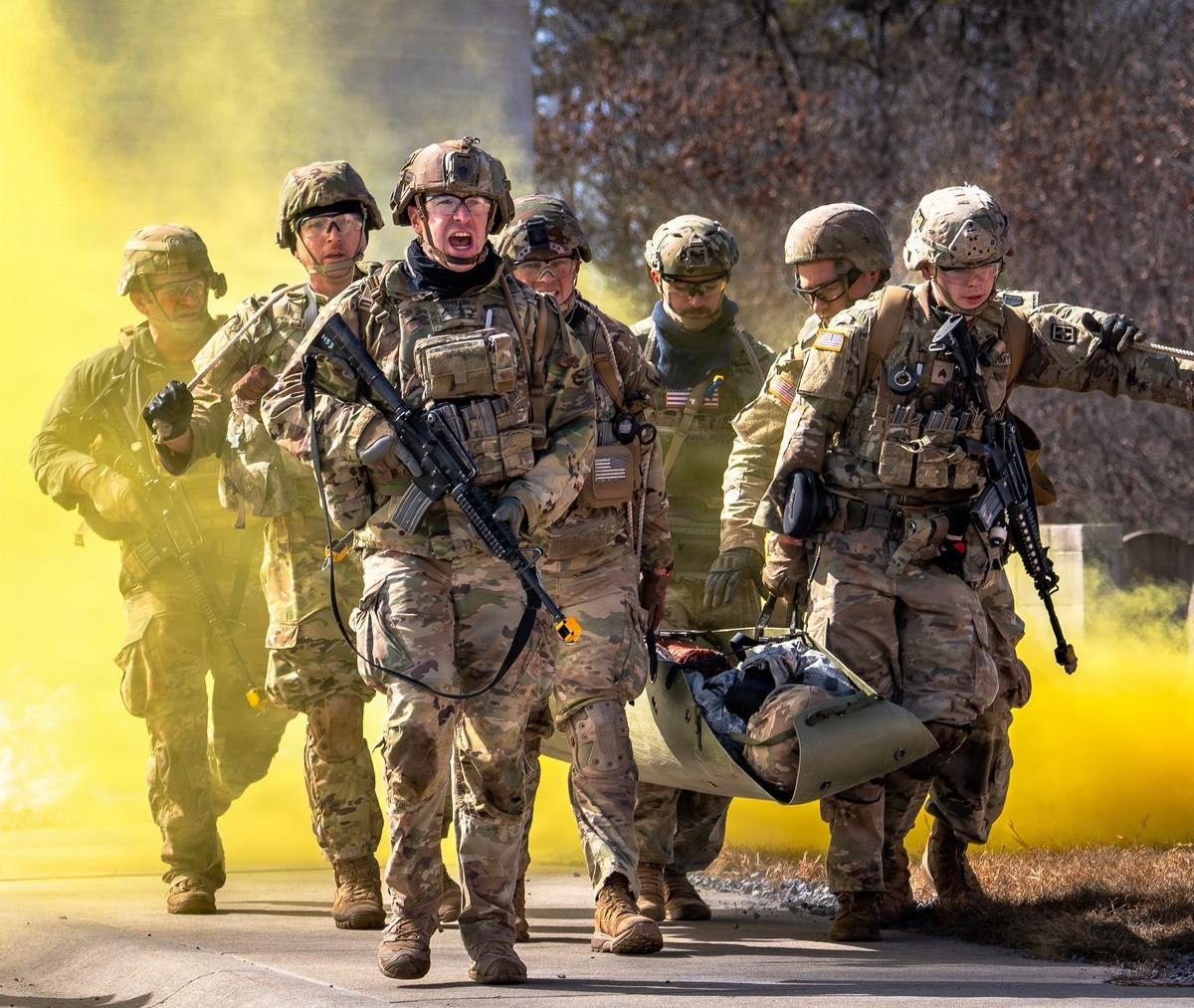
Pennsylvania National Guard Trains Future Combat Medics
•March 4, 2026
0
Why It Matters
The accelerated pipeline expands the Army’s medical readiness, ensuring more qualified combat medics for both domestic emergencies and overseas deployments. It also enhances career pathways for Guard soldiers transitioning into critical healthcare roles.
Key Takeaways
- •59‑day course transforms soldiers into certified combat medics
- •Phase 1 grants National EMT registration within three weeks
- •Simulated mass‑casualty event tests real‑world medical response
- •Instructors deem training the most challenging in 18‑year careers
- •Boosts Army medical readiness for domestic and overseas missions
Pulse Analysis
The demand for skilled combat medics has surged as modern battlefields and disaster response scenarios grow more complex. The Pennsylvania National Guard, through its 166th Regiment Regional Training Institute, addresses this gap by offering a condensed yet comprehensive 68W Healthcare Specialist MOS‑Transition (MOS‑T) program. By pulling talent from diverse military occupational specialties, the Guard not only fills a critical staffing need but also provides soldiers with a clear, high‑impact career trajectory that aligns with both military and civilian emergency medical services.
The MOS‑T curriculum is divided into three rigorous phases. Phase 1 fast‑tracks participants through the National Registry of Emergency Medical Technicians (NREMT) course, achieving national EMT certification in just three weeks—a feat highlighted as the program’s toughest segment. Phase 2 shifts focus to primary‑care environments, introducing “sick call” procedures and limited clinical decision‑making. Phase 3 immerses trainees in field medicine, culminating in a realistic mass‑casualty exercise that mirrors combat conditions. This hands‑on approach ensures that graduates can transition seamlessly from classroom theory to life‑saving actions on the front lines.
Beyond immediate battlefield benefits, the program strengthens overall military medical readiness and interagency cooperation. Graduates are equipped to support domestic disaster relief, bridging gaps between military and civilian emergency responders. Moreover, the intensive training enhances retention by offering soldiers valuable, transferable skills that are prized in both the armed forces and the civilian healthcare market. As the Guard continues to refine this pipeline, it sets a benchmark for rapid, high‑quality medical training that other service branches may emulate, reinforcing the United States’ capacity to respond to crises at home and abroad.
Pennsylvania National Guard trains future combat medics
0
Comments
Want to join the conversation?
Loading comments...