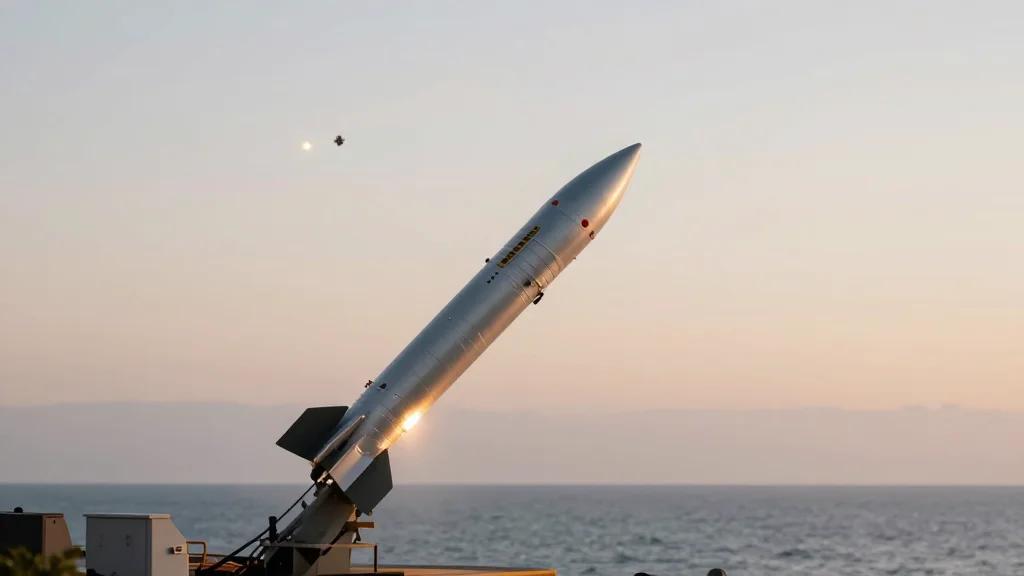
Pentagon Approves $17.9 B Golden Dome Air‑Missile Defense System for FY2027

Why It Matters
Golden Dome represents the United States’ most ambitious attempt to create a unified, multi‑domain missile‑defense architecture. By marrying space‑based sensing with kinetic and non‑kinetic interceptors, the program aims to close gaps that have long limited the effectiveness of legacy systems against hypersonic and maneuverable threats. Success would not only enhance the protection of U.S. cities and critical infrastructure but also signal to allies that the U.S. can field a credible, layered shield against peer adversaries. Conversely, failure could embolden China and Russia to accelerate deployment of advanced missile capabilities, reshaping the strategic balance. The $17.9 billion spend also reshapes the defense procurement landscape. It creates a sizable, sustained market for companies that can deliver integrated hardware and software across air, land, sea and space. This could drive consolidation, spur innovation in AI‑enabled command systems, and accelerate the maturation of space‑based interceptors—technologies that may later be exported to partner nations, extending the U.S. strategic influence. Overall, Golden Dome is a litmus test for the United States’ ability to operationalize a truly networked defense posture in an era where speed, data integration and cross‑domain coordination are decisive.
Key Takeaways
- •$17.9 billion allocated in FY2027 budget for Golden Dome program
- •System‑of‑systems integrates space‑based sensors with GMD, Aegis, THAAD and Patriot
- •Targets Chinese hypersonic glide vehicles and Russian advanced strategic missiles
- •Executive Order 14186 (Jan 2025) mandates a persistent, multi‑domain defensive network
- •Prototype space‑sensor constellation planned for launch in FY2029
Pulse Analysis
Golden Dome is a watershed in U.S. defense policy because it operationalizes a concept that has lingered in strategic documents for years: a fully networked, cross‑service shield that can engage threats from launch to impact. Historically, missile‑defense efforts have been siloed—ground‑based interceptors protected the continental United States, while sea‑based radars and Aegis ships focused on regional threats. By weaving together these disparate elements with a space‑based sensor layer, the program promises to compress the decision‑making cycle that hypersonic weapons exploit. This integration, however, is technically daunting. It requires real‑time data fusion across legacy platforms that were never designed to share a common data model, and it hinges on the rapid development of space‑based infrared constellations that can survive a contested environment.
From a market perspective, the $17.9 billion spend will likely catalyze a wave of mergers and partnerships among firms that can deliver both hardware and software solutions. Companies that specialize in AI‑driven sensor fusion, secure communications and rapid‑prototype interceptor technologies stand to benefit. At the same time, the emphasis on non‑kinetic effects could shift funding toward electronic‑warfare firms, diversifying the traditional missile‑defense supplier base.
Strategically, Golden Dome may force China and Russia to reconsider the cost‑benefit calculus of their hypersonic programs. If the United States can demonstrate a credible, layered defense, adversaries might be compelled to invest in counter‑space capabilities or develop even faster, more maneuverable weapons to overwhelm the network. The program thus sets the stage for a new arms race, not just in missile technology but in the broader domain of space‑enabled warfare. The next few years will reveal whether the United States can translate this ambitious architecture into an operational reality, and whether the investment will deliver the strategic stability it promises.
Pentagon Approves $17.9 B Golden Dome Air‑Missile Defense System for FY2027
Comments
Want to join the conversation?
Loading comments...