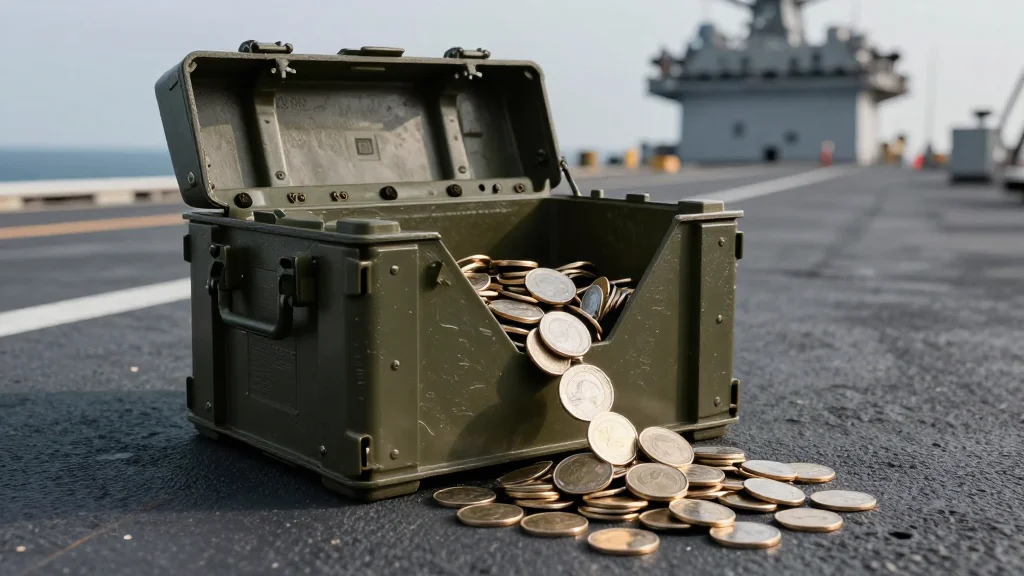
Pentagon Cites $25 Bn Price Tag as US Escalates Iran Blockade, Lawmakers Demand Answers

Companies Mentioned
Why It Matters
The disclosed $25 bn cost highlights how quickly a limited military engagement can balloon into a multi‑billion‑dollar enterprise, straining the Pentagon’s budget and forcing lawmakers to weigh strategic gains against fiscal responsibility. The blockade of the Strait of Hormuz not only escalates military risk but also triggers global oil price spikes, directly affecting inflation and consumer spending in the United States and abroad. Together, these dynamics could reshape U.S. defense priorities, influence future congressional authorizations, and alter the geopolitical calculus in the Middle East. If the war drags on, the United States may face a cascade of secondary effects: depletion of critical munitions, accelerated wear on naval assets, and heightened political backlash at home. Conversely, a swift resolution could restore shipping lanes, lower energy prices, and allow the Pentagon to redirect funds toward other strategic priorities, such as emerging technologies and allied force modernization. The stakes are high for both national security and the broader economy.
Key Takeaways
- •Pentagon comptroller Jules Hurst disclosed $25 bn spent on the Iran war, mainly on munitions.
- •Defense Secretary Pete Hegseth faced a six‑hour congressional hearing, defending the blockade and budget.
- •Democrats warned the war could cost $40‑$50 bn when base repairs and equipment replacement are included.
- •Brent crude hit $126.41 per barrel, WTI rose above $108, driven by the Hormuz blockade.
- •Congress will vote on a supplemental request tied to a $1.5 trillion defense budget for 2027.
Pulse Analysis
The $25 bn price tag, while eye‑catching, is likely a baseline figure that masks deeper fiscal exposure. Historically, U.S. conflicts in the Middle East have shown a pattern of cost escalation as initial objectives broaden and supply chains strain. The current blockade mirrors the 1990‑91 Gulf War’s maritime interdictions, but with a modern twist: oil markets react in real time, amplifying political pressure on Washington. The administration’s reliance on a naval choke point also raises operational risk; three U.S. carriers are now forward‑deployed, stretching maintenance cycles and crew readiness.
Politically, the hearing underscores a growing rift between the executive’s willingness to pursue aggressive posturing and a Congress increasingly wary of open‑ended war funding. Hegseth’s combative rhetoric may rally the administration’s base but alienates moderate voters concerned about rising gas prices and budget deficits. The upcoming supplemental request will test whether the bipartisan consensus that once underpinned defense spending can survive a conflict that offers limited tangible gains.
Strategically, the blockade’s success—or failure—will influence future U.S. maritime doctrine. If Iran’s ports remain sealed and oil prices stay elevated, Washington may view chokepoint control as a viable lever, prompting investment in long‑range strike capabilities and anti‑access/area‑denial (A2/AD) countermeasures. Conversely, a swift diplomatic resolution could shift focus back to emerging threats such as cyber warfare and great‑power competition in the Indo‑Pacific, reshaping procurement priorities away from legacy carrier groups toward unmanned systems and AI‑driven platforms.
Pentagon cites $25 bn price tag as US escalates Iran blockade, lawmakers demand answers
Comments
Want to join the conversation?
Loading comments...