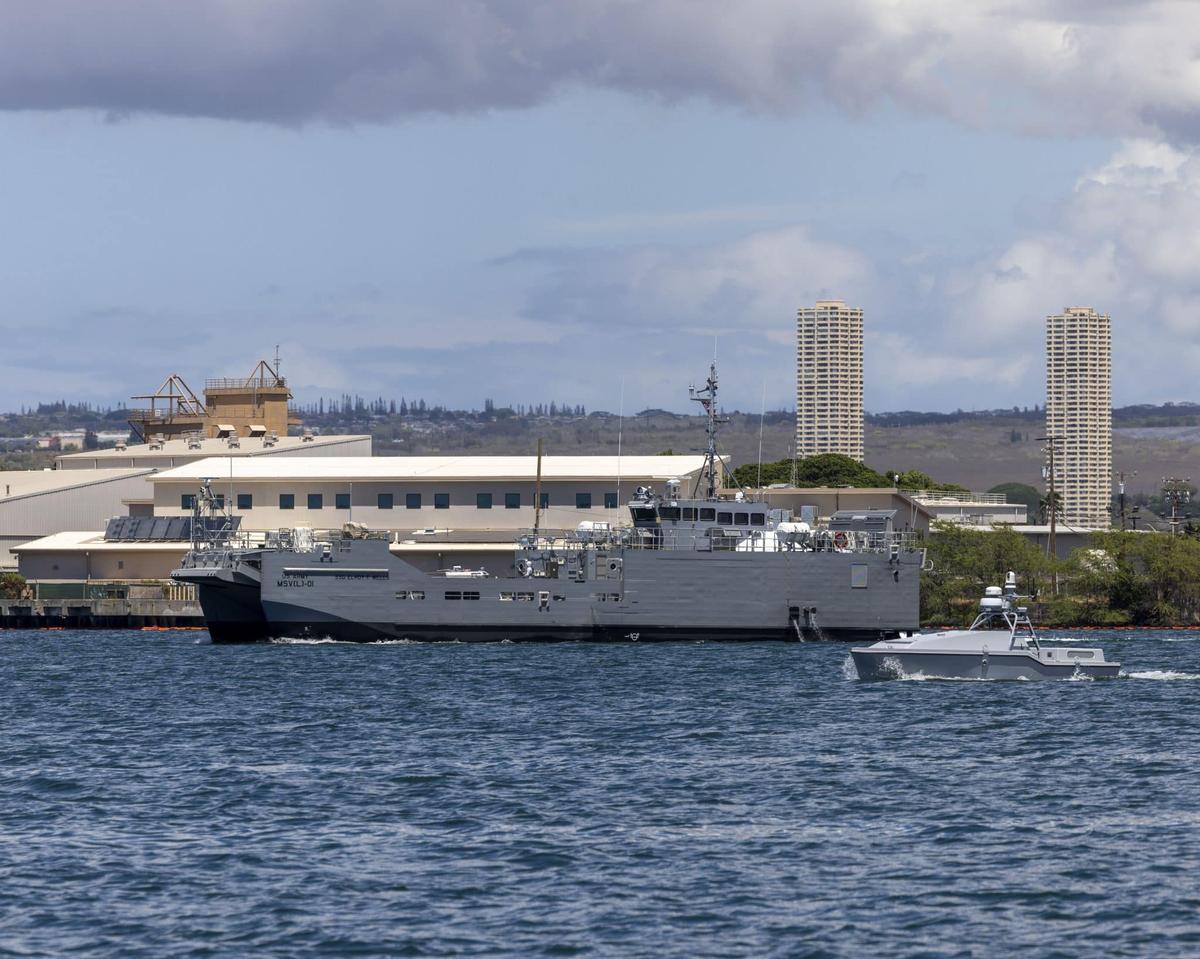
Pentagon Eyes New USV for Indo-Pacific Contested Logistics
Why It Matters
Unmanned logistics dramatically lower personnel risk while enhancing survivability against China’s anti‑access capabilities, reshaping how the U.S. sustains forces across the first island chain. The program also signals a broader shift toward autonomous maritime supply chains in future high‑intensity conflicts.
Key Takeaways
- •Pentagon seeks dozens of ARV‑S unmanned surface vessels
- •ARV‑S must carry two 20‑ft containers over 1,600 nm
- •Vessels operate in sea states 4‑6, fully autonomous
- •US lawmakers push USV escorts for Army watercraft
- •Unmanned logistics reduce personnel risk and complicate enemy targeting
Pulse Analysis
The Indo‑Pacific theater presents a logistical nightmare for conventional forces, with vast distances, limited friendly ports, and a sophisticated Chinese anti‑access strategy. By turning to unmanned surface vessels, the U.S. Army aims to bypass the vulnerability of manned watercraft, delivering supplies without exposing sailors to missile and air threats. This approach mirrors broader defense trends that prioritize autonomy to sustain forward‑deployed units while preserving combat power.
The Autonomous Resupply Vehicle (ARV‑S) is engineered for high‑endurance missions, boasting a 1,600‑nautical‑mile range and the ability to navigate sea states 4‑6 without human intervention. Its payload capacity of two standard 20‑foot containers translates to a flexible, modular supply chain that can support everything from ammunition to humanitarian aid. The solicitation emphasizes rapid production scaling, signaling the Pentagon’s intent to field a sizable fleet quickly, a move that could reshape Army maritime logistics doctrine.
Strategically, the ARV‑S aligns with U.S. efforts to maintain a credible deterrent across the first island chain. Congressional backing, evident in FY‑27 language urging USV escorts for Army vessels, underscores bipartisan recognition of the technology’s value. As China expands its naval and missile capabilities, the United States’ investment in autonomous logistics not only mitigates risk but also forces adversaries to contend with a dispersed, hard‑to‑target supply network, potentially altering the calculus of any future conflict in the region.
Pentagon Eyes New USV for Indo-Pacific Contested Logistics
Comments
Want to join the conversation?
Loading comments...