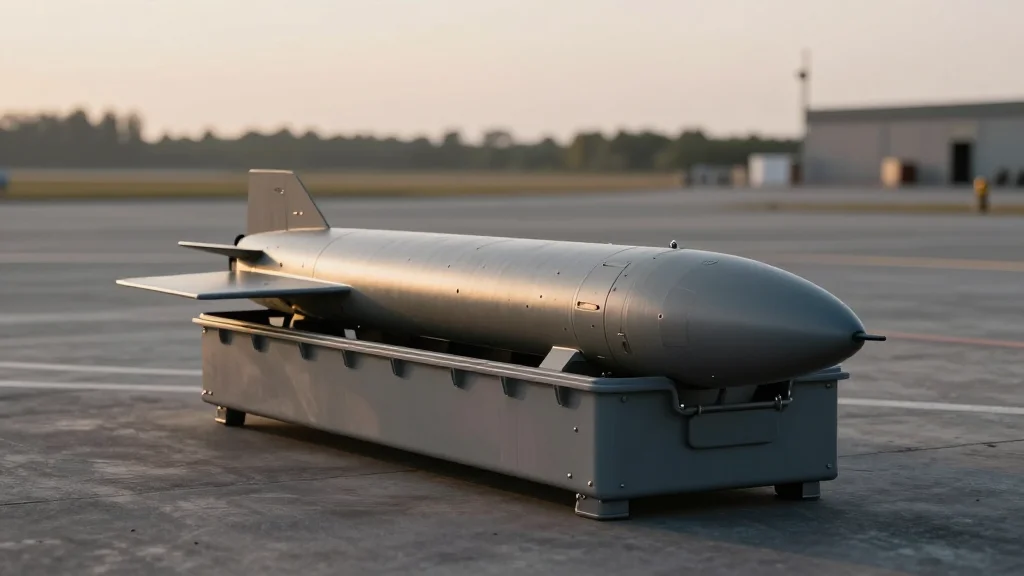
Pentagon Launches Low‑Cost Containerized Missile Program to Procure 10,000 Missiles by 2030

Companies Mentioned
Why It Matters
The LCCM program could reshape U.S. strike capability by delivering a high‑volume, low‑cost missile stockpile that complements expensive precision weapons. By opening contracts to non‑traditional defense firms, the Pentagon hopes to spur innovation, shorten development timelines, and reduce reliance on legacy prime contractors. If successful, the approach may become a template for future weapons programs, influencing how the services balance cost, capability and industrial base health. Affordability also has strategic implications. In high‑intensity conflicts, the ability to field thousands of inexpensive cruise missiles could sustain prolonged air‑defense operations and enable saturation attacks against sophisticated enemy air defenses. The program’s cross‑service design further blurs traditional service boundaries, encouraging joint development and procurement that could streamline logistics and training across the Army, Air Force and Navy.
Key Takeaways
- •Pentagon signs long‑term contracts with Anduril, CoAspire, Leidos and Zone 5 for the Low‑Cost Containerized Missile program.
- •Program targets production of more than 10,000 cruise missiles beginning in 2027.
- •Air Force’s Family of Affordable Mass Munitions seeks >$12 billion for 28,000 missiles over five years.
- •Michael Duffey quoted saying the effort expands the industrial base and accelerates testing timelines.
- •LCCM missiles are designed for launch from ground, air or maritime platforms, enhancing joint flexibility.
Pulse Analysis
The LCCM initiative reflects a broader Pentagon pivot toward mass‑produced, affordable munitions—a response to fiscal constraints and the operational reality of high‑tempo conflicts. Historically, U.S. missile procurement has been dominated by a handful of legacy primes, resulting in long lead times and high unit costs. By courting newcomers like Anduril and Zone 5, the Department of War is betting on disruptive technologies—rapid prototyping, containerized launch systems, and modular boosters—to compress the acquisition cycle.
If the program delivers on its promise, it could force a recalibration of the defense industrial base. Traditional contractors may need to adapt to a more competitive environment, potentially forming partnerships with startups or adopting agile development practices. Moreover, the cross‑service nature of LCCM aligns with the Joint Force’s push for interoperable weapons, reducing duplication and simplifying sustainment.
However, the initiative carries risks. The lack of disclosed contract values makes it difficult to gauge cost‑effectiveness, and integrating novel missile designs across disparate platforms could encounter technical hurdles. Congressional scrutiny will intensify as the $12 billion FAMM request competes with other defense priorities. Success will hinge on the new entrants’ ability to meet stringent performance and schedule benchmarks while delivering a price point that justifies large‑scale procurement. Should they succeed, the LCCM could become a cornerstone of U.S. deterrence, offering a scalable, affordable strike capability that reshapes the balance of air power.
Pentagon Launches Low‑Cost Containerized Missile Program to Procure 10,000 Missiles by 2030
Comments
Want to join the conversation?
Loading comments...