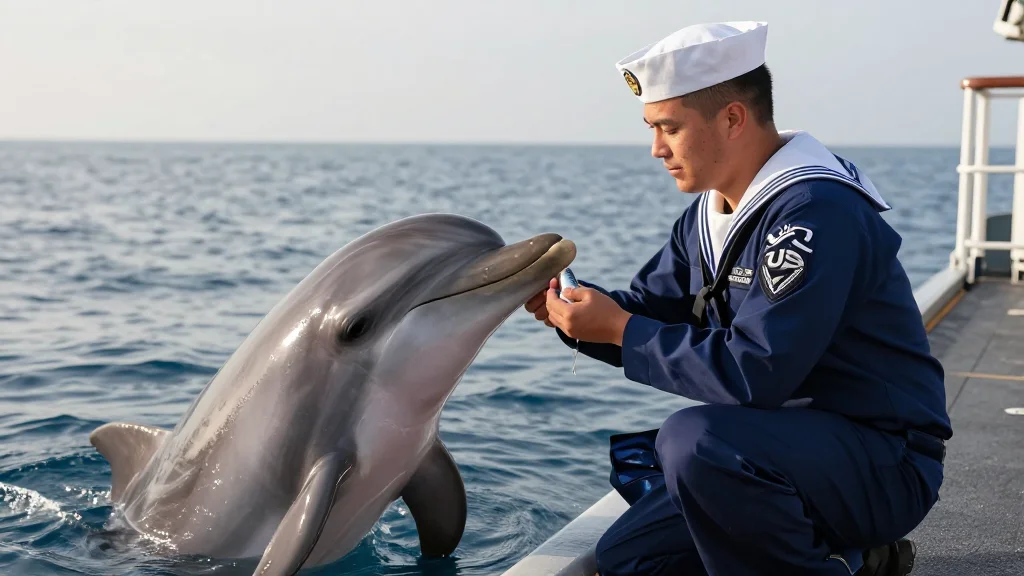
Pentagon Leaders Got an Unusual Question About Iran and 'Kamikaze Dolphins.' Here's How the US Military Uses These Animals.
Why It Matters
The exchange underscores how sensational rumors can cloud public perception of military capabilities while reaffirming the strategic value of marine mammals in U.S. undersea security.
Key Takeaways
- •Pentagon dismissed claims Iran fields “kamikaze” dolphins
- •US Navy has trained dolphins for mine detection since 1950s
- •2015 program managed 85 dolphins and 50 sea lions; current count unclear
- •Navy halted lethal‑training plans in 1990, focusing on detection tasks
- •Advanced sensors not yet ready, so dolphins remain essential for underwater security
Pulse Analysis
The U.S. Navy’s Marine Mammal Program traces its roots to Cold‑War experiments that recognized dolphins’ sophisticated sonar as a natural sensor suite. Over decades, bottlenose dolphins have been deployed to locate mines, guard harbors, and even simulate hostile swimmers for SEAL training. By the 1980s, the program supported operations in the Persian Gulf, and by 2015 it oversaw 85 dolphins and 50 sea lions, illustrating a niche but enduring capability that complements high‑tech platforms.
Recent media chatter revived the myth of Iranian "kamikaze" dolphins, prompting a rare Pentagon briefing where senior leaders, including Chairman Gen. Dan Caine and Secretary Pete Hegseth, flatly denied any Iranian deployment and admitted the United States does not field offensive dolphin units. The rumor, fueled by older Soviet‑era reports and sensational headlines, highlights how misinformation can distract from genuine defense issues and the need for clear communication about military assets.
Looking ahead, the Navy faces a crossroads as autonomous underwater vehicles and synthetic sonar improve. A 2022 review considered shutting down the marine mammal component, but officials concluded that current technology cannot yet match the dolphins’ speed, agility, and detection accuracy in cluttered littoral waters. Consequently, the program remains active under the Naval Information Warfare Center Pacific, serving as a bridge until unmanned systems achieve comparable performance, and reinforcing the broader lesson that biological assets still hold strategic relevance in modern maritime security.
Pentagon leaders got an unusual question about Iran and 'kamikaze dolphins.' Here's how the US military uses these animals.
Comments
Want to join the conversation?
Loading comments...