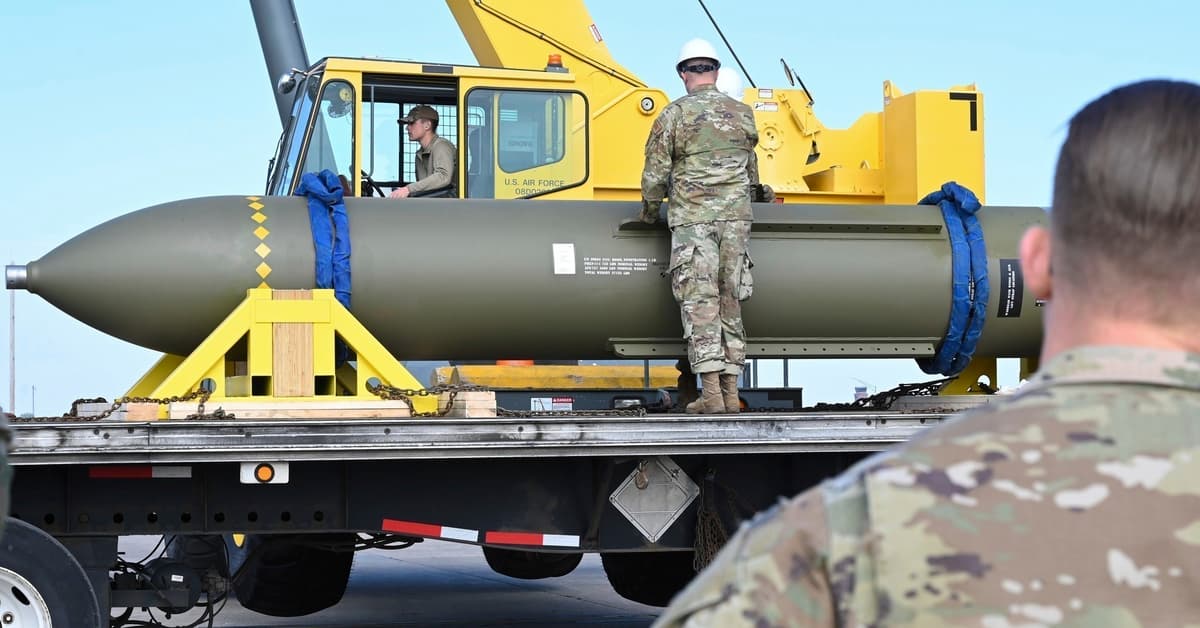
Pentagon Looks to Reinvent the Bunker-Buster Bomb
Why It Matters
By moving beyond brute‑force designs, the U.S. can field precision bunker‑busting weapons that fit on a wider range of aircraft, enhancing strike flexibility and reducing logistical burdens. This shift addresses the growing challenge of adversaries hiding critical assets deep underground.
Key Takeaways
- •DARPA seeks shock‑wave shaping for next‑gen bunker busters
- •Goal: smaller munitions compatible with diverse aircraft platforms
- •Focus on tunable materials and real‑time high‑strain diagnostics
- •Iran, North Korea, and insurgents drive demand for deeper penetration
- •RFI deadline June 26, inviting industry and academia proposals
Pulse Analysis
DARPA’s latest Request for Information marks a strategic pivot in underground warfare. While legacy bunker‑busters like the World War II Grand Slam and today’s GBU‑57 rely on massive kinetic energy, the agency now asks innovators to engineer shock‑wave control mechanisms. By exploiting transient material states, anisotropic wave propagation, and dynamic impedance matching, designers could concentrate destructive energy precisely where it matters, potentially neutralizing targets buried hundreds of feet underground without the need for ultra‑heavy ordnance.
The push for shock‑wave‑based weapons aligns with broader trends in materials science and high‑speed diagnostics. Researchers are exploring architected composites and actively tunable lattices that change stiffness on demand, as well as embedded sensors capable of capturing strain rates in real time. Such advances promise not only greater destructive efficiency but also the ability to tailor blast signatures, reducing collateral damage and improving mission planning. If successful, these technologies could be integrated into smaller delivery systems, expanding the pool of aircraft—beyond the limited B‑2 fleet—that can deploy bunker‑busting payloads.
Strategically, the development addresses a pressing security gap. Nations like Iran and North Korea conceal nuclear facilities and missile stockpiles deep within mountains, while non‑state actors have historically used tunnels for guerrilla operations. A more adaptable, precision‑focused bunker‑buster would give the United States a decisive tool to counter these hardened threats, reinforcing deterrence and preserving operational tempo in contested environments. The June 26 deadline invites a wave of proposals that could reshape the future of subterranean strike capability.
Pentagon looks to reinvent the bunker-buster bomb
Comments
Want to join the conversation?
Loading comments...