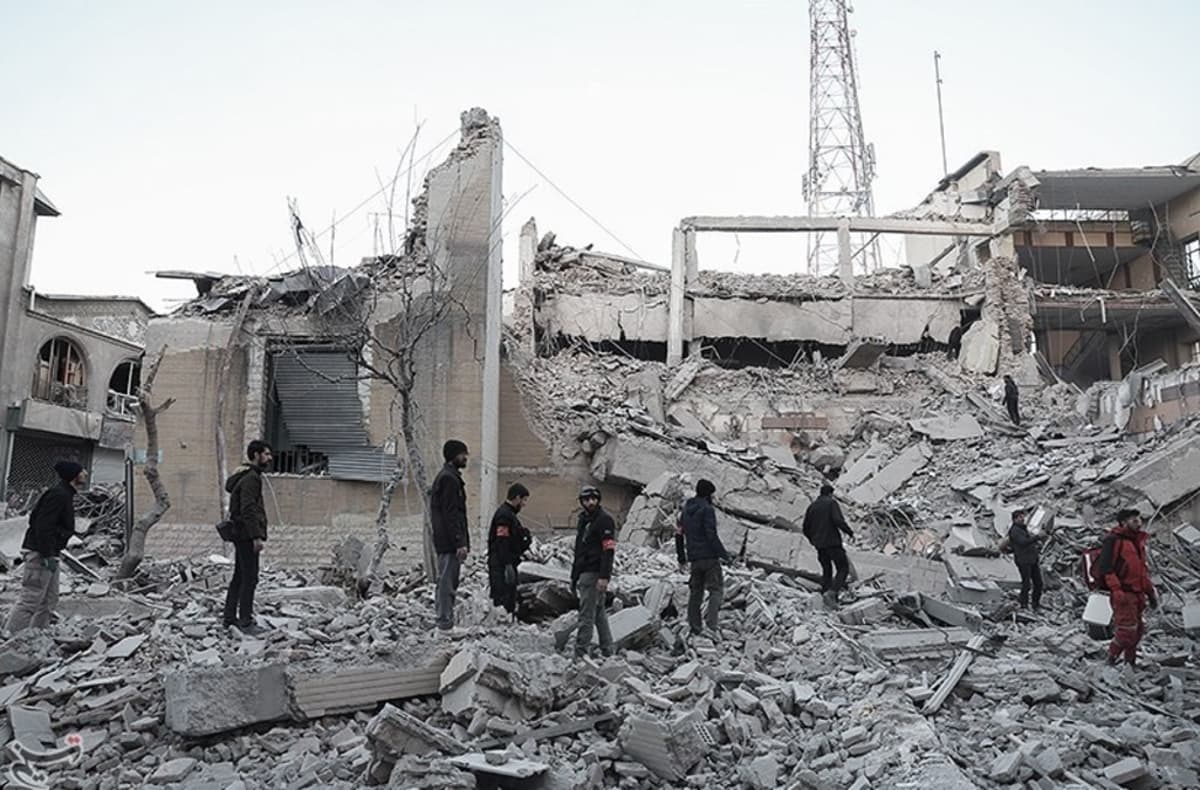
Pentagon Proclaims 'Decisive Military Victory' As Ceasefire Takes Hold
Why It Matters
The claims reshape U.S. leverage in negotiations and could affect global oil flows, while ongoing Iranian strikes underscore the cease‑fire’s precarious stability.
Key Takeaways
- •Pentagon reports 80‑95% destruction of Iran’s defense assets.
- •Operation Epic Fury struck 13,000 targets in five‑plus weeks.
- •Iran’s air force and missile program claimed largely neutralized.
- •Despite claims, Iran hit Saudi petrochemical complex and downed F‑15E.
- •Two‑week ceasefire hinges on Trump’s 10‑point Iranian proposal.
Pulse Analysis
The latest Pentagon briefing marks a dramatic escalation in the U.S.-Iran confrontation that began with the 2023 missile exchange over the Strait of Hormuz. By framing the five‑plus weeks of Operation Epic Fury as a "decisive military victory," Washington aims to signal both domestic resolve and bargaining power ahead of a two‑week cease‑fire. The narrative emphasizes the destruction of Iran’s air defense networks, naval vessels, and missile production lines, positioning the United States as the dominant force capable of reopening critical maritime chokepoints for global commerce.
Analysts, however, caution that the Pentagon’s damage assessments may overstate operational success. Independent satellite imagery and open‑source intelligence suggest that while a substantial portion of Iran’s conventional fleet was hit, key components of its asymmetric capabilities—such as drone swarms and regional proxy forces—remain functional. Iran’s recent strike on a Saudi petrochemical complex and the downing of a U.S. F‑15E illustrate that the country retains strike capacity, complicating the narrative of a shattered defense industrial base. The discrepancy between official claims and on‑the‑ground realities raises questions about the durability of the cease‑fire and the potential for renewed hostilities.
For markets and policymakers, the cease‑fire’s success hinges on the disputed 10‑point Iranian proposal championed by former President Trump. If the agreement secures uninterrupted oil flow through the Strait of Hormuz, energy prices could stabilize, benefitting global supply chains. Conversely, any breach—especially by regional actors like Israel targeting Hezbollah—could reignite conflict, spiking commodity volatility. Stakeholders in defense contracting, energy trading, and geopolitical risk assessment will be watching the next two weeks closely, as the balance between diplomatic overtures and military posturing determines the trajectory of U.S.-Iran relations.
Pentagon Proclaims 'Decisive Military Victory' As Ceasefire Takes Hold
Comments
Want to join the conversation?
Loading comments...