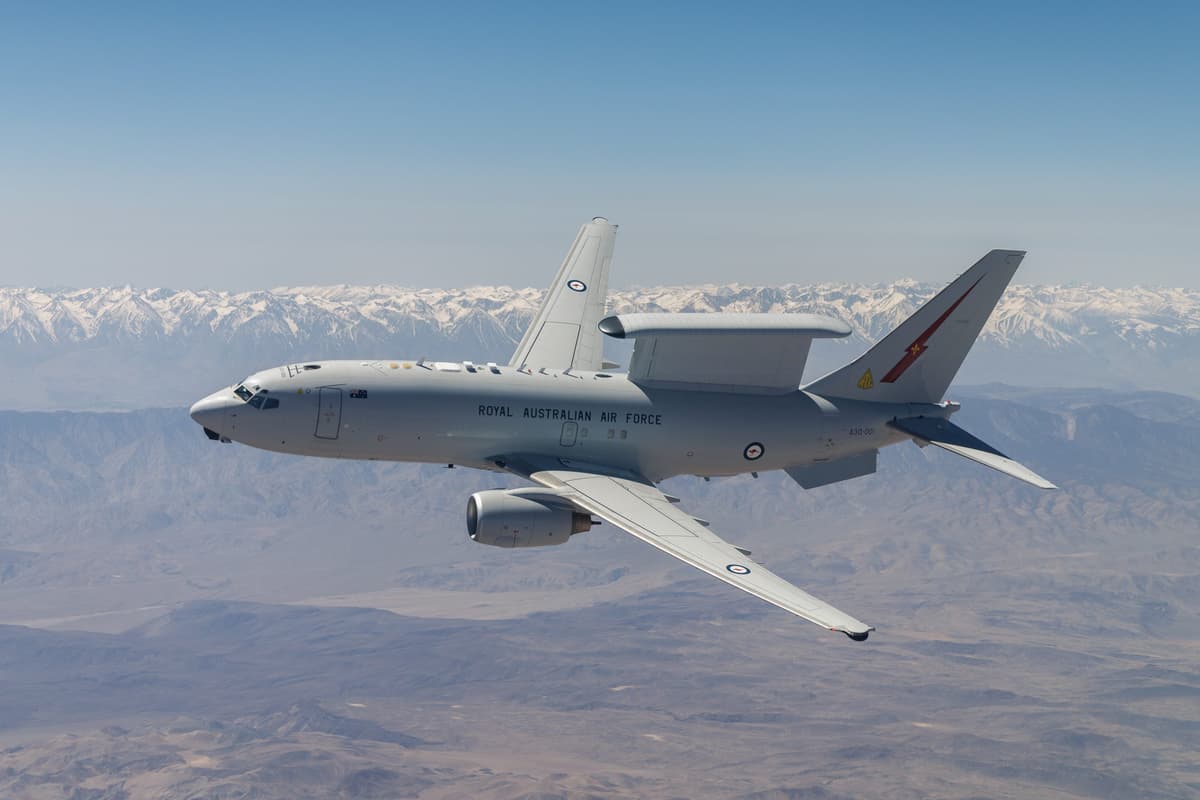
Pentagon Relents, Seeks Funds for E-7 Wedgetail
Why It Matters
Restoring E‑7 funding closes a looming airborne early‑warning gap and safeguards U.S. and allied air‑defense capabilities while the space‑based AMTI solution matures. The decision also signals continued investment in legacy platforms amid budget pressures, affecting defense contractors and congressional appropriations.
Key Takeaways
- •Pentagon seeks FY2027 funds for Boeing E‑7 Wedgetail replacement
- •Two prototypes already built; plan to field seven aircraft soon
- •Australian Wedgetail proved critical in counter‑Iran missile operations
- •Space‑based AMTI not yet affordable, keeping airborne radar essential
- •Congress mandated $1.1 billion to complete prototypes and report status
Pulse Analysis
The Air Force’s E‑7A Wedgetail program, a Boeing‑derived 737 platform, has re‑emerged in the Pentagon’s budget after being stripped from the president’s FY2027 request. Defense leaders argue the aircraft fills an immediate capability gap left by the aging E‑3 AWACS fleet, especially after a missile strike destroyed one of the six E‑3s deployed for Operation Epic Fury. By securing an amendment to the Office of Management and Budget, the service hopes to lock in funding for the two existing prototypes and a planned seven‑aircraft baseline, positioning the Wedgetail as a bridge to future space‑based sensors.
Operational urgency drives the renewed push. The recent Iranian missile attack on Saudi Arabia highlighted the vulnerability of current airborne early‑warning assets, while Australia’s deployment of an E‑7 to support NATO‑aligned forces demonstrated the platform’s real‑world value in detecting and neutralizing hostile missiles and drones. With space‑based Airborne Moving Target Indicator (AMTI) technology still in development and cost‑prohibitive, the Wedgetail offers a proven, battle‑tested solution that can be fielded quickly, preserving air‑domain situational awareness for U.S. and partner forces.
Politically, the program sits at the intersection of congressional oversight and defense‑industry interests. After former senior generals rallied against a Trump‑era cancellation, Congress mandated $1.1 billion to finish the prototypes and required a status report, prompting the Pentagon’s budget revision. If the baseline cost estimate proves favorable, the Air Force intends to elevate the Wedgetail to a major capability acquisition, moving it into engineering and manufacturing development. This trajectory secures Boeing’s multi‑billion‑dollar contract, influences future defense spending priorities, and underscores the enduring relevance of manned airborne radar in a transitioning, space‑centric battlespace.
Pentagon Relents, Seeks Funds for E-7 Wedgetail
Comments
Want to join the conversation?
Loading comments...