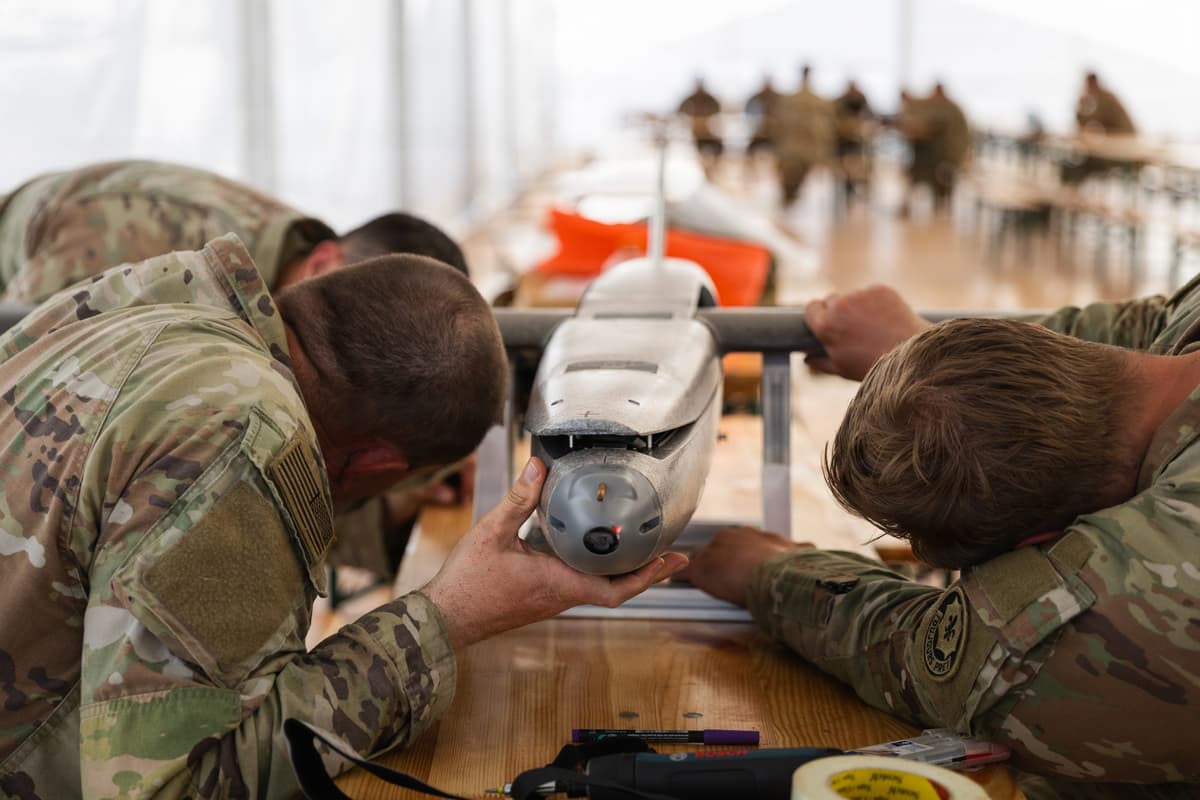
Pentagon Reveals Preferred Munitions for One-Way Attack Drones
Companies Mentioned
Why It Matters
The designation of preferred munitions accelerates the fielding of lethal, low‑cost drone capabilities, giving the U.S. military a scalable edge in contested airspaces. It also signals a shift toward rapid, commercial‑grade warhead solutions, opening new markets for defense startups.
Key Takeaways
- •Pentagon's $1.1B Drone Dominance program names five preferred munitions providers.
- •Northrop Grumman’s Common UAS Payload ready for immediate integration, no redesign needed.
- •Young firms Bravo Ordnance and Kela secure VC backing for drone warheads.
- •Program aims to cut small‑drone cost from $5,000 to $2,300 by 2028.
- •Phase three launches late 2026; final testing scheduled early 2027.
Pulse Analysis
The Department of Defense’s Drone Dominance initiative, launched in July 2025 with a $1.1 billion budget, aims to field roughly 300,000 small drones by 2028. The goal is to cut the average unit price from about $5,000 to $2,300, making swarming and one‑way attack platforms affordable for all services. The effort unfolds in three phases: an initial demonstration, a current evaluation of 79 designs from 49 firms, and a final selection slated for late 2026. Cost reduction while preserving lethality drives every procurement decision.
The Lethality Prize Challenge named five winners as providers of preferred munitions. Northrop Grumman’s Common UAS Payload requires no redesign and leverages more than $2 billion of prior investment, enabling immediate deployment. Startup Bravo Ordnance, launched in 2025 with $3.5 million of venture capital, promises custom warheads in under two weeks, while Israeli‑backed Kela Technologies, valued at $1.2 billion after raising $300 million, brings rapid software integration to commercial drones. Kraken Kinetics and Mountain Horse Solutions round out the group, each offering modular payloads that attach to off‑the‑shelf airframes.
Labeling these designs as preferred munitions streamlines acquisition and signals to the market which solutions meet Pentagon standards. For the services, it translates into faster fielding of lethal payloads that can be slotted onto inexpensive commercial drones, expanding tactical options in contested airspaces. For industry, the modest $10,000 prize serves as a seal of approval that can unlock larger contracts as the program moves into its third phase and final testing in early 2027. The blend of legacy firms and venture‑backed startups reshapes the future of unmanned warfare.
Pentagon reveals preferred munitions for one-way attack drones
Comments
Want to join the conversation?
Loading comments...