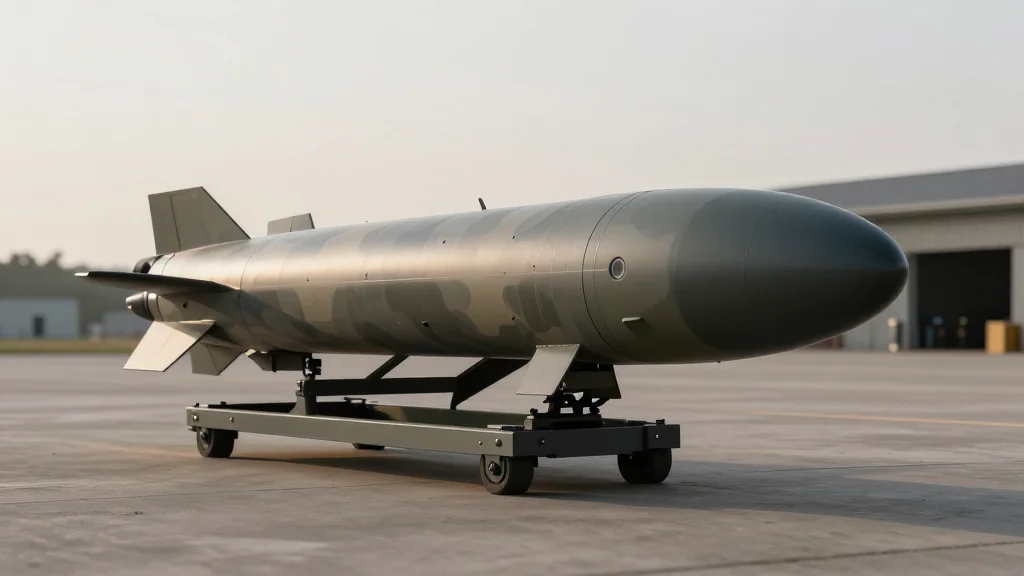
Pentagon Secures Framework to Buy 10,000 Low‑Cost Barracuda‑500M Cruise Missiles

Companies Mentioned
Why It Matters
The framework agreements represent a decisive shift from the traditional, single‑source, cost‑plus procurement model toward a market‑driven approach that leverages private‑sector speed and capital. By committing to firm‑fixed‑price contracts and containerized delivery, the Pentagon seeks to lower unit costs, mitigate supply‑chain risks, and ensure rapid replenishment of strike assets in a high‑intensity conflict, particularly in the Indo‑Pacific theater. Beyond cost savings, the deals broaden the defense industrial base by bringing newer entrants such as Anduril and Castelion into the core missile supply chain. This diversification reduces reliance on legacy prime contractors, fosters competition, and may accelerate innovation in areas like autonomous targeting and hypersonic propulsion, shaping the future architecture of U.S. lethal strike capabilities.
Key Takeaways
- •Pentagon signs framework agreements with Anduril, CoAspire, Leidos and Zone 5 to procure >10,000 low‑cost cruise missiles (Barracuda‑500M) over 2027‑2029
- •Anduril commits to delivering at least 1,000 missiles per year, with a $40 million investment in a Southern California production line
- •Leidos will supply an initial 3,000 LCCMs modeled after its AGM‑190A Small Cruise Missile
- •Parallel contract with Castelion targets a minimum of 500 Blackbeard hypersonic missiles annually, with a plan for >12,000 units over five years
- •Firm‑fixed‑price terms and containerized launch concepts aim to cut costs, speed production and expand the U.S. defense industrial base
Pulse Analysis
The Pentagon’s LCCM framework is more than a procurement shortcut; it is a test case for a broader acquisition transformation that could ripple through the entire defense sector. By anchoring contracts to commercial‑style, fixed‑price terms, the DoD forces suppliers to internalize cost discipline, a stark contrast to the historically inflated budgets of legacy missile programs. This could pressure traditional prime contractors to adopt leaner production methods or risk losing market share to agile newcomers.
The emphasis on containerization also signals a strategic pivot toward modular, rapidly deployable strike assets. Shipping‑container launchers blur the line between combat and logistics, complicating adversary targeting and enabling dispersed basing concepts that are especially valuable in contested maritime environments. If the utility assessment validates performance, we may see a cascade of similar container‑based weapons—ranging from loitering munitions to directed‑energy systems—entering the force structure.
Finally, the inclusion of a hypersonic component via Castelion underscores the DoD’s desire to democratize high‑speed strike capabilities. By treating hypersonics as a low‑cost, high‑volume commodity rather than a bespoke, ultra‑expensive program, the Pentagon could accelerate fielding timelines and create a new class of affordable, rapid‑response weapons. The success or failure of these frameworks will likely inform future policy decisions on how the United States balances innovation, cost, and industrial resilience in the next generation of warfare.
Pentagon Secures Framework to Buy 10,000 Low‑Cost Barracuda‑500M Cruise Missiles
Comments
Want to join the conversation?
Loading comments...