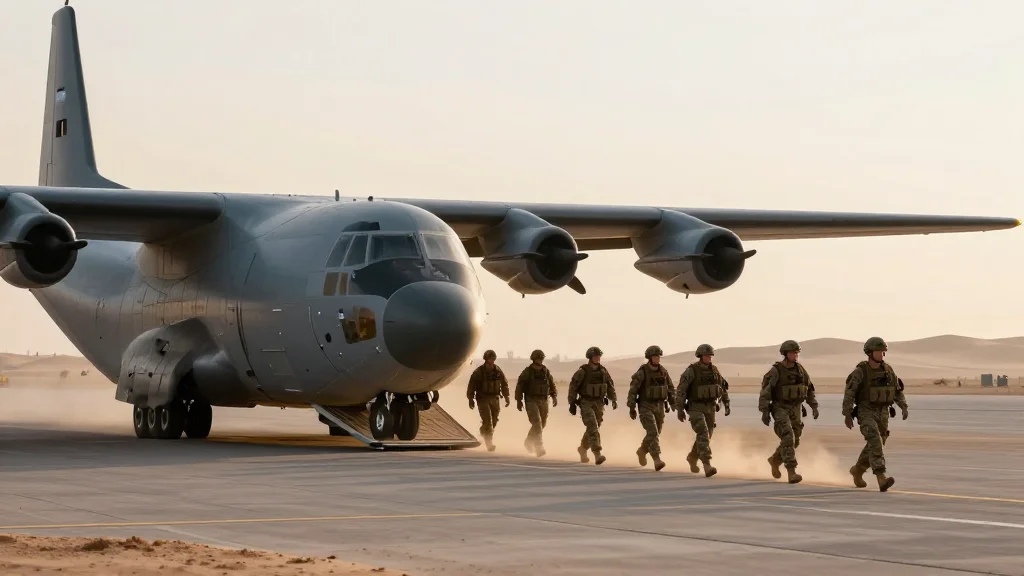
Pentagon Sends Over 1,000 82nd Airborne Troops to Middle East as Iran Conflict Escalates

Why It Matters
The deployment of over 1,000 airborne troops and several thousand Marines marks the most significant U.S. ground force movement in the Iran conflict to date, raising the stakes for regional stability. If the troops are used to pressure Tehran, the move could trigger a broader escalation, drawing in Gulf states and potentially widening the war beyond Iran’s borders. Conversely, the presence may serve as a bargaining chip, forcing Iran back to the negotiating table, but it also tests the U.S. military’s ability to project force in a highly contested, drone‑dense environment. Beyond the immediate theater, the buildup underscores systemic challenges in U.S. defense procurement. The contrast between rapid startup innovation cycles and the Pentagon’s decade‑long acquisition timelines could limit the effectiveness of any ground operation, highlighting a strategic gap that may shape future U.S. force design and budgeting decisions.
Key Takeaways
- •Pentagon orders >1,000 82nd Airborne soldiers and two MEUs (~5,000 troops) to the Middle East
- •President Trump promotes a 15‑point peace plan while Iran rejects negotiations
- •Analysts cite three possible ground missions: Kharg Island, nuclear material capture, or coastal blockade
- •Republican lawmakers split: Nancy Mace opposes ground troops; Mike Johnson downplays the buildup
- •Global defense spending hits $2.44 trillion in 2023, but procurement cycles remain a decade‑long bottleneck
Pulse Analysis
The decision to move a sizable airborne contingent into the Persian Gulf reflects a strategic pivot from the U.S.'s traditional reliance on air power to a more kinetic posture. Historically, the United States has used limited ground forces as a signal of resolve—think the 1991 Gulf War’s initial 30,000‑troop deployment—yet the current environment is markedly different. Iran’s integrated air‑defense network, dense swarm‑drone capabilities, and asymmetric maritime threats mean that any ground force would need robust, high‑tech support, a requirement that the Pentagon’s decade‑long acquisition pipeline struggles to meet. This mismatch could force the military to lean on commercial off‑the‑shelf technologies or fast‑track defense startups, accelerating the very procurement reforms advocated by industry observers.
Politically, the troop surge is a double‑edged sword. For Trump, it provides leverage in negotiations and satisfies a domestic constituency that favors a hardline stance. For regional allies, especially Gulf states that have historically mediated U.S. conflicts, the move erodes trust and may push them toward independent security arrangements, such as deeper cooperation with China or Russia. The backlash from Republican lawmakers like Nancy Mace also signals a growing war‑weariness that could constrain future escalations.
Looking ahead, the United States faces a strategic choice: convert the airborne presence into a limited, well‑defined operation with clear objectives and exit criteria, or risk a protracted ground engagement that could strain logistics, inflate casualties, and destabilize the broader Middle East. The outcome will likely influence defense budgeting for the next decade, potentially accelerating the push for faster, more modular acquisition models that align with the rapid innovation cycles of the private sector.
Pentagon Sends Over 1,000 82nd Airborne Troops to Middle East as Iran Conflict Escalates
Comments
Want to join the conversation?
Loading comments...