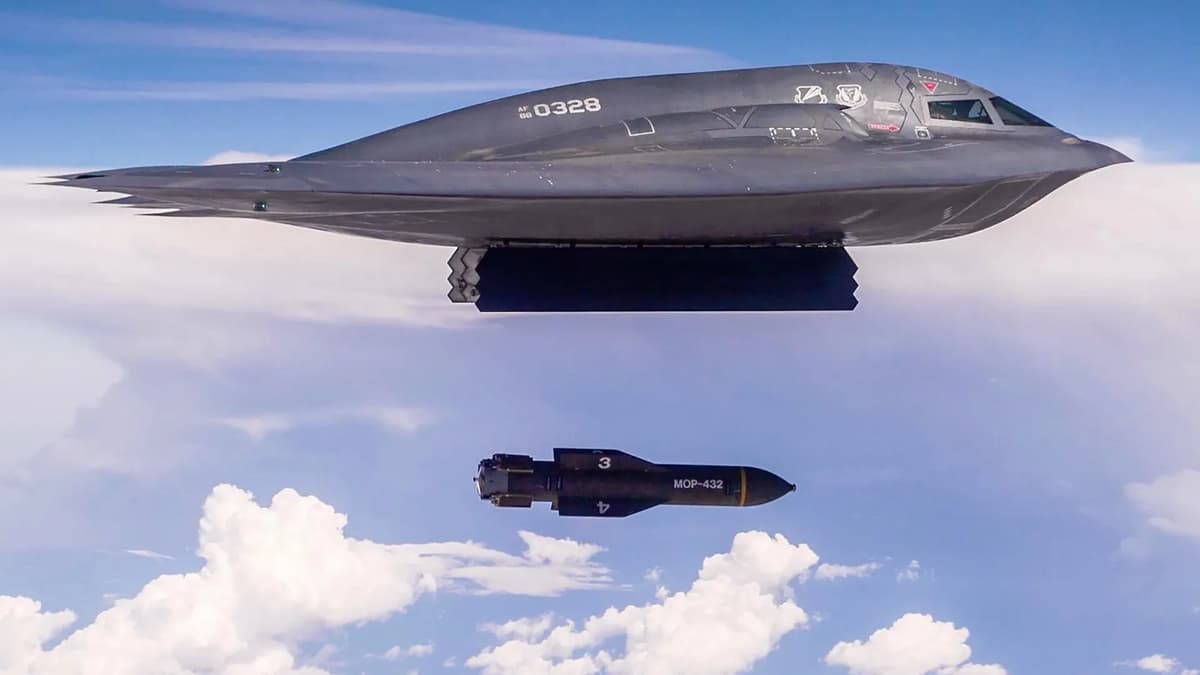
Pentagon to Restock Massive Ordnance Penetrator Bombs Dropped by B-2s on Iran
•February 13, 2026
0
Why It Matters
Restocking MOPs preserves the United States’ ability to neutralize hardened, underground threats, while the upcoming NGP could redefine bomber payload strategies and broaden the defense supplier base.
Key Takeaways
- •$100M Boeing contract replenishes expended GBU‑57 bombs
- •Last MOP batch before shifting to Next‑Generation Penetrator
- •Tailkit deliveries slated to begin Jan 2028
- •NGP targets lighter 22,000‑lb penetrator for B‑21
- •Procurement opens competition beyond Boeing’s IP
Pulse Analysis
Operation Midnight Hammer demonstrated the strategic value of the 30,000‑pound GBU‑57 Massive Ordnance Penetrator, a weapon designed to breach reinforced concrete and rock to destroy deep‑buried nuclear infrastructure. Dropped by B‑2 Spirit stealth bombers, the MOPs achieved their intended over‑pressure and blast effects, confirming the United States’ capability to neutralize Iran’s clandestine facilities. The successful use of these bombs has kept them at the forefront of the Air Force’s deep‑target arsenal for over a decade.
In February, the Air Force released partially redacted documents confirming a $100 million procurement effort with Boeing to replace the MOPs used in the 2025 strikes. The contract, described as “critically needed,” will fund full weapon systems, including tailkits scheduled for delivery beginning January 10, 2028. This replenishment is framed as essential to restore operational readiness for Air Force Global Strike Command and to support contingency war plans across all combatant commands. At the same time, the service is winding down production of the GBU‑57, positioning the newly acquired stock as the final legacy batch before the transition to the Next‑Generation Penetrator (NGP).
The NGP program aims to deliver a lighter, roughly 22,000‑pound penetrator capable of fitting the emerging B‑21 Raider bomber, which offers reduced payload capacity compared to the B‑2. By seeking a more open, competitive acquisition strategy, the Pentagon hopes to diversify the supplier base, reduce reliance on Boeing’s proprietary software, and accelerate innovation in hard‑target strike technology. This shift could reshape the industrial landscape for high‑energy weapons, influence future bomber design considerations, and ensure the United States maintains a credible deterrent against fortified adversary sites.
Pentagon to Restock Massive Ordnance Penetrator Bombs Dropped by B-2s on Iran
0
Comments
Want to join the conversation?
Loading comments...