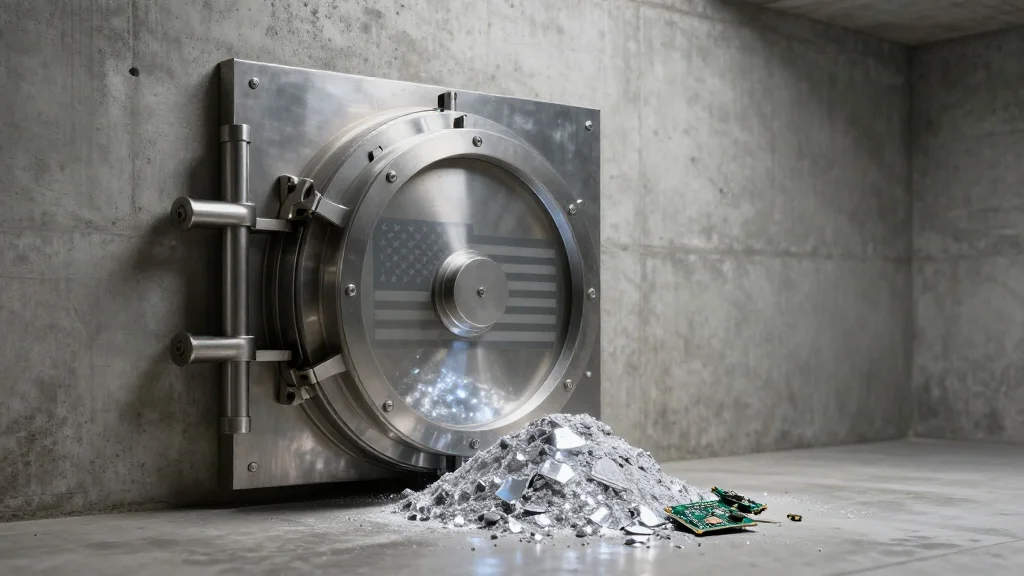
Pentagon Turns to Domestic E‑Waste Stockpiles as Critical Minerals Source

Companies Mentioned
Why It Matters
Securing a reliable domestic source of critical minerals is essential for maintaining the United States’ defense manufacturing base and for meeting the 2027 DFARS ban on Chinese and Russian materials. By extracting metals from classified electronics, the Pentagon can reduce dependence on foreign smelters, improve supply chain resilience, and potentially lower procurement costs for next‑generation weapons that rely on rare earths and high‑purity copper. The initiative also aligns with broader national security goals of reducing strategic vulnerabilities in the face of adversaries that are accelerating their own AI‑driven decision cycles and expanding their own mineral extraction capabilities. Beyond the immediate defense implications, the program could catalyze a domestic recycling industry, creating jobs and fostering technological innovation in hydrometallurgy. If successful, the model may be replicated across other federal agencies that manage large volumes of e‑waste, amplifying the environmental and economic benefits while reinforcing national security.
Key Takeaways
- •Pentagon will harvest copper, gold, palladium, silver and tin from classified electronics in its warehouses.
- •Project Vault allocates $12 billion to build a critical‑minerals stockpile; DOE adds $500 million for recycling facilities.
- •Only ~15% of U.S. e‑waste is recycled; most printed circuit boards are exported for processing.
- •New hydrometallurgical plants can be built in 15 months for about $40 million each.
- •2027 DFARS deadline bans contracts for minerals sourced from China, Russia, Iran or North Korea.
Pulse Analysis
The Pentagon’s decision to mine its own e‑waste marks a pragmatic response to a supply‑chain shock that has been brewing for years. Historically, U.S. defense procurement has relied on a global network of miners and smelters, many of which sit in geopolitically sensitive regions. The 2027 DFARS ban forces a rapid re‑evaluation of that model, and the internal stockpile approach offers a low‑hang‑time, high‑visibility solution. While the $12 billion Project Vault budget is sizable, the real challenge lies in converting that capital into operational capacity. Hydrometallurgical technologies have proven their technical viability, but scaling them to meet the Pentagon’s annual metal demand will require coordinated investment, regulatory fast‑tracking, and a skilled workforce.
From a competitive standpoint, the move could pressure allied nations to adopt similar domestic recycling strategies, potentially reshaping the global market for critical minerals. China’s dominance in rare‑earth processing has long been a strategic headache for Washington; a successful U.S. recycling pipeline could erode that leverage and create a new export niche for American‑processed metals. However, the initiative also risks creating a new bottleneck if the domestic processing infrastructure cannot keep pace with the volume of classified hardware slated for destruction.
Looking ahead, the Pentagon’s success will hinge on three factors: the speed at which new facilities come online, the ability to certify the purity and traceability of recovered metals for defense use, and the integration of these materials into existing supply chains without disrupting current production schedules. If these hurdles are cleared, the program could become a cornerstone of a broader “industrial security” doctrine that treats every piece of government‑owned hardware as a potential resource, turning waste into a strategic advantage.
Pentagon Turns to Domestic E‑Waste Stockpiles as Critical Minerals Source
Comments
Want to join the conversation?
Loading comments...