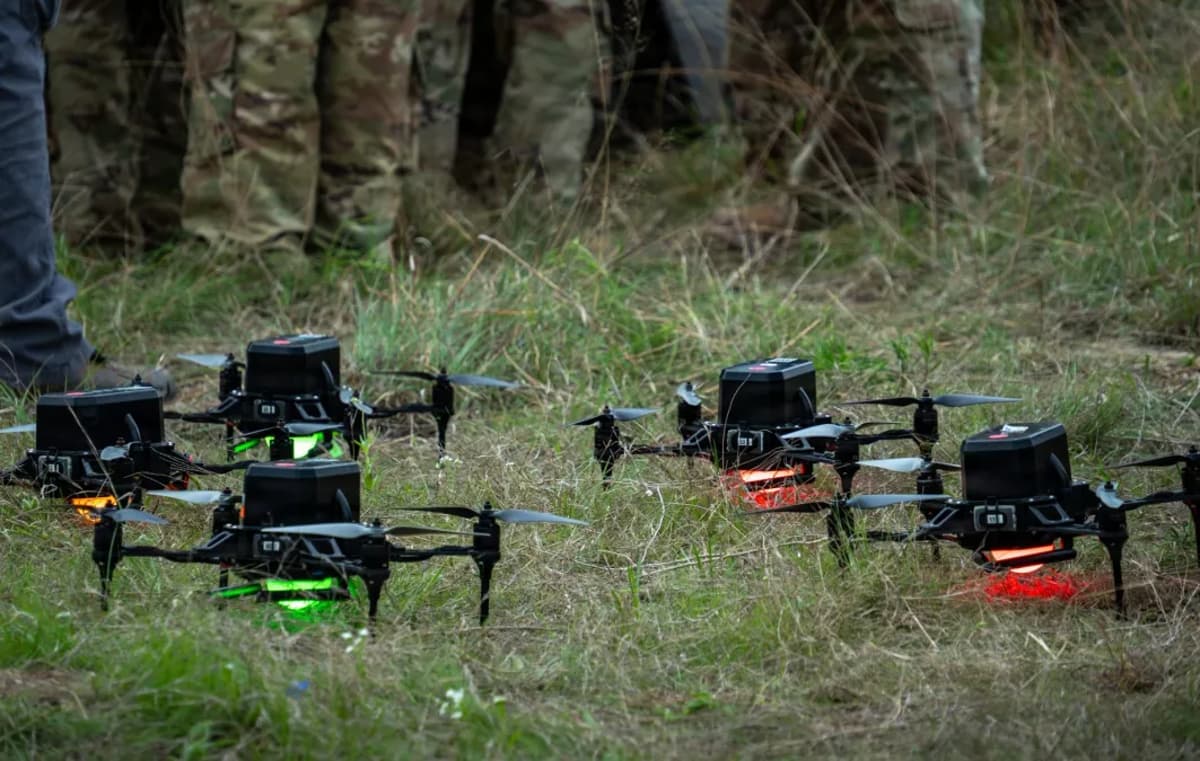
Petraeus: $55 Billion Drone Investment Won’t Buy a Fighting Force Without Doctrine
Key Takeaways
- •Pentagon requests $54.6 billion for autonomous warfare FY27.
- •Less than 2% of funds allocated to doctrine and training.
- •Past drone programs stalled by lack of support personnel and doctrine.
- •Petraeus urges Congress to earmark 5% for doctrine development.
- •Without institutional frameworks, spending may not yield combat‑ready autonomous forces.
Pulse Analysis
The FY27 defense budget proposes an unprecedented $54.6 billion allocation for autonomous warfare, a figure that dwarfs previous years’ spending by more than 20,000 percent. While the raw numbers signal a decisive shift toward unmanned systems, history shows that hardware alone does not guarantee battlefield superiority. The early Predator era illustrates how a fleet of aircraft can sit idle without a supporting ecosystem of trained operators, maintenance crews, and clear employment concepts. That lesson is now resurfacing as the Pentagon prepares to field swarms of AI‑driven platforms at scale.
Petraeus and Flanagan argue that the current funding plan neglects the doctrinal foundation required to turn drones into a cohesive fighting force. Less than two percent of the budget is directed toward developing joint concepts, training pipelines, and feedback mechanisms that translate commander intent into machine‑executable parameters. The U.S. also lacks a unified command structure for coordinating autonomous formations, a gap that hampers rapid adaptation—an advantage demonstrated by Ukraine’s improvised drone tactics. By investing heavily in hardware while under‑funding doctrine, the services risk repeating the bottlenecks that once slowed Predator integration.
To avoid a costly misstep, the authors propose three congressional actions: earmark at least 5 % of autonomous‑warfare funds for doctrine, training and force design; embed continuous feedback loops in acquisition contracts; and require regular reporting on how operational lessons reshape policy and procurement. Such measures would align spending with the institutional capacity needed to outpace rivals like Russia and China, which are already field‑testing autonomous concepts in live combat. Proper sequencing ensures that the $55 billion investment translates into a truly combat‑ready, AI‑enabled force rather than a spreadsheet of assets.
Petraeus: $55 Billion Drone Investment Won’t Buy a Fighting Force Without Doctrine
Comments
Want to join the conversation?