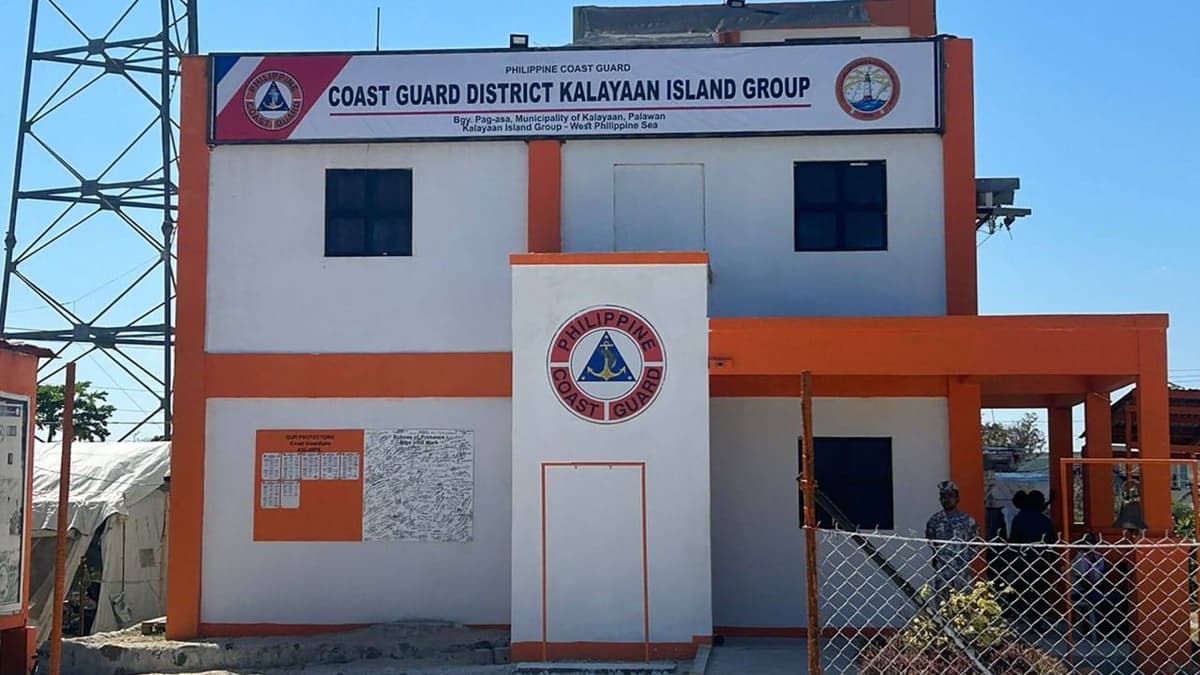
Philippines Expands South China Sea Footprint with Permanent Thitu Island Base
Why It Matters
By establishing a permanent base, the Philippines elevates its defensive posture and reinforces its legal claim, heightening strategic competition with China and influencing broader regional security dynamics.
Key Takeaways
- •Philippines opens first permanent coast‑guard base on Thitu Island.
- •District covers 68,000 sq km of contested Spratly waters.
- •Commodore‑level commander and permanently stationed ship now on site.
- •Chinese Coast Guard vessels warned journalist near the new base.
- •Base aims to strengthen Philippines’ claim over Kalayaan island group.
Pulse Analysis
The South China Sea remains one of the world’s most contested maritime zones, with Beijing asserting sovereignty over nearly the entire expanse despite a 2016 international tribunal ruling that dismissed its claims. Manila has long relied on intermittent patrols from Palawan, but the lack of a permanent foothold left its claim to the Kalayaan islands vulnerable. The establishment of a dedicated Philippine Coast Guard district on Thitu Island marks a strategic shift, providing continuous surveillance, rapid response capability, and a tangible symbol of state authority in a region where presence often translates to legitimacy.
Thitu Island, known locally as Pag‑asa, sits at the heart of the Spratly chain and controls access to vital shipping lanes and potential energy reserves. The new command centre’s jurisdiction—approximately 68,000 sq km—covers key sea lanes used by commercial vessels and military ships alike. By stationing a commodore‑level commander, a permanent cutter, and additional response vessels, the Philippines can more effectively monitor incursions, enforce its maritime laws, and coordinate with allied navies. The visible Chinese Coast Guard activity during the base’s activation underscores the heightened tension and the importance of a robust, on‑the‑ground capability.
Regional allies, particularly the United States and Japan, have repeatedly urged a rules‑based order in the South China Sea. Manila’s move aligns with broader coalition efforts to counterbalance Beijing’s maritime expansion without escalating to open conflict. While the base may provoke diplomatic protests from China, it also offers the Philippines a stronger bargaining chip in future negotiations and a clearer platform for joint exercises with partner forces. In the long term, a permanent presence could deter aggressive maneuvers, protect fisheries, and support Manila’s economic interests tied to maritime trade and resource exploitation.
Philippines expands South China Sea footprint with permanent Thitu Island base
Comments
Want to join the conversation?
Loading comments...