Philippines Rejects China’s Claim It ‘Staged’ Cyanide Evidence at Disputed Shoal
Why It Matters
The episode escalates an already volatile South China Sea standoff, linking territorial claims to environmental sabotage and potential violations of international fishing law. It could prompt diplomatic protests, legal action, and heightened naval vigilance in a region critical to global trade.
Key Takeaways
- •Chinese fishermen allegedly deployed cyanide near the grounded BRP Sierra Madre
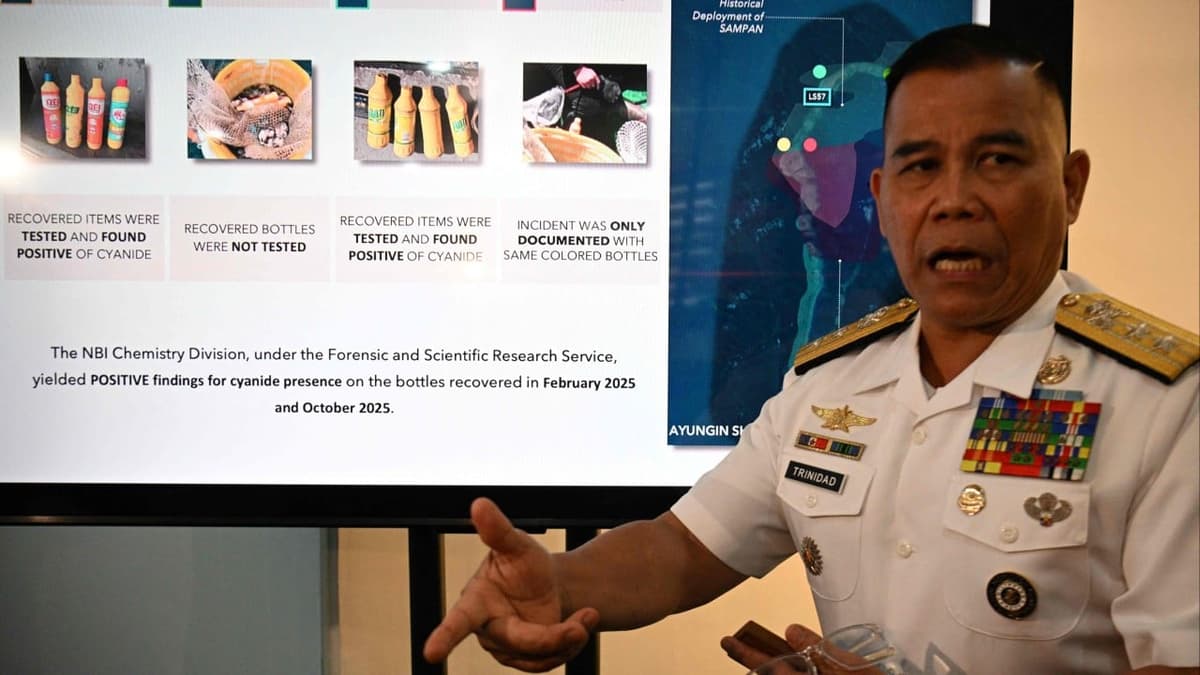
- •Philippine NBI lab confirmed cyanide presence in seized yellow bottles
- •Beijing accuses Manila of fabricating the cyanide incident
- •Both sides cite 2016 Hague ruling to support their claims
- •Potential legal routes include UN LOS filing and diplomatic protests
Pulse Analysis
The latest flare‑up over Second Thomas Shoal underscores how environmental tactics are becoming weapons in the South China Sea dispute. While the Philippines points to laboratory‑verified cyanide in bottles recovered from Chinese maritime‑militia sampans, Beijing frames the episode as a staged provocation. This narrative battle reflects a broader strategy: each side seeks to legitimize its presence by portraying the other as a violator of international norms, whether those norms pertain to territorial sovereignty or marine conservation.
Beyond the immediate accusations, the incident raises serious concerns about the health of the West Philippine Sea’s coral ecosystems. Cyanide, traditionally used in illegal fish‑stunning operations, can cause irreversible damage to reef structures and bio‑diversity, threatening the livelihoods of over 2.7 million Filipino fishers. The Philippine Navy’s reliance on desalinated seawater from the same area amplifies the risk to personnel and equipment, potentially compromising the operational readiness of the outpost on the grounded vessel.
Strategically, the episode may push Manila toward formal legal avenues, such as filing a case under the United Nations Convention on the Law of the Sea (UNCLOS) or seeking a new arbitration panel. International attention could increase pressure on Beijing, especially if environmental NGOs spotlight the ecological impact. For businesses monitoring geopolitical risk, the development signals heightened uncertainty for shipping lanes, offshore energy projects, and regional supply chains that depend on a stable security environment in the Indo‑Pacific.
Philippines rejects China’s claim it ‘staged’ cyanide evidence at disputed shoal
Comments
Want to join the conversation?
Loading comments...