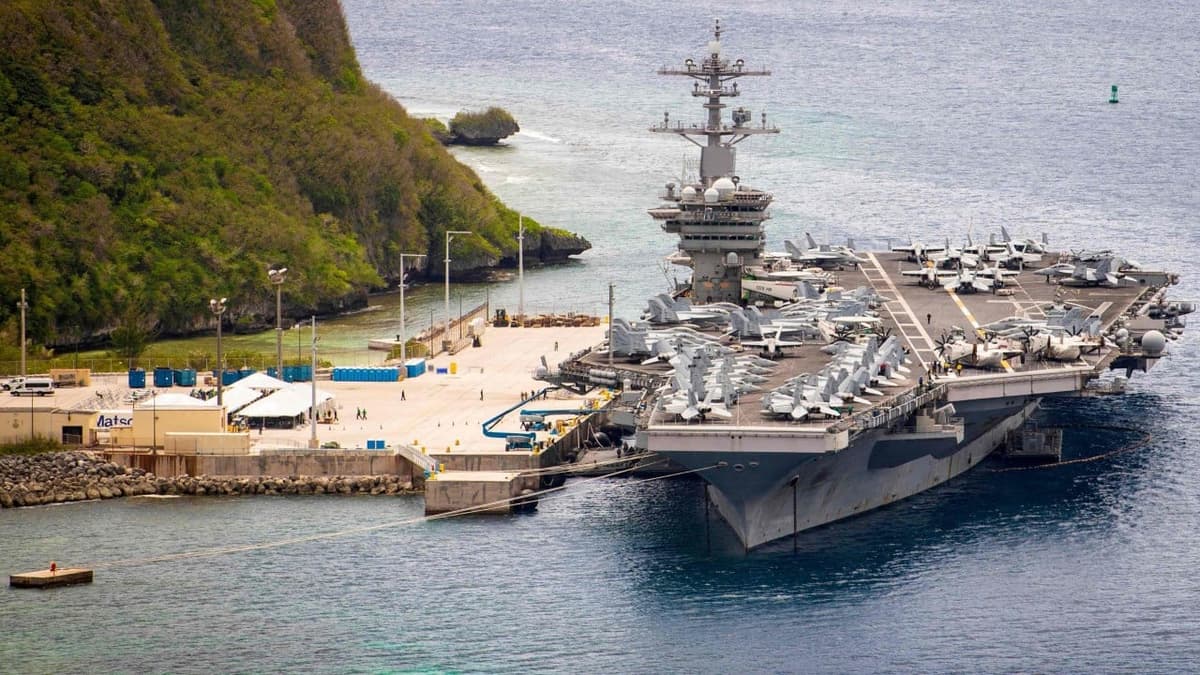
PLA Scientists Propose a Plan to Destroy US Carrier Groups From 3,000km Away
Companies Mentioned
Why It Matters
The proposal threatens the core of U.S. power‑projection, forcing a reassessment of carrier basing and missile defense investments. It signals a shift toward long‑range, precision strike capabilities that could erode the carrier’s strategic dominance.
Key Takeaways
- •PLA proposes 3,000 km strike range against carrier groups
- •Hypersonic glide vehicles central to long‑range attack concept
- •U.S. carriers repositioned to Guam to avoid conventional missiles
- •Potential arms race in anti‑ship ballistic missile tech
Pulse Analysis
China’s push to develop weapons that can strike U.S. carrier groups from 3,000 km reflects a broader doctrinal shift toward distance as a defensive shield. By integrating hypersonic glide vehicles and anti‑ship ballistic missiles, PLA scientists aim to bypass traditional layered defenses, exploiting the high speed and maneuverability of these systems. The strategy assumes that U.S. carriers, now stationed at remote outposts like Guam, will remain vulnerable despite the geographic separation, challenging the long‑held belief that distance alone guarantees safety.
For the United States, the emergence of such capabilities forces a strategic calculus change. Naval planners must consider augmenting carrier groups with advanced point‑defense systems, deploying forward‑deployed interceptors, or even re‑evaluating the carrier’s role in contested environments. Budget allocations may shift toward developing directed‑energy weapons and integrated air‑and‑missile defense networks capable of detecting and neutralizing hypersonic threats before they close to terminal range. The potential need for new basing concepts—such as dispersed, smaller surface combatants or unmanned platforms—could also reshape force posture across the Indo‑Pacific.
Regionally, the proposal heightens tension in an already volatile security landscape. Allies reliant on U.S. naval presence may demand stronger protective measures, while China’s demonstration of long‑range strike intent could embolden its maritime assertiveness in the South China Sea and beyond. The arms race dynamic may accelerate investments in counter‑hypersonic technologies worldwide, prompting a new era of high‑speed, long‑distance warfare that redefines deterrence and escalation thresholds. Stakeholders across defense, industry, and policy circles should monitor development timelines and assess mitigation pathways to preserve strategic stability.
PLA scientists propose a plan to destroy US carrier groups from 3,000km away
Comments
Want to join the conversation?
Loading comments...