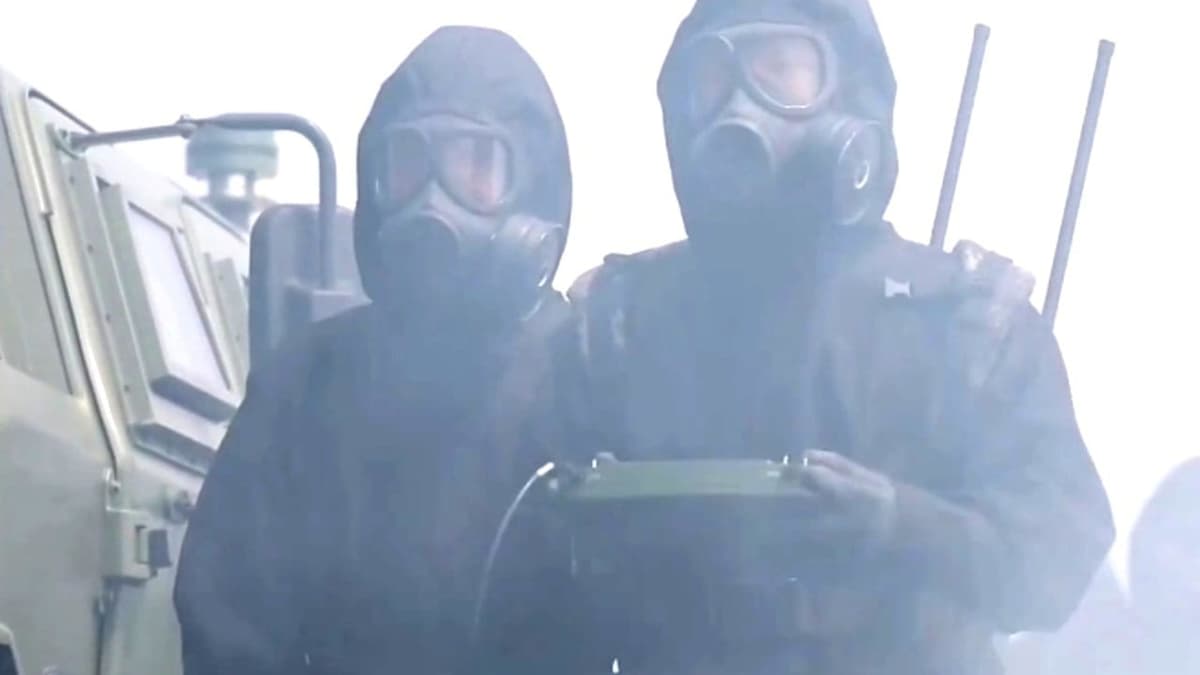
PLA Troops Facing Taiwan Strait and Japan Simulate Response to Nuclear Attack
Why It Matters
The drill signals Beijing’s intent to bolster CBRN readiness amid rising cross‑strait and Sino‑Japanese frictions, raising regional security concerns.
Key Takeaways
- •PLA drills decontamination for simulated nuclear attack.
- •Eastern Theatre Command covers Taiwan, East China Sea, Japan.
- •Japan claims capability to produce 5,500 warheads quickly.
- •New Japanese missiles with >1,000 km range deployed.
- •Nuclear plants near Taiwan and Japan within command’s area.
Pulse Analysis
The People's Liberation Army’s Eastern Theatre Command has placed CBRN (chemical, biological, radiological, nuclear) preparedness at the forefront of its training agenda, staging a full‑scale decontamination simulation that mirrors a nuclear strike scenario. By deploying uncrewed helicopters alongside traditional radiation detectors, the PLA demonstrated an integrated approach to quickly delineate contaminated zones and assess exposure for troops and equipment. This capability reflects a broader shift in Chinese military doctrine toward multi‑domain resilience, especially as the command’s jurisdiction spans the Taiwan Strait, the East China Sea, and key nuclear power sites in Fujian and Zhejiang.
Regional dynamics amplify the significance of the drill. Japan’s recent statements about potential military involvement in a Taiwan conflict, coupled with claims of possessing enough fissile material for 5,500 warheads and the deployment of missiles exceeding 1,000 km range, have heightened Beijing’s security calculus. The proximity of Japanese missile installations on Yonaguni Island to Chinese nuclear plants—within 400 km—creates a scenario where a conventional strike could inadvertently trigger radiological hazards. Consequently, the PLA’s emphasis on rapid decontamination underscores its anticipation of complex, hybrid threats that blend conventional and nuclear dimensions.
For policymakers and investors, the exercise offers a window into how China is preparing for worst‑case contingencies in a volatile Indo‑Pacific environment. The focus on swift detection, personnel screening, and equipment decontamination suggests that the PLA is building a doctrinal foundation for operating in contaminated battlefields, potentially influencing future force postures and procurement decisions. As the United States continues to back Taiwan’s defense and monitor nuclear safety risks, understanding China’s CBRN readiness becomes essential for assessing escalation thresholds and the broader stability of the region.
PLA troops facing Taiwan Strait and Japan simulate response to nuclear attack
Comments
Want to join the conversation?
Loading comments...