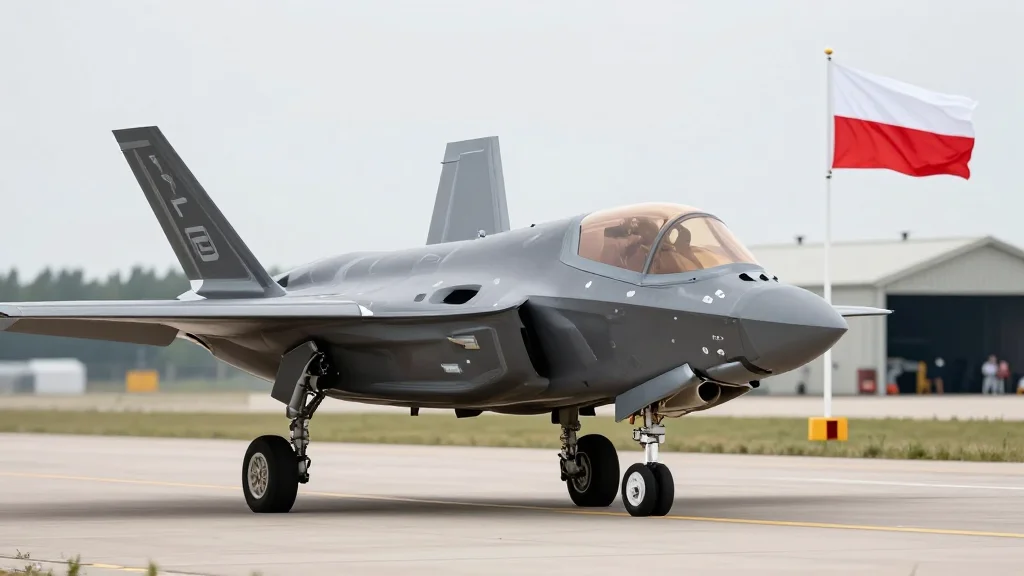
Poland to Receive First F‑35A ‘Husarz’ Jets, Boosting NATO’s Eastern Flank

Companies Mentioned
Why It Matters
The introduction of fifth‑generation fighters into Poland reshapes the balance of air power on NATO’s eastern frontier, offering Warsaw a credible deterrent against regional aggression and enhancing collective surveillance capabilities. By integrating the F‑35’s sensor‑fusion network with existing NATO assets, the alliance gains a more cohesive picture of the air domain, which is critical as adversaries field advanced missile and electronic‑warfare systems. Economically, the program injects billions of dollars into Poland’s defense sector, spurring infrastructure projects, job creation, and technology transfer. However, the high cost of sustainment and the need for a skilled maintenance workforce present long‑term fiscal and industrial challenges that will test Warsaw’s defense budgeting and industrial policy.
Key Takeaways
- •First F‑35A “Husarz” jets scheduled for delivery by third week of May 2026 at Łask Air Base.
- •Poland ordered 32 jets in 2020 under a $4.5 billion contract.
- •The fleet will operate alongside 48 upgraded F‑16V Block 52+ fighters for a dual‑layer defense.
- •Łódź Voivodeship allocated €200 million (~$215 million) for base upgrades and supporting infrastructure.
- •Operational capability expected in early 2027 after infrastructure and crew certification.
Pulse Analysis
Poland’s move to field the F‑35 marks a decisive step in NATO’s broader strategy to push advanced capabilities toward its eastern border. Historically, the alliance’s air‑defense posture in the region has relied on legacy platforms that lack the sensor‑fusion and low‑observable characteristics of modern fighters. By fielding the F‑35, Warsaw not only upgrades its own deterrent but also creates a hub for data sharing that can be leveraged by neighboring allies, effectively tightening the alliance’s integrated air‑and‑missile defense (IAMD) network.
The financial commitment—$4.5 billion for the aircraft plus an additional $215 million for base modernization—signals Poland’s willingness to shoulder a larger share of the collective defense burden. Yet the sustainability of such a high‑tech fleet will depend on Poland’s ability to cultivate a domestic supply chain and retain skilled personnel. The current reliance on Lockheed Martin for technical support underscores a potential vulnerability; any delays in technology transfer could impede readiness.
Looking ahead, the success of Poland’s F‑35 integration will likely influence procurement decisions in other Eastern European NATO members. If Warsaw can demonstrate a smooth transition—balancing operational readiness with manageable lifecycle costs—it could set a template for a regional modernization wave, compelling both allies and adversaries to reassess their strategic calculations in the European theater.
Poland to Receive First F‑35A ‘Husarz’ Jets, Boosting NATO’s Eastern Flank
Comments
Want to join the conversation?
Loading comments...