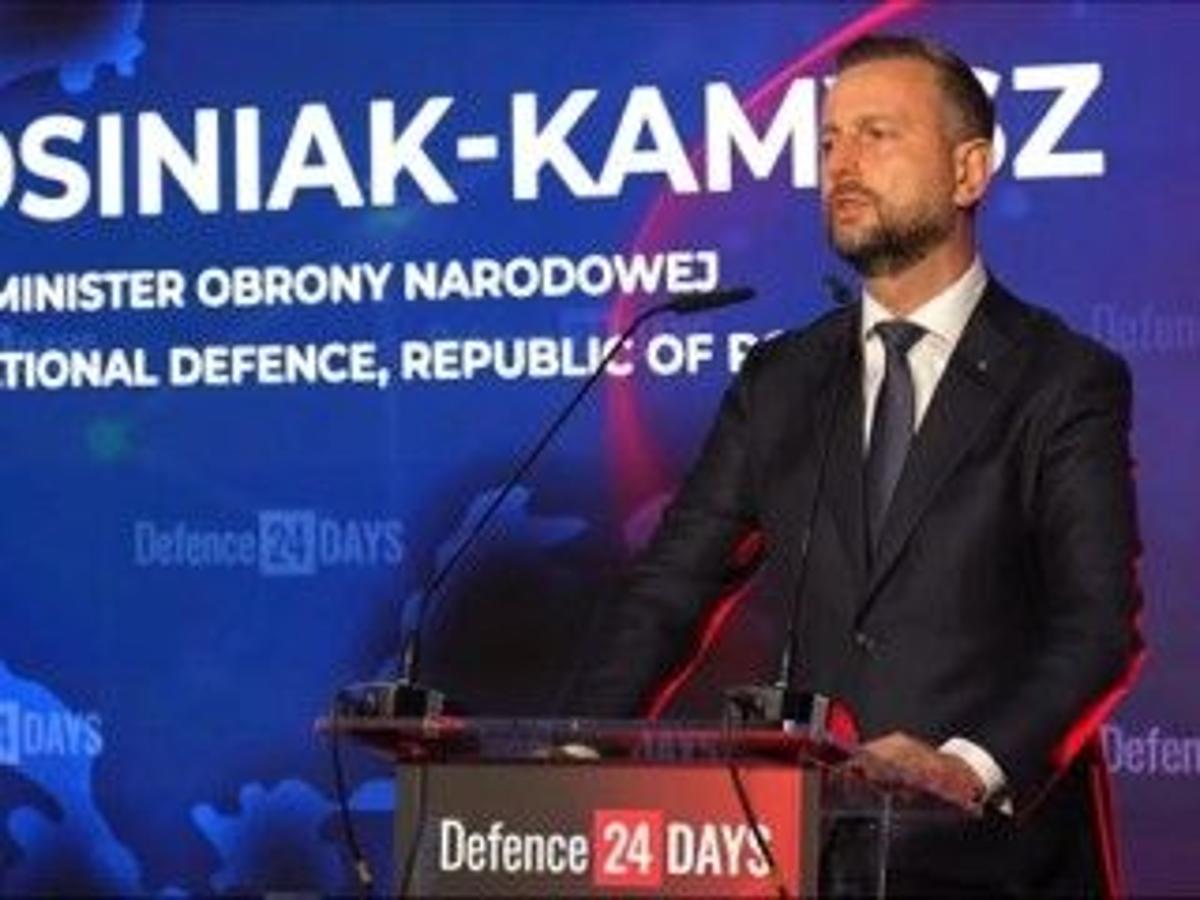
Polish Defence Minister Calls for 24/7 Arms Production
Why It Matters
Accelerating domestic arms production underpins Poland’s goal of the largest European army and strengthens NATO’s eastern flank, while early defence‑spending hikes pressure other allies to meet security commitments.
Key Takeaways
- •Kosiniak‑Kamysz demands continuous 24/7 production from Polish defence firms.
- •Poland targets 500,000 troops and 200,000 reservists by 2030.
- •Focus on drones, AI, satellite imagery, and deep‑strike capabilities.
- •Calls for NATO allies to reach 5% defence spending by 2030.
- •Emphasizes society, army, and alliances as pillars of security.
Pulse Analysis
Poland’s call for round‑the‑clock arms manufacturing reflects a strategic shift prompted by heightened regional tensions and the country’s ambition to field the largest army in Europe. By urging both state‑run and private firms to run multiple shifts, the defence ministry aims to close the gap between procurement plans and battlefield needs, especially as Warsaw prepares to double its active‑duty personnel and add a substantial reserve component by 2030. The move also signals to NATO that Poland is ready to shoulder a larger share of collective security on its eastern border.
The minister’s technology roadmap places autonomous systems and data‑driven tools at the core of future combat operations. Drones, counter‑drone networks, satellite imagery, artificial‑intelligence analytics, and deep‑strike weapons are earmarked for rapid scaling, yet Kosiniak‑Kamysz cautioned against over‑reliance on any single platform. By integrating these capabilities with conventional forces, Poland hopes to achieve a hybrid force structure that can respond to both conventional invasions and asymmetric threats. This balanced approach encourages domestic firms to diversify product lines, fostering a resilient supply chain that can adapt to shifting threat spectra.
Poland’s demand for NATO partners to meet a 5 % defence‑budget target by 2030 adds pressure on a continent still grappling with 2 % commitments. If realized, the increased spending could fuel cross‑border procurement, joint R&D, and shared production lines, amplifying the impact of Poland’s 24/7 push. However, scaling a workforce to half a million soldiers and expanding industrial capacity will require substantial investment, skilled labour, and regulatory agility. Observers will watch how Warsaw’s industrial acceleration influences broader European defence policy and whether it spurs a faster, more integrated NATO industrial base.
Polish defence minister calls for 24/7 arms production
Comments
Want to join the conversation?
Loading comments...