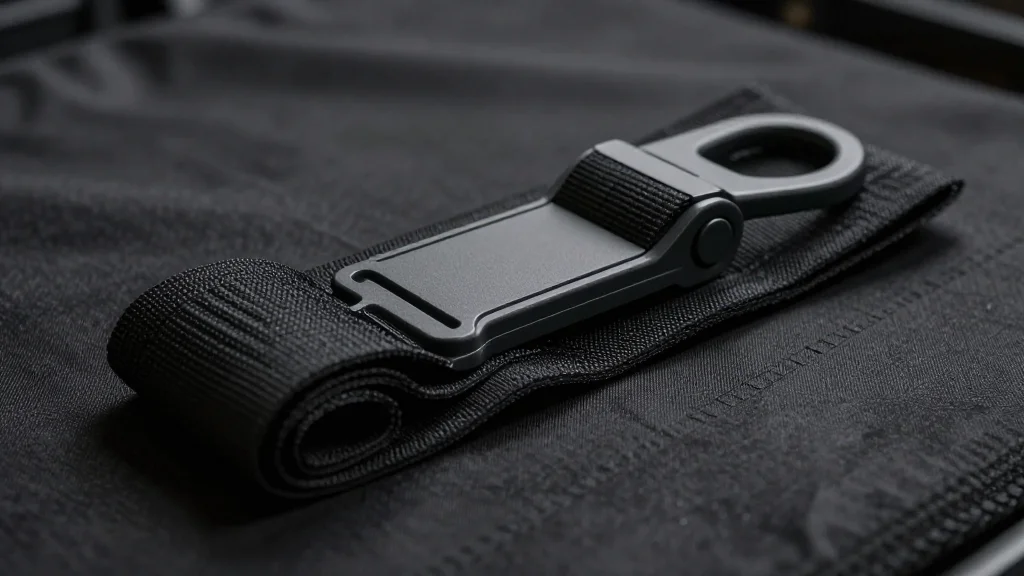
Pressure Points: Aristeia on Its New Battlefield Tourniquet
Why It Matters
The Generation 8 accelerates hemorrhage control in combat and disaster scenarios, reducing preventable deaths while lowering logistical burdens for armed forces and first‑responder agencies.
Key Takeaways
- •Generation 8 tourniquet reduces application time by roughly 30 %
- •Meets NATO STANAG 4509 for extreme temperature durability
- •95 % first‑attempt success in independent Natick testing
- •Flat‑fold design lets 1,000 units fit volume of 750 older models
- •Targeted at military, parapublic, and civilian emergency responders
Pulse Analysis
Aristeia, a Boston‑based medical‑device firm that grew out of the U.S. Army’s Combat Casualty Care program, unveiled its Generation 8 tourniquet in April 2026. The device replaces the older Generation 7 model with a slimmer, polymer‑composite band and a single‑hand pull‑to‑apply mechanism that promises a 30 percent reduction in application time. Its built‑in visual cue—‘PULL TO STOP BLEEDING and PLACE 1× WIDTH ABOVE WOUND’—helps users achieve optimal placement under stress. The new tourniquet also meets the latest NATO Standardization Agreement (STANAG 4509) for durability and temperature extremes.
The Generation 8 is being fielded to U.S. Army units, allied forces, and a growing cohort of parapublic agencies such as fire departments and law‑enforcement tactical teams. Independent testing by the U.S. Army Natick Soldier Research, Development and Engineering Center showed a 95 percent first‑attempt success rate, even when applied by personnel wearing gloves or under low‑light conditions. Because the band is lighter and folds flat, logisticians can pack 1,000 units in the same volume previously required for 750, reducing transport costs and easing supply‑chain constraints.
Beyond the battlefield, the Generation 8’s user‑friendly design opens doors for civilian emergency‑medical services and disaster‑relief NGOs that previously relied on bulkier, less intuitive devices. Analysts at Frost & Sullivan project the global tourniquet market to reach $1.2 billion by 2030, driven by increased demand for rapid‑bleed control in both combat and civilian settings. Aristeia’s early adoption by multiple government agencies positions it to capture a sizable share of that growth, while competitors such as SAM Medical and HyFin must accelerate innovation to keep pace.
Pressure points: Aristeia on its new battlefield tourniquet
Comments
Want to join the conversation?
Loading comments...