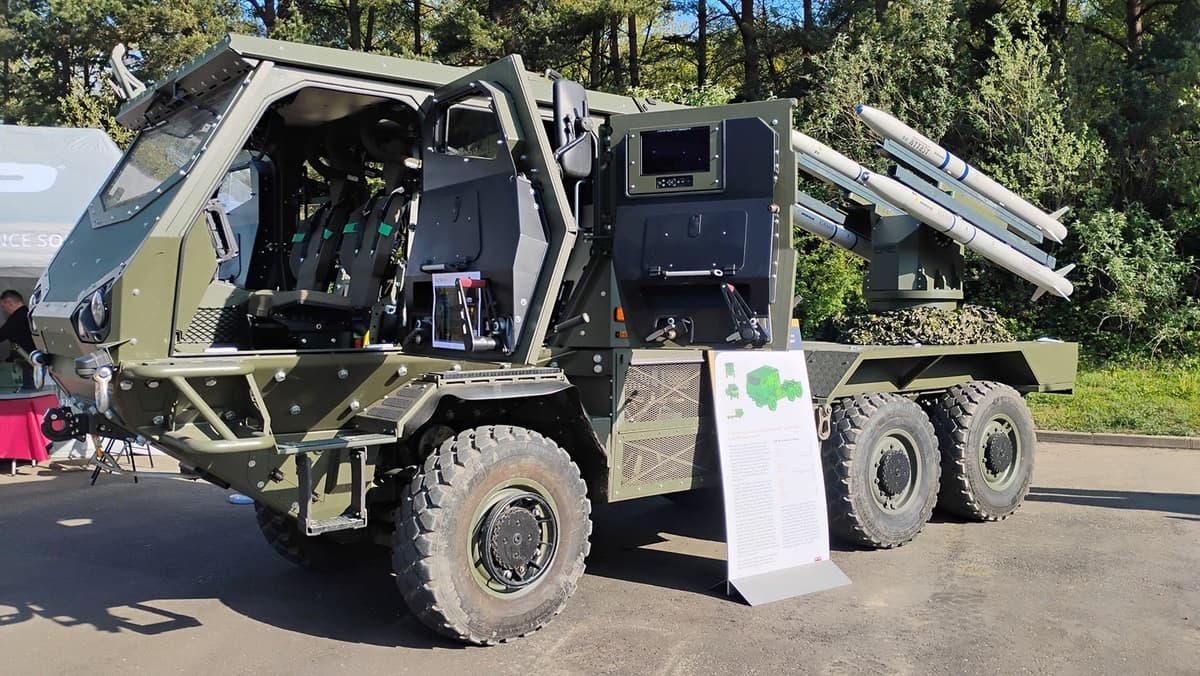
Raven 5: The Answer to the UK’s Mobile Air Defence Needs?
Why It Matters
Raven 5 fills a critical capability gap in the UK’s layered air‑defence architecture, bolstering protection of critical infrastructure and forward‑deployed forces. Its NATO‑compatible systems also enhance coalition interoperability amid rising near‑peer threats.
Key Takeaways
- •Raven 5 adds 30 km engagement range, up from 15 km.
- •Six‑wheel chassis enables rapid relocation across varied terrain.
- •Integrated with NATO IFF and digital fire‑control system.
- •Unit cost estimated at £1.2 million (~$1.5 million) per vehicle.
- •UK MoD plans to procure 100 units for domestic air‑defence.
Pulse Analysis
The United Kingdom has struggled to replace aging short‑range air‑defence assets after the retirement of legacy systems such as the Rapier and Starstreak. As hostile aerial platforms become more agile and low‑observable, the need for a mobile, quick‑reaction solution has intensified. Raven 5, a successor to the Ukraine‑deployed Raven 4, arrives at a moment when the British Army is reassessing its air‑defence posture, seeking a platform that can protect forward operating bases, critical infrastructure, and high‑value assets without the logistical footprint of larger systems.
Technically, Raven 5 marks a significant leap forward. Its new radar suite delivers a 30‑kilometre detection and engagement radius—roughly double that of its predecessor—while maintaining a low radar cross‑section. The vehicle’s six‑wheel drive, combined with an advanced suspension, allows it to traverse rough terrain and reposition within minutes, a vital attribute for counter‑UAS and cruise‑missile threats. A fully digital fire‑control system, integrated with NATO Identification Friend or Foe (IFF) protocols, enables seamless data sharing across allied command networks, reducing decision‑making latency. At an estimated £1.2 million per unit (about $1.5 million), the system balances capability with affordability, making it attractive for both domestic procurement and export markets.
Strategically, the adoption of Raven 5 could reshape the UK’s air‑defence strategy. By fielding a mobile, network‑centric platform, the Ministry of Defence can plug coverage gaps in the eastern and southern approaches, complementing longer‑range systems like the Sky Sabre. The system’s proven performance in Ukraine also offers a real‑world validation that may accelerate NATO allies’ interest, potentially spawning a new export niche for British defence firms. In an era where hybrid warfare and low‑cost aerial threats proliferate, Raven 5 provides a scalable, interoperable tool that strengthens deterrence and aligns with the UK’s broader goal of maintaining a resilient, coalition‑ready defence posture.
Raven 5: the answer to the UK’s mobile air defence needs?
Comments
Want to join the conversation?
Loading comments...