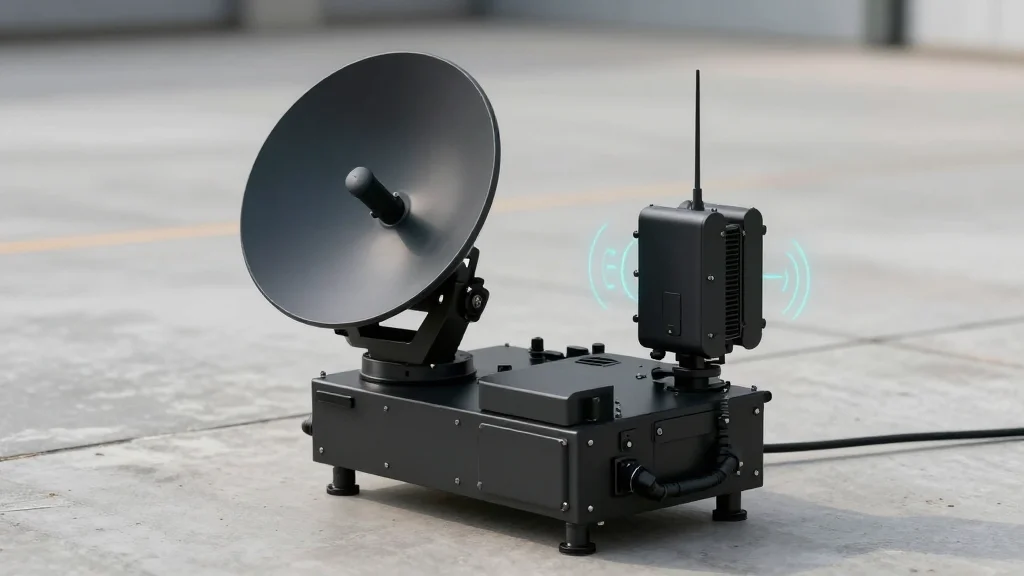
Raytheon Unveils Land Version of the Next Generation Jammer
Companies Mentioned
Why It Matters
A ground‑based NGJ gives the U.S. and allies a portable electronic‑warfare layer, strengthening defense against increasingly networked aerial threats. It also opens a new market for Raytheon in land‑centric electronic attack solutions.
Key Takeaways
- •Raytheon’s land NGJ prototype demonstrates portable, high‑power electronic attack
- •System can jam radar, communications, and drone data links simultaneously
- •Designed for rapid deployment in forward operating bases and critical sites
- •Expands Raytheon’s portfolio beyond naval electronic warfare
- •Potential to influence future joint‑force electronic‑attack doctrine
Pulse Analysis
The Next Generation Jammer has been a cornerstone of the U.S. Navy’s electronic‑warfare strategy, primarily mounted on EA‑18G Growler aircraft to suppress enemy radars and communications. Raytheon’s decision to adapt the NGJ for ground use reflects a broader shift toward multi‑domain operations, where electronic attack must be available not only in the sky but also on land. By leveraging the same high‑power, software‑defined architecture, the land variant promises rapid re‑configuration against evolving threats, from sophisticated integrated air defenses to swarming drones.
In practice, the ground‑based NGJ acts as an “invisible shield,” emitting tailored jamming waveforms that confuse or blind surveillance radars, target‑tracking sensors, and unmanned aerial systems. Its modular design allows integration with existing command‑and‑control networks, enabling operators to layer electronic attack with kinetic defenses. This capability is especially valuable for forward operating bases, critical infrastructure, and contested regions where air superiority cannot be guaranteed. By disrupting the data link chain, the system can degrade an adversary’s situational awareness without expending ammunition.
The introduction of a land NGJ also reshapes the defense market. Raytheon positions itself to capture contracts traditionally dominated by ground‑based electronic‑attack vendors, potentially prompting competitors to accelerate similar programs. Moreover, the technology aligns with the U.S. Department of Defense’s push for interoperable, cross‑domain solutions, suggesting future joint‑force doctrines will embed electronic warfare as a persistent, rather than episodic, capability. As adversaries invest heavily in networked sensors and autonomous weapons, portable jamming platforms like Raytheon’s land NGJ could become a decisive factor in maintaining battlefield dominance.
Raytheon unveils land version of the Next Generation Jammer
Comments
Want to join the conversation?
Loading comments...