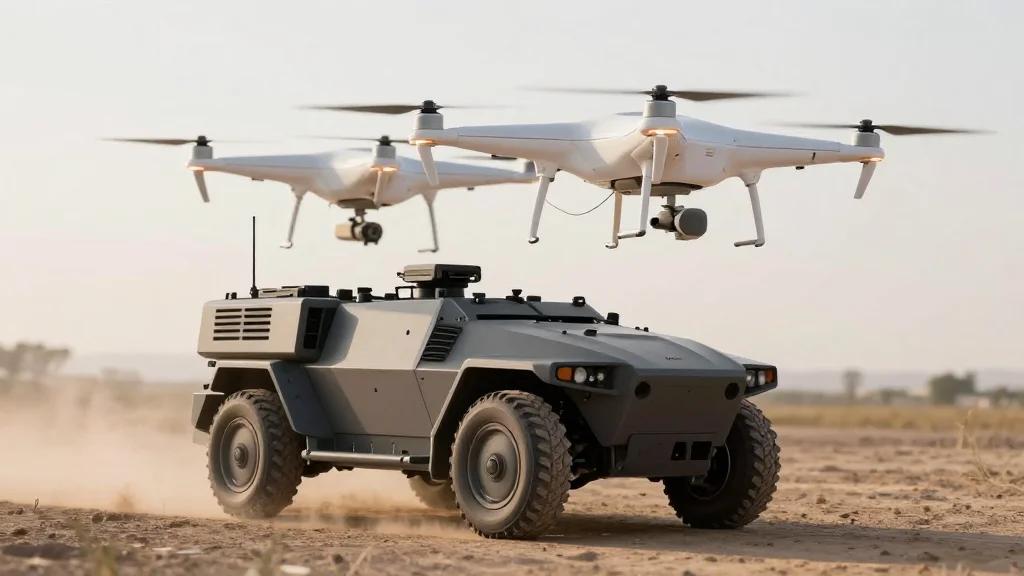
Realizing the Promise of the Drone Revolution
Why It Matters
If the DoDW can field affordable drone swarms, it could deter or defeat major‑power adversaries without matching their sheer numbers, reshaping the strategic balance. Success hinges on rapid institutional adaptation, making the issue critical for U.S. defense competitiveness.
Key Takeaways
- •Attritable drones cost a fraction of traditional defense platforms
- •Large swarms can offset numerically superior adversaries
- •DoD must revamp doctrine, training, and acquisition processes
- •Cultural shift toward agility and innovation is essential
Pulse Analysis
The drone revolution is no longer a futuristic concept; it is an emerging reality driven by rapid advances in autonomy, miniaturization, and low‑cost manufacturing. Commercial sectors have demonstrated that mass‑produced unmanned aerial systems can be built for a few thousand dollars, a stark contrast to the multi‑million‑dollar platforms traditionally fielded by the military. This price differential allows the U.S. to field swarms of disposable drones that can overwhelm enemy defenses, conduct persistent surveillance, and execute precision strikes, fundamentally altering the calculus of attrition in high‑intensity conflict.
Strategically, the ability to deploy large numbers of inexpensive drones offers a potent counter to adversaries with larger conventional forces. By saturating sensor networks and presenting multiple simultaneous targets, swarms can degrade an opponent’s situational awareness and force them to expend costly counter‑UAS assets. This asymmetry could deter aggression from near‑peer competitors who rely on sheer volume, as the U.S. can achieve comparable effects with a fraction of the expenditure. Moreover, the flexibility of modular payloads enables rapid reconfiguration for intelligence, electronic warfare, or kinetic missions, expanding operational options across the full spectrum of conflict.
Realizing these benefits, however, demands a systemic overhaul within the Department of War. Existing acquisition frameworks favor high‑cost, low‑quantity systems, while doctrine and training remain oriented toward legacy platforms. The paper recommends synchronized reforms across doctrine, organization, training, materiel, leadership, education, personnel, facilities, and policy, coupled with a cultural shift toward agility and innovation. By embracing these changes, the DoDW can integrate drone swarms into its force structure, ensuring that the promise of the drone revolution translates into a decisive strategic advantage.
Realizing the Promise of the Drone Revolution
Comments
Want to join the conversation?
Loading comments...