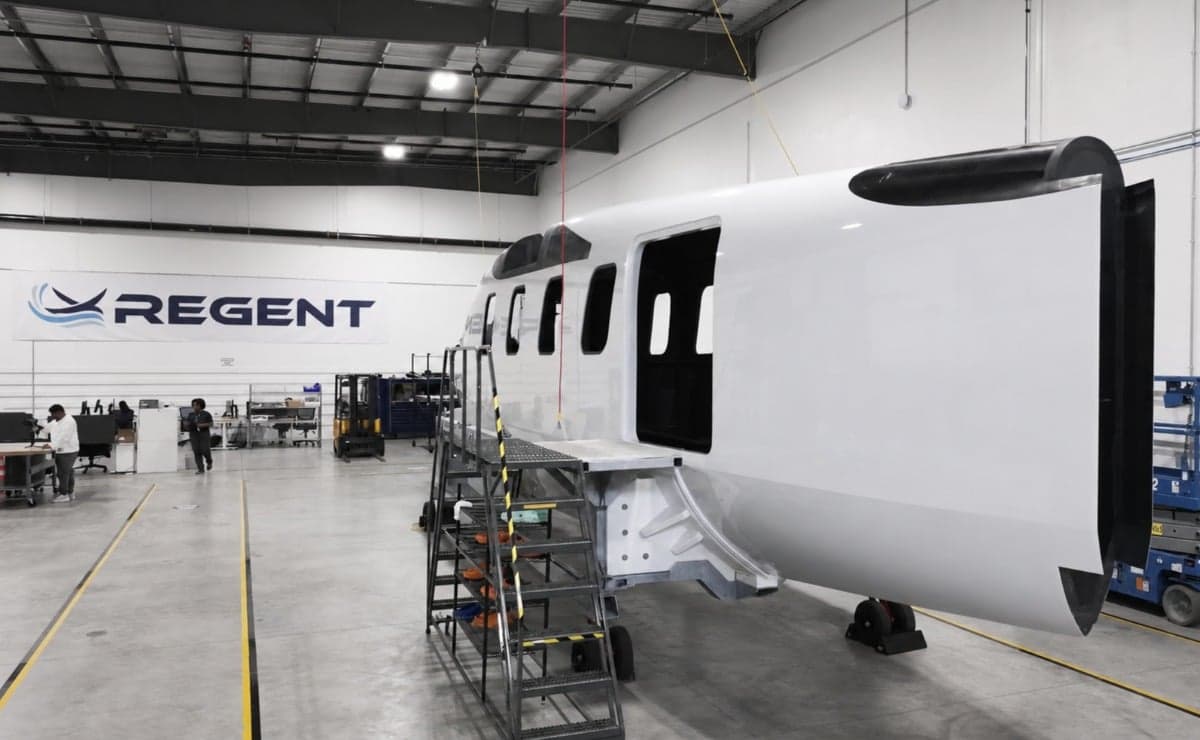
REGENT Completes the World’s First Seaglider Factory in Rhode Island
Why It Matters
The facility marks the first large‑scale production line for wing‑in‑ground‑effect vessels, opening a new market for ultra‑fast coastal transport and giving the U.S. defense sector a low‑observable logistics platform. It also signals a resurgence of domestic advanced maritime manufacturing, aligning with federal goals to rebuild the shipbuilding base.
Key Takeaways
- •255,000‑sq‑ft facility enables serial Seaglider production
- •$10 bn order book spans six continents, targeting coastal mobility
- •Viceroy carries 12 passengers; Squire serves unmanned cargo and defense
- •$15 m Marine Corps contracts validate defense applications
- •Facility will create 300 jobs, potential up to 750
Pulse Analysis
The Seaglider’s wing‑in‑ground‑effect design revives a Cold‑War concept with modern composites, electric propulsion and hydrofoil lift, delivering aircraft‑like speeds just above the water. By reducing drag and increasing lift, these vehicles can cut coastal travel times by half compared with traditional ferries, creating a compelling alternative for routes too short for jets yet too long for conventional boats. Industry analysts see the technology as a catalyst for a new class of high‑speed, low‑emission maritime transport, potentially reshaping regional mobility and tourism.
REGENT’s new 255,000‑square‑foot plant in Quonset Business Park provides the infrastructure needed to shift from hand‑built prototypes to volume manufacturing. The layout integrates aerospace‑grade assembly lines, hydrofoil integration bays and waterfront test zones, allowing seamless transition from hull construction to flight‑ready vessels. With an initial workforce of 300 and a roadmap to 750 employees, the project injects significant capital into Rhode Island’s economy and demonstrates how strategic public‑private partnerships can revive American shipbuilding capabilities that have lagged behind Asian competitors.
On the defense side, the $15 million U.S. Marine Corps contracts underscore the Seaglider’s tactical value for rapid, low‑observable littoral logistics. Its ability to skim above water reduces radar cross‑section and exposure time in contested zones, offering a speed advantage over conventional fast boats. As the Department of Defense pursues dual‑use platforms that blend civilian scalability with military performance, REGENT’s dual‑track approach positions it to capture both commercial ferry operators and defense procurement pipelines, potentially accelerating adoption across allied navies seeking next‑generation maritime mobility.
REGENT completes the world’s first Seaglider factory in Rhode Island
Comments
Want to join the conversation?
Loading comments...