Defense News and Headlines
  • All Technology
  • AI
  • Autonomy
  • B2B Growth
  • Big Data
  • BioTech
  • ClimateTech
  • Consumer Tech
  • Crypto
  • Cybersecurity
  • DevOps
  • Digital Marketing
  • Ecommerce
  • EdTech
  • Enterprise
  • FinTech
  • GovTech
  • Hardware
  • HealthTech
  • HRTech
  • LegalTech
  • Nanotech
  • PropTech
  • Quantum
  • Robotics
  • SaaS
  • SpaceTech
AllNewsDealsSocialBlogsVideosPodcastsDigests

Defense Pulse

EMAIL DIGESTS

Daily

Every morning

Weekly

Sunday recap

NewsDealsSocialBlogsVideosPodcasts
DefenseNewsRepublicans and Democrats Unite to Condemn Trump’s Attacks on Allies
Republicans and Democrats Unite to Condemn Trump’s Attacks on Allies
DefenseGlobal Economy

Republicans and Democrats Unite to Condemn Trump’s Attacks on Allies

•February 16, 2026
0
The Guardian – UK Defence
The Guardian – UK Defence•Feb 16, 2026

Companies Mentioned

Fox News

Fox News

Getty Images

Getty Images

GETY

Why It Matters

The unified criticism signals a potential realignment of U.S. foreign‑policy consensus, bolstering transatlantic trust and pressuring the White House to moderate its confrontational stance. It also reinforces legislative momentum for tougher sanctions on Russia and a coordinated response to trade disputes.

Key Takeaways

  • •Bipartisan leaders publicly denounced Trump's tariffs and unpredictability.
  • •European allies unified in response to Trump's Greenland claim.
  • •Democrats highlighted Ukraine support; Republicans echoed sanctions need.
  • •Republican Senator Tillis challenged GOP ally on Greenland rhetoric.
  • •Conference signaled shift away from traditional US diplomatic silence.

Pulse Analysis

The Munich Security Conference has long served as a barometer for global security trends, but this year it became a stage for unprecedented bipartisan dissent against the U.S. president. While traditionally the American delegation avoids internal criticism abroad, a coalition of Democrats and a handful of Republicans broke that norm, targeting Trump’s tariff strategy, erratic diplomatic tone, and the controversial Greenland overture. Their collective voice not only amplified concerns about trade volatility but also reinforced the message that unpredictable leadership can erode long‑standing alliances.

Europe’s reaction to the Greenland episode illustrates how external pressure can reshape U.S. policy calculations. By presenting a united front, European partners demonstrated that coordinated push‑back can neutralize unilateral moves, a lesson echoed by Hillary Clinton and other senior officials. This dynamic is especially critical as the continent grapples with the war in Ukraine; bipartisan U.S. legislators used the platform to reaffirm support for Kyiv and to advocate for robust secondary sanctions against entities aiding Russia. Such alignment may compel Congress to act, even as the White House remains reticent.

Looking ahead, the bipartisan outcry may signal a broader shift in American foreign‑policy discourse. As internal political fractures become more visible, lawmakers from both parties are positioning themselves as custodians of the transatlantic relationship, potentially reshaping trade negotiations and security commitments. The convergence of domestic criticism and international expectations could force the administration to adopt a more predictable, rules‑based approach, restoring confidence among allies and stabilizing markets that have been rattled by tariff threats and diplomatic volatility.

Republicans and Democrats unite to condemn Trump’s attacks on allies

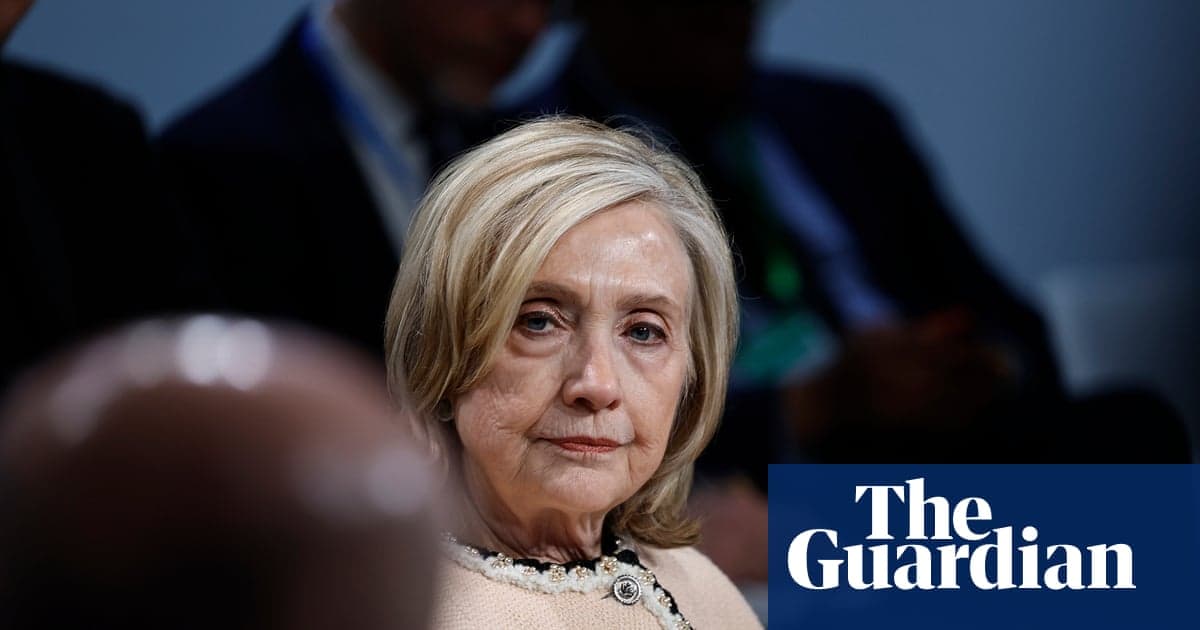
American politicians break rank at Munich Security Conference to hit out at ‘destructive’ president and urge Europe to stand up to Trump · Patrick Wintour, Diplomatic editor · Mon 16 Feb 2026 06:00 EST · Hillary Clinton said Europe’s unity over Greenland helped to neuter Trump’s response. Photograph: Johannes Simon/Getty Images

Donald Trump’s most unbridled critics at this weekend’s Munich Security Conference have not been Europeans but Americans – and not just Democrat politicians.

A few Republicans, out of earshot of the US president’s favoured Fox News, have had the courage to challenge Trump’s diet of tariffs and unpredictability.

The criticism ends what little remained of the tradition that the US delegation to the conference limits criticism of the commander‑in‑chief abroad.

The attacks came thick and fast as Democrats vied to disown Trump, or, in the case of Hillary Clinton, the former US secretary of state, to urge Europe that Trump’s chief weapon – perceived unpredictability – can be neutered by consistent push‑back.

In the case of Greenland she said the resistance “worked because a critical mass of our allies said ‘no, not like, we will negotiate. We’ll do this. We will do that’. There was a well‑presented opposition that said No. I hope what people are understanding is that unpredictability is uncomfortable, but it is important to arrive at a response and stick with it because that affects whether a leader thinks he can proceed … With Trump the question is, don’t doubt what he wants to do. Try to figure out how to stop him from doing it. Don’t debate what his intention is because he is telling you what his intention is. He may or may not be able to achieve it, but that is up to forces outside of him.”

Gavin Newsom, the Democrat governor of California, accused Trump of “doubling down on stupid”. He said: “Never in the history of the US has there been a more destructive president than the current occupant of the White House in Washington. He is trying to recreate the 19th century. He is a wholly owned subsidiary of big oil gas and coal.”

Newsom said he had been frustrated at the World Economic Forum in Davos a fortnight ago by Europe’s apparent lack of understanding of what it was up against. “There is no one more skilled at exploiting weakness,” he said.

But now he felt more encouraged by Europe’s response. “The one thing that Donald Trump has done that I deeply appreciate, and he has done it almost single‑handedly, is to unify Europe in a profound and consequential way and I applaud Donald Trump for making that happen.”

Elissa Slotkin, Democrat senator for Michigan who the US Department of Justice failed to indict on charges of sedition last week, said: “It’s not hidden to anyone at the Munich Security Conference – the US is going through something at the moment. Is anyone missing that?

“The fundamental question [for the agenda at Munich] is whether we are going to exert more pressure on Vladimir Putin – and because we are in a mess back home, we do not know the answer to this question … and if we stay on the merry‑go‑round it just extends the pain and suffering in Ukraine.”

She warned: “We will have to hit rock bottom before we come back.”

At one packed late‑night session on Friday, Alexandria Ocasio‑Cortez was for the first time presenting her foreign‑policy vision. “We are shocked at the president’s destruction of our relationship with our European allies,” she said. “His threatening over Greenland is not a joke. It is not funny; it threatens the very trust and relationships that allows peace to persist. I can say unequivocally the vast majority of the US people do not want to see these relationships frayed, and they are committed to our partnerships, relationships and our allies.”

But she was the speaker most determined not to return to the past. “I don’t know if we are in a post‑rules‑based order. It is possible we were in a pre‑rules‑based order and now we have an opportunity to explore what the world would look like if we upheld human rights, democracy, and trade that actually centres on working‑class people instead of overwhelmingly the benefits of trade accruing to the wealthiest.”

Jeanne Shaheen, the ranking Democrat on the US Senate foreign‑relations committee, stressed strong support for Ukraine was a bipartisan issue inside the Senate, even if it was not in the White House. She pointed out the Senate had legislation ready to go to impose severe secondary sanctions on countries that do business with Russia.

Gretchen Whitmer, the Michigan governor, warned: “Trust is built over generations and it can be lost fast. In the last 14 months we have done a lot of damage. [If you say no to Canada], you say yes to China.”

A Republican in attendance, Senator Thom Tillis, echoed her, warning the law of economics tariffs were going to cause damage. Strikingly, he also challenged Lindsey Graham, one of Trump’s closest Republican allies, who recently said, “who gives a shit who owns Greenland?”

Appearing at the conference, Tillis said: “The 85,000 Indigenous people in Greenland give a shit about who owns Greenland. And at the end of the day, we need to show respect .”

Read Original Article
0

Comments

Want to join the conversation?

Loading comments...