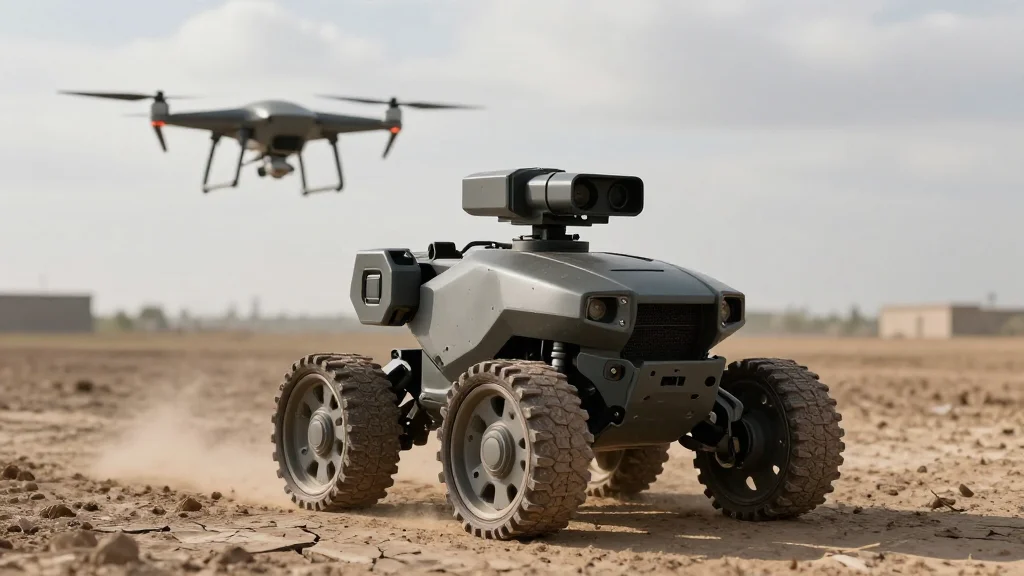
Robots Captured Russian Army Positions for First Time in History, Zelenskyy Says
Why It Matters
The breakthrough proves that autonomous platforms can replace high‑risk infantry assaults, reshaping battlefield tactics and potentially lowering casualty rates worldwide. It also signals a new market for advanced military robotics, accelerating defense innovation.
Key Takeaways
- •Ukrainian forces seized Russian position using only robots and drones
- •Operation incurred zero Ukrainian casualties, enemy surrendered
- •Ground robots completed over 22,000 missions in first quarter 2026
- •AI‑enabled Droid TW‑7.62 previously captured three Russian POWs
- •Robotics adoption reduces infantry risk and speeds assault timelines
Pulse Analysis
The Ukrainian army’s recent capture of a Russian stronghold using only unmanned ground systems and drones marks a watershed moment in modern warfare. While traditional assaults rely on infantry to breach defenses, Ukraine’s approach leveraged AI‑driven robots like the Droid TW‑7.62 to conduct reconnaissance, engage targets, and even take prisoners. By removing soldiers from the most hazardous zones, the operation not only eliminated immediate casualties but also demonstrated the practical viability of fully autonomous strike packages on a contested front line.
Behind the headline lies a broader technological narrative. Over the first three months of 2026, Ukrainian forces logged more than 22,000 robotic missions, ranging from supply runs to direct combat engagements. These platforms combine advanced sensor suites, machine‑learning target identification, and remote piloting from secure locations. The integration of UAVs for aerial overwatch and ground combat drones for close‑quarters action creates a layered, networked battlefield where human decision‑making is amplified rather than replaced. This synergy has already yielded tangible results, such as the capture of three Russian soldiers by an autonomous robot earlier this year.
The implications extend far beyond the Ukrainian theater. NATO allies and other defense ministries are closely monitoring the performance data, anticipating a shift toward mixed human‑machine units in future doctrines. Defense manufacturers are likely to accelerate R&D investments in ruggedized, AI‑capable platforms that can operate in contested environments. As the cost of autonomous systems continues to decline, the strategic calculus for conventional forces will evolve, emphasizing speed, precision, and survivability over sheer manpower. This paradigm shift could redefine how nations plan, train, and execute combat operations in the coming decade.
Robots captured Russian army positions for first time in history, Zelenskyy says
Comments
Want to join the conversation?
Loading comments...