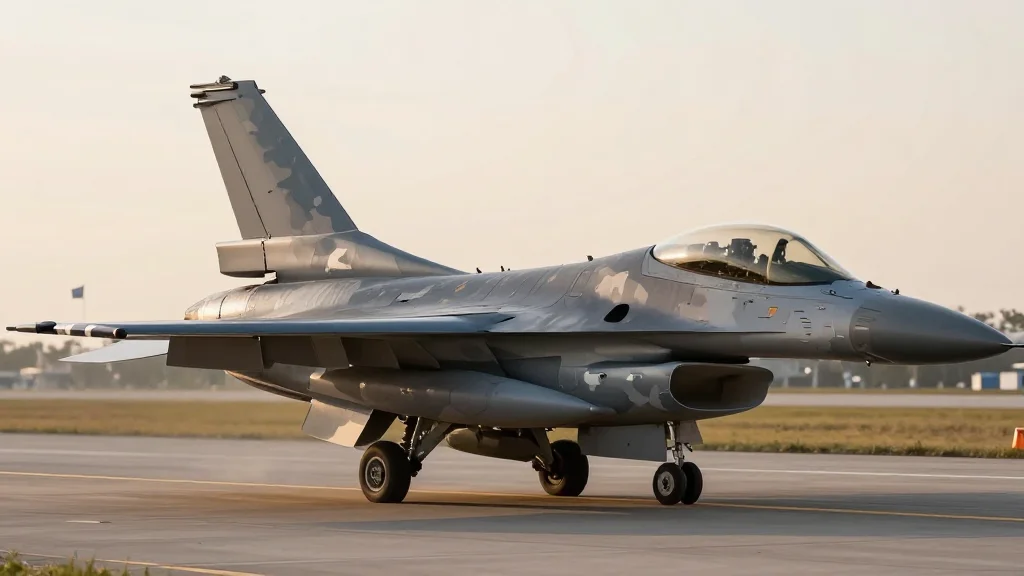
Romania Scrambles F-16s After Russian Drone and Missile Strike Near Border, NATO Stands Ready

Why It Matters
The incident illustrates how Russia’s long‑range strike capabilities can create flashpoints that test NATO’s collective‑defence mechanisms. By scrambling F‑16s and coordinating through NATO’s command structure, Romania demonstrated the alliance’s ability to respond swiftly, deterring potential airspace violations. The joint drone‑production effort, backed by substantial EU funding, also signals a shift toward indigenous, low‑cost counter‑UAS solutions that could reduce reliance on legacy platforms. Beyond the immediate tactical response, the episode may influence NATO’s strategic calculus on force deployments in Eastern Europe. Repeated near‑misses could prompt member states to bolster air‑defence assets, accelerate procurement of advanced radar and missile systems, and refine rules of engagement for autonomous drone threats. The broader implication is a possible escalation in the alliance’s forward‑deployed posture, which could shape the security dynamics of the region for years to come.
Key Takeaways
- •Romania scrambled two F‑16 jets at 2:30 a.m. after Russian drones were detected near the Tulcea border.
- •NATO’s Allied Air Command provided real‑time intelligence, enabling a rapid response without airspace breach.
- •A second wave of drones was tracked at 5 a.m.; the alert ended at 5:42 a.m. with no unauthorized entry.
- •Romania and Ukraine will produce drones in Romania using up to €200 million (≈ $215 million) in EU funding.
- •The incident follows a March 26 Shahed‑type drone that crashed inside Romanian territory, highlighting spillover risks.
Pulse Analysis
NATO’s quick reaction to the Romanian air alert underscores a maturing interoperability framework that has been years in the making. The alliance’s ability to fuse national radar feeds with NATO‑wide situational awareness tools allowed Bucharest to act decisively, a capability that was absent during earlier incursions in 2022‑23. This operational maturity reduces the window for Russian drones to exploit gaps, effectively raising the cost of low‑tech aerial attacks.
Strategically, the episode may accelerate a shift from reliance on high‑end fighter patrols toward a layered defence that blends kinetic and non‑kinetic assets. Romania’s new legal authority to shoot down intruding drones, combined with the EU‑funded drone‑production line, points to a future where NATO members field swarms of inexpensive, locally produced UAVs for both offensive and defensive missions. Such a paradigm could dilute Russia’s advantage in cheap, expendable drones, forcing Moscow to either invest in more sophisticated counter‑UAS measures or accept a higher attrition rate.
Looking ahead, the June joint exercise will be a litmus test for NATO’s integrated response. If the alliance can demonstrate seamless command‑and‑control across air, land, and cyber domains, it will send a clear deterrent signal to Russia that any attempt to breach NATO airspace will be met with a coordinated, multi‑layered defense. Conversely, any operational hiccups could embolden Moscow to probe further, potentially raising the stakes for a broader confrontation on the Eastern Front.
Romania Scrambles F-16s After Russian Drone and Missile Strike Near Border, NATO Stands Ready
Comments
Want to join the conversation?
Loading comments...