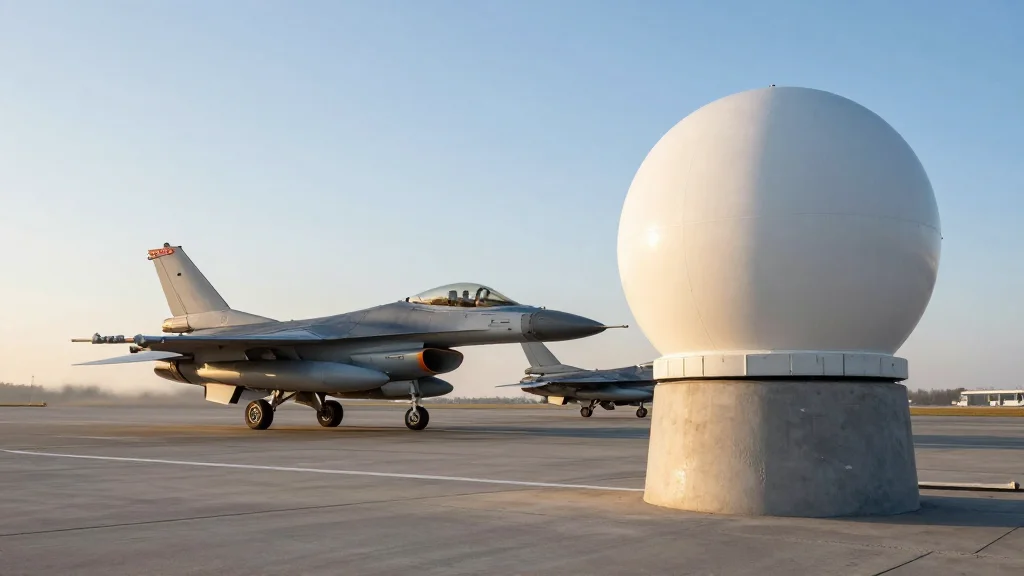
Romanian F-16s Scrambled as 17 Russian Drones Detected Near Ukraine Border

Why It Matters
The Romanian scramble highlights a new dimension of the Russia‑Ukraine war: the use of drones to project power beyond the immediate combat zone and into NATO airspace. If such incursions become routine, they could force the alliance to re‑evaluate its air‑defence posture, allocate additional resources to the Black Sea region, and potentially expand the scope of Article 5 commitments. Moreover, the incident tests the credibility of NATO’s collective defence promise, as member states must demonstrate the ability to respond swiftly to low‑altitude, high‑speed threats that traditional radar systems may miss. For the defense industry, the event signals growing demand for advanced counter‑UAS (C-UAS) solutions, integrated radar‑fusion platforms, and rapid‑launch interceptor missiles. Companies that can deliver interoperable, AI‑driven detection and engagement tools are likely to see heightened interest from NATO members seeking to shore up vulnerable southern flanks.
Key Takeaways
- •Romania scrambled two F-16s after detecting 17 Russian drones near Tulcea County.
- •The drones were part of a larger Russian strike on Ukrainian civilian and infrastructure targets.
- •No drones entered Romanian airspace; the alert lasted under two hours.
- •Romanian Ministry of National Defense activated both fighter jets and anti‑aircraft systems.
- •The incident raises concerns about NATO’s southern air‑defence readiness and C‑UAS capabilities.
Pulse Analysis
The Romanian response to the Russian drone swarm is a micro‑cosm of a broader shift in modern warfare: unmanned systems are no longer confined to the battlefield but are being used to test the perimeters of alliances. NATO’s historic focus on high‑altitude, manned aircraft threats is being challenged by low‑cost, proliferating drones that can overwhelm traditional radar and missile defenses. This incident will likely accelerate NATO’s investment in layered C‑UAS architectures, combining ground‑based radars, airborne early‑warning platforms, and AI‑driven decision loops.
Historically, NATO’s air policing missions have concentrated on the Baltic and Central European corridors, where Russian aircraft regularly test NATO airspace. The Black Sea region, however, has seen fewer direct NATO interceptions, partly due to the complex political environment surrounding Romania, Bulgaria, and Turkey. Romania’s rapid launch of F-16s demonstrates a willingness to fill that gap, but it also exposes a reliance on legacy platforms that may struggle against swarming drones without supplemental C‑UAS assets. The alliance may need to prioritize procurement of next‑generation fighters equipped with advanced electronic warfare suites and integrate them with dedicated C‑UAS batteries.
From a market perspective, defense contractors that specialize in low‑observable radar, directed‑energy weapons, and autonomous interceptors stand to benefit. The incident underscores the urgency for NATO members to standardize data links and engagement protocols, ensuring that a drone detected by Romanian sensors can be handed off seamlessly to a German or Italian air‑defence unit if the threat migrates. In the coming months, we can expect heightened diplomatic dialogue within NATO on expanding the Integrated Air and Missile Defence (IAMD) umbrella to cover the Black Sea, as well as increased funding for joint exercises that simulate swarming drone attacks. The Romanian scramble is a warning shot: if the alliance does not adapt, the next incursion could be more aggressive, potentially pulling NATO into a direct confrontation.
Romanian F-16s Scrambled as 17 Russian Drones Detected Near Ukraine Border
Comments
Want to join the conversation?
Loading comments...